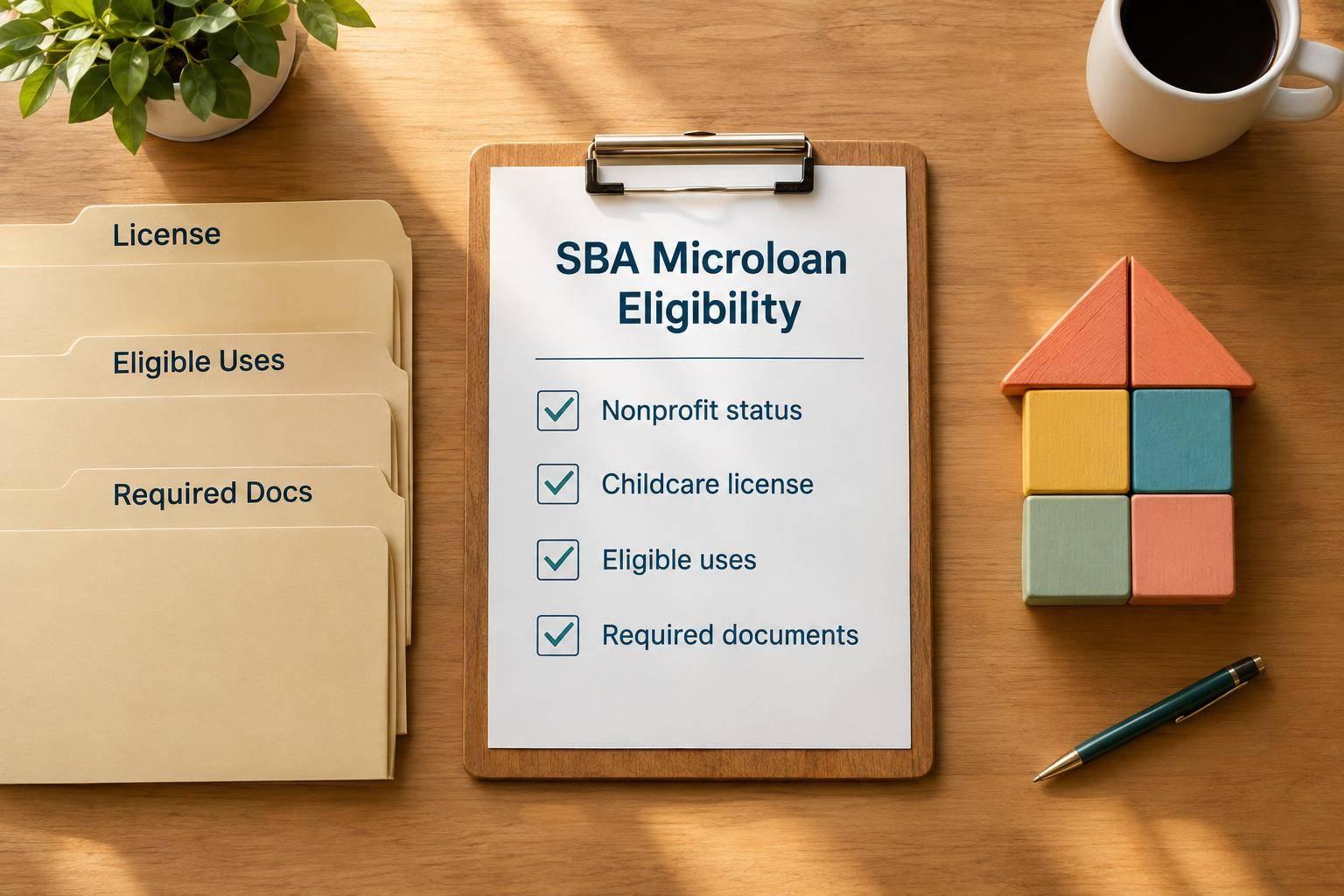
Nonprofit childcare centers may qualify for SBA Microloans of up to $50,000 – but tax-exempt status alone isn’t enough. Before applying, confirm the childcare purpose and planned expenses with an SBA-approved intermediary, which reviews the application and decides whether to lend.
The main rules:
- Use funds for eligible childcare costs, such as furniture, equipment, supplies, and working capital – not real estate purchases or debt repayment.
- Check three separate requirements: federal eligibility, state and local childcare approvals, and the intermediary’s credit standards.
- Prepare documents showing the nonprofit’s ownership and control, childcare plans, licensing status, budget, and ability to repay.
This nonprofit childcare exception does not extend automatically to SBA 7(a) or 504 loans. Paid application help is optional and does not guarantee approval.
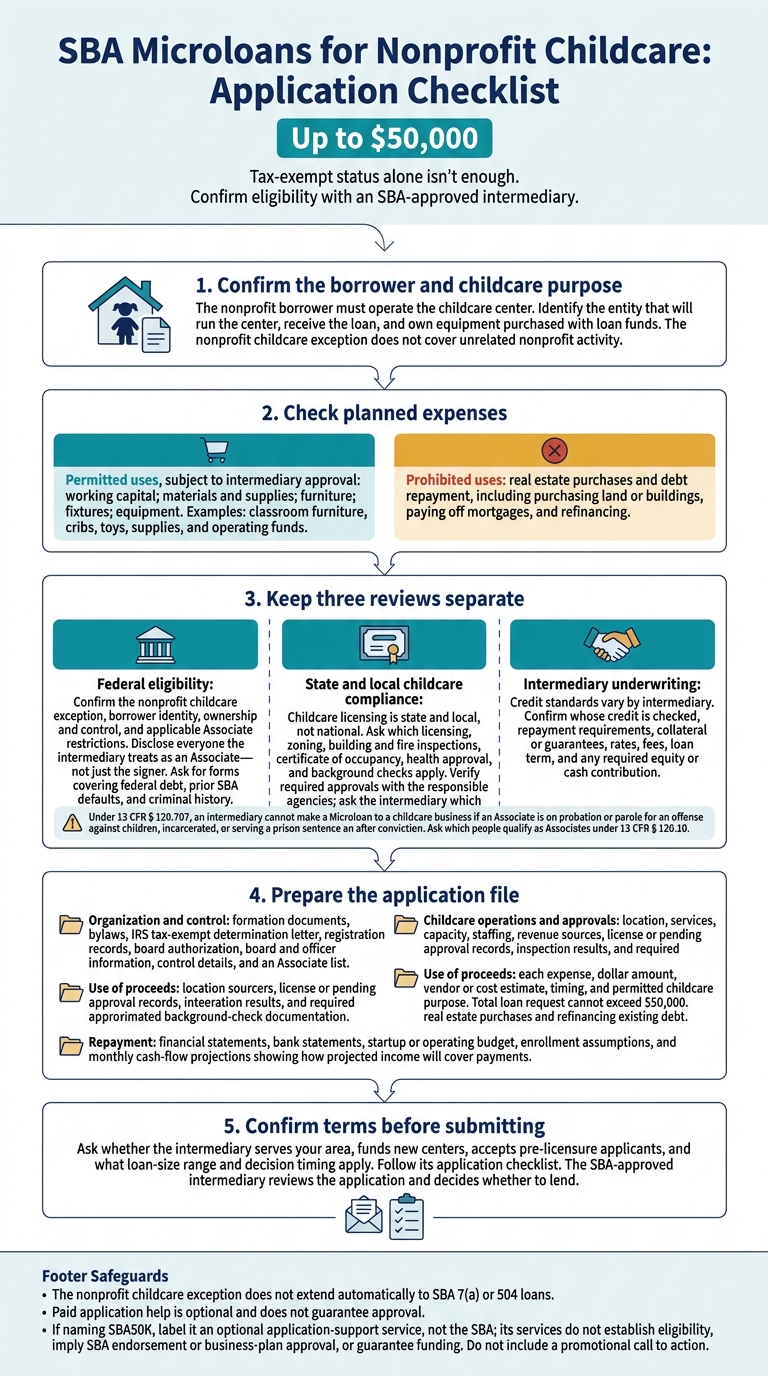
SBA Microloans for Nonprofit Childcare: Application Checklist
When Nonprofit Childcare Businesses May Qualify
Section 120.707 provides a narrow exception for nonprofit childcare centers. It does not cover unrelated nonprofit activity. Before filing, confirm the borrower, childcare purpose, and planned use of funds with the intermediary.
Childcare Businesses vs. Other Nonprofits
The borrower must operate the childcare center. Tax-exempt status alone doesn’t make a nonprofit eligible. Identify the entity that will run the center, receive the loan, and own the equipment purchased with loan funds.
These examples show how the exception applies:
Borrower Proposed use Eligibility distinction Nonprofit corporation operating a licensed childcare center Furniture, equipment, and supplies for the center Confirm that the borrower and project qualify under the childcare exception Nonprofit corporation requesting funds for unrelated nonprofit activities Expenses unrelated to operating a childcare center The childcare exception does not cover unrelated nonprofit activity
Allowed Expenses and Prohibited Uses
Permitted uses include working capital and materials, supplies, furniture, fixtures, and equipment – for example, classroom furniture, cribs, toys, supplies, and operating funds – subject to intermediary approval.
Microloan funds cannot buy real estate or repay debt. That includes purchasing land or buildings, paying off mortgages, and refinancing. Submit vendor quotes and a budget that clearly separates allowed expenses from prohibited uses.
Before submitting the application, verify licensing, ownership, and federal eligibility requirements, or compare SBA microloans and bank loans to ensure this is the right financing path.
sbb-itb-1eb586e
What to Confirm With an Intermediary
Ask the intermediary to confirm the childcare, licensing, ownership, and federal eligibility rules that apply in your area. Check its service area, loan-size range, rates and fees, collateral or guarantee requirements, and credit standards. Also ask whether it funds new centers, accepts pre-licensure applicants, and how long decisions take. Keep three reviews separate: federal eligibility, state and local childcare compliance, and lender underwriting.
Applicant Identity, Childcare Purpose, and Licensing
Provide the nonprofit’s legal name, entity type, formation state, EIN, address, tax status, and authorized signer. Explain the childcare services, ages served, how the center will run, and how you plan to use the funds. State whether the loan will establish a new center or support an existing one. If state or local approvals are pending, ask whether the intermediary accepts a conditional approval, pending application, provisional license, or licensing timeline.
Next, confirm which local approvals the center needs before funding. Childcare licensing is state and local, not national. Ask for a checklist for your jurisdiction. Requirements may include licensing, zoning, building and fire inspections, a certificate of occupancy, health approval, and background checks. Verify with the responsible agencies which approvals must be complete, then ask the intermediary which may remain pending when funding occurs.
Associate Restrictions and Federal Eligibility
Federal eligibility also depends on who controls the business. Under 13 CFR § 120.707, an intermediary cannot make a Microloan to a childcare business if an Associate is on probation or parole for an offense against children, incarcerated, or serving a prison sentence after conviction. Ask which directors, officers, managers, key employees, and controlling persons qualify as Associates under 13 CFR § 120.10. Disclose everyone the intermediary treats as an Associate – not just the signer.
Request the forms covering federal debt, prior SBA defaults, and criminal history. Ask which issues affect eligibility and what supporting records to submit. Get written guidance from the intermediary before leaving anything out.
Credit, Repayment, and Lender Requirements
Once eligibility is clear, move to underwriting. Ask whose credit the intermediary checks, whether it requires collateral or guarantees, and how it assesses your ability to repay. Credit standards vary by intermediary.
Confirm which underwriting documents you’ll need, such as financial statements, bank statements, budgets, enrollment assumptions, and cash-flow projections. Before committing to a full application, request the proposed rate, fees, loan term, and any required equity or cash contribution.
Prepare Your Nonprofit Childcare Application
Once eligibility is confirmed, build your application file around the intermediary’s checklist. Keep eligibility, licensing, and underwriting documents separate so each part is easy to review.
Documents for Your Childcare Application
Include your formation documents, bylaws, IRS tax-exempt determination letter, registration records, and board authorization. Add board and officer information, control details, and an Associate list. Clearly identify the nonprofit as the borrower.
Show how the nonprofit runs its childcare program – not just that it has tax-exempt status. Describe the center’s location, services, capacity, staffing, and revenue sources. Include its license or pending approval records, inspection results, and required background-check documentation.
Next, explain exactly where the loan money will go. Prepare a use-of-proceeds schedule with each expense, dollar amount, vendor or cost estimate, timing, and permitted childcare purpose. The total loan request cannot exceed $50,000. Leave out real estate purchases and refinancing existing debt.
Match the schedule to your startup or operating budget and monthly cash-flow projections. Show how projected income will cover loan payments.
Application Support From SBA50K
SBA50K offers microloan application support, business-plan help, and intermediary connections. This optional service is not the SBA. Before using it, confirm whether it supports nonprofit childcare applicants, what its services cover, and what fees apply. Its services do not establish eligibility, imply SBA endorsement or business-plan approval, or guarantee funding.
Conclusion: Confirm Eligibility Before Applying
Before submitting your application, confirm with the intermediary that the nonprofit’s childcare purpose fits the childcare exception.
FAQs
Can our church-run daycare qualify for an SBA Microloan?
Yes, a church-run daycare may qualify under the exception for nonprofit childcare centers. That exception does not apply to nonprofits in general.
Your center must meet SBA size standards and show it can repay the loan. Check with a local SBA-approved intermediary to see whether it accepts nonprofit childcare applicants and which underwriting criteria it uses.
SBA50K offers a funding guide, application preparation help, and custom business plans to help improve your chances of approval.
Can our nonprofit qualify without a repayment history?
Yes, your nonprofit childcare center may qualify without a repayment history. Lenders look beyond past performance. They also assess your ability to repay using projected cash flow, owner investment, and a realistic business plan.
Ask an intermediary about its requirements for startups and pre-revenue businesses. Find out whether it accepts personal financial statements, bank records, and three- to five-year financial projections as proof of your ability to repay.
Can we use a microloan for childcare facility renovations?
Yes, SBA microloans can cover some facility improvements, including furniture, fixtures, and equipment repairs. They can’t fund real estate purchases.
For proposed renovations, provide contractor estimates, permits, and an explanation of how the work will increase your childcare center’s capacity, revenue, or efficiency.
Intermediary lenders set their own restrictions, so check with your lender to confirm that your renovation plans qualify before you apply.
Leave a Reply