
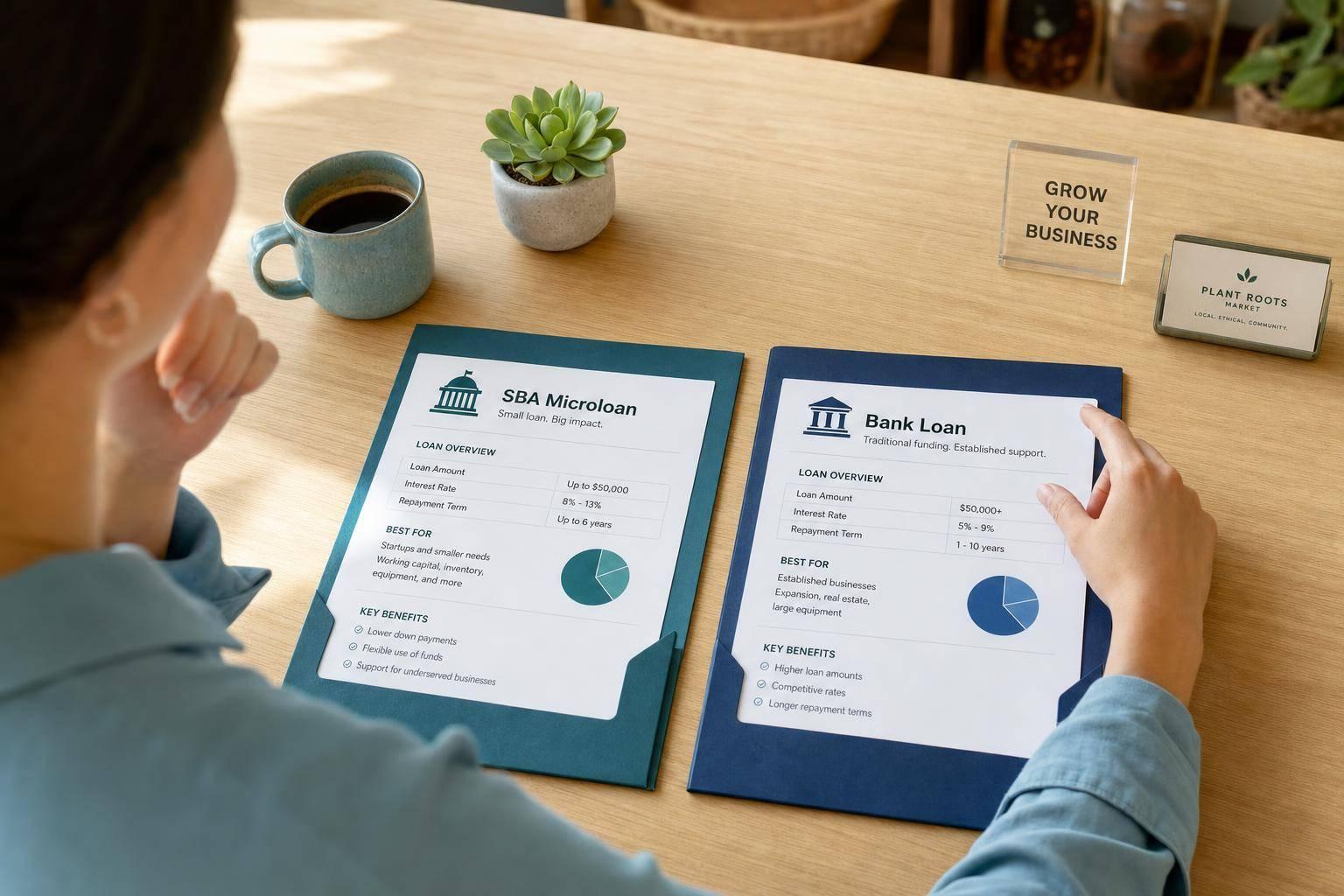
If you need $50,000 or less, have a newer business, or your credit is not strong, an SBA microloan will often be the better starting point. If you need more than $50,000, have at least 2 years in business, and stronger financials, a bank loan will usually fit better.
Here’s the short version:
- SBA microloans range from $500 to $50,000
- Average microloan size is about $13,000 to $15,000
- Microloan rates are often 6% to 13%
- Microloan terms can go up to 6 years
- Bank-backed SBA loans can reach $5,000,000
- Bank approval may take 1 to 3 months
- Banks often want stronger credit and about 2 years of business history
This choice usually comes down to five things:
- How much money you need
- Your credit score
- How long you’ve been in business
- What collateral you have
- What you’ll use the money for
If I were choosing, I’d keep it simple:
small amount + newer business + lower credit = microloan
larger amount + older business + stronger credit = bank loan
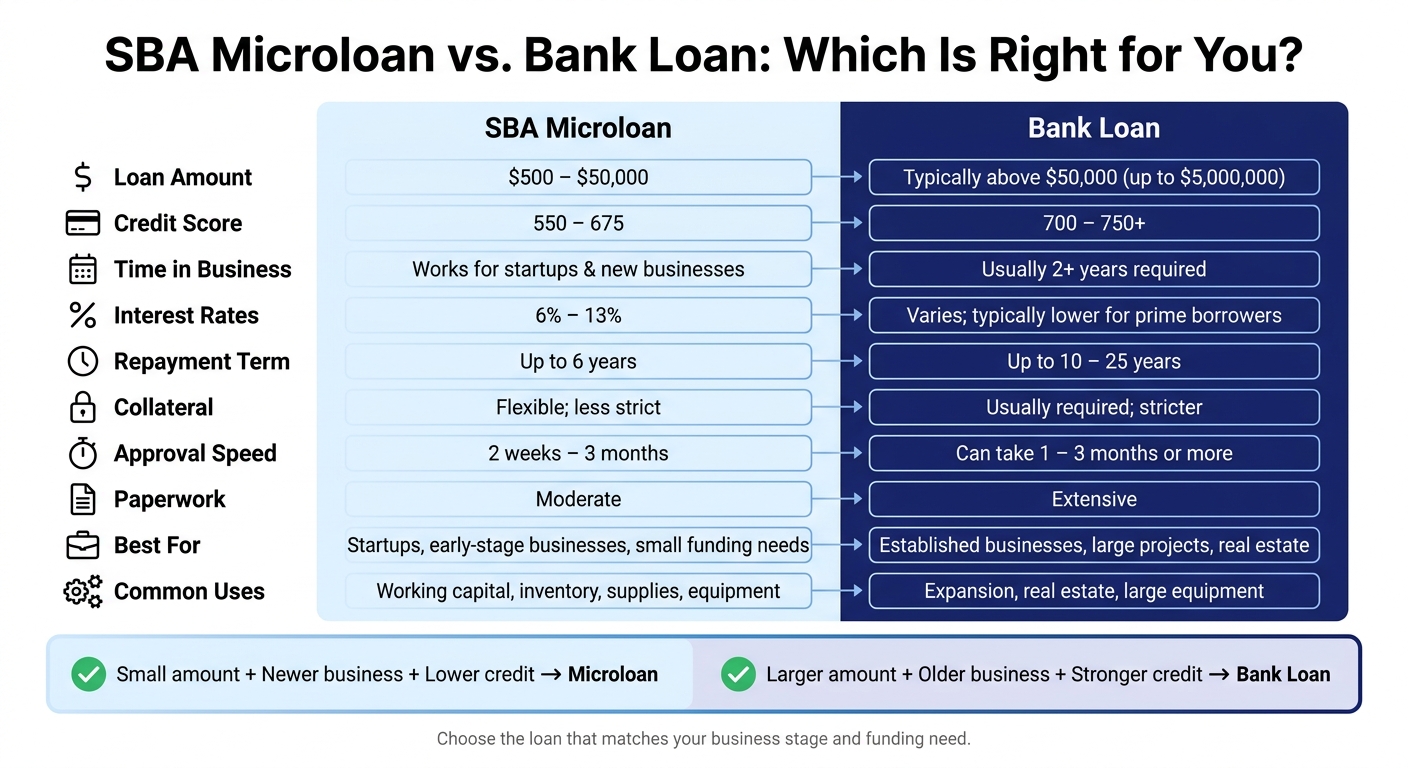
SBA Microloan vs Bank Loan: Side-by-Side Comparison
Quick Comparison
| Criteria | SBA Microloan | Bank Loan |
|---|---|---|
| Loan amount | $500 to $50,000 | Often above $50,000 |
| Best for | Startups, new businesses, small funding needs | Established businesses, larger projects |
| Credit range | Often 550 to 675 | Often 700 to 750+ |
| Time in business | Works for newer businesses | Often 2+ years |
| Uses | Working capital, inventory, supplies, equipment | Expansion, real estate, larger equipment |
| Repayment term | Up to 6 years | Often longer, up to 10 to 25 years on some loans |
| Collateral | Often more flexible | Often stricter |
| Funding time | Often 2 weeks to 3 months | Often takes months |
In other words: this is less about chasing the lowest rate and more about picking the loan you can qualify for – and one that matches your business stage, loan size, and use of funds.
sbb-itb-1eb586e
What an SBA Microloan Offers
The SBA Microloan Program offers up to $50,000 through nonprofit intermediary lenders. It’s often used by borrowers who may not qualify for bank financing. The SBA only sets the $50,000 cap. The intermediary lender handles the rest, including approval rules, rates, and loan terms.
That setup has a big effect on the process. It shapes how much you can borrow, what the money can cover, and how tough approval may be.
Loan Size, Approved Uses, and Repayment Terms
Loans can start as low as $500, and the average loan size falls between $13,000 and $15,000. Funds can be used for:
- Working capital
- Inventory
- Supplies
- Furniture and fixtures
- Machinery and equipment
They can’t be used for real estate or to pay off existing debt.
Repayment terms can run up to 6 years, and interest rates usually land between 6% and 13%, based on the intermediary lender.
Who Typically Qualifies
SBA microloans are often geared toward startups, newer businesses, and borrowers with a limited credit history. Typical credit scores range from 550 to 675. If your credit is on the weak side, a cosigner may help strengthen the application.
Collateral is often part of the deal, but lenders may accept business assets like equipment or inventory. In some cases, they may also take personal assets, such as a vehicle. A personal guarantee is also usually expected from any owner who holds at least a 20% stake in the business.
Where SBA50K Fits in the Process

SBA50K helps applicants get their paperwork in order, build business plans, and connect with intermediary lenders. For earlier-stage borrowers, that can make the path feel a lot less intimidating than a bank loan.
Next, compare those flexible requirements with how bank loans are typically underwritten.
How Bank Loans Compare
Bank loans come from commercial lenders, and they tend to work best for businesses that already have some history behind them. In plain English, banks usually lean toward companies with stronger revenue and better credit. That matters most when you look at how much money you need, how soon you need it, and what collateral you can put on the table.
Loan Amounts, Uses, and Terms
Bank loans usually offer a much higher funding cap. Bank-backed SBA 7(a) and 504 loans can go up to $5,000,000. That makes them a better fit for bigger needs, like large equipment purchases, business expansion, and commercial real estate.
The payoff period is longer too. SBA microloans usually run for up to 6 years, while bank-backed SBA loans can run from 10 to 25 years. SBA 504 loans also require a 10% down payment, so you’ll often need some cash up front. If you’re looking for more than $50,000, bank financing is usually the more realistic option.
Credit, Documentation, and Collateral Requirements
Banks set a higher bar. Many look for a personal credit score of at least 750, while SBA microloan borrowers often fall in the 550 to 675 range.
They also ask for more documentation, such as:
- Tax returns
- Financial statements
- Credit reports
- Business formation documents
On top of that, banks often want at least two years of business records. Collateral rules can be tougher as well, with lenders often asking for assets like real estate or equipment. And patience matters here: approval can take 1 to 3 months.
Next, compare the two options side by side to see which fits your business stage and funding need.
SBA Microloan vs. Bank Loan: Side-by-Side Comparison
Use the comparison below to line up your funding needs, credit profile, and business stage with the loan that makes the most sense.
| Feature | SBA Microloan | Bank Loan |
|---|---|---|
| Loan Size | $500–$50,000 | Varies widely; typically above $50,000 |
| Common Uses | Working capital, inventory, equipment, startup costs | Expansion, real estate, large equipment |
| Repayment Term | Up to 6 years | Varies; longer terms are common for real estate |
| Interest Rates | 6%–13% | Varies; typically lower for prime borrowers |
| Credit Profile | 550–675 | 700–750+ |
| Collateral | Flexible; usually less strict than bank loans | Usually required |
| Approval Speed | 2 weeks to 3 months, depending on lender | Can take months |
| Paperwork | Moderate; usually less extensive than a bank loan | Extensive; lenders typically want more documentation and financial history |
| Typical Borrower Stage | Startups and early-stage businesses | Established businesses, usually with at least two years of operation |
Which Option Fits Your Funding Need and Business Stage
If your credit score is below 650 or your business is less than two years old, a microloan is often the more realistic option. It tends to work better for smaller funding requests and newer businesses that may not have deep financial records yet.
If you need more than $50,000 and your financials are strong, a bank loan can open the door to larger loan amounts and longer repayment terms. That matters when you’re funding a big purchase or planning a major expansion.
Hypothetical Borrower Scenarios
The table shows the pattern. These examples make it easier to see how that plays out.
Scenario 1 – New café owner needing startup inventory: A first-time business owner opens a small café and needs $18,000 to buy a commercial refrigerator and initial food inventory. Her credit score is 590, and she doesn’t have collateral. In that case, an SBA microloan is the better fit.
Scenario 2 – Established manufacturer seeking expansion capital: A manufacturing company with five years of operation needs $175,000 to buy a second warehouse, but the loan amount and real estate use mean an SBA microloan isn’t a match. With a credit score of 780 and solid financials, a bank loan is the better route.
How to Decide: Key Takeaways and a Quick Checklist
Use the comparison above to narrow your choice fast. It comes down to five things: how much money you need, how old your business is, your credit, whether you have collateral, and what you plan to do with the funds.
An SBA microloan is usually the better fit if you need $50,000 or less, your business is new or still in its early days, and your credit file is thin. A bank loan tends to make more sense if you need a larger amount, have at least two years in business, and a credit score of 680+.
Use the checklist below to sanity-check your fit in just a few minutes.
A 5-Point Checklist Before You Apply
Run through these questions before you send in an application:
- How much do you need? If it’s under $50,000, start by looking at a microloan. If it’s more than that, bank financing is often the better place to look.
- How long has your business been open? Startups and businesses under two years old often line up well with microloans. Banks usually want at least two years of operating history.
- What’s your credit score? Lower credit tends to point toward a microloan. Stronger credit gives you a better shot at bank loan options.
- Do you have collateral? Microloan lenders can be more flexible here. Banks usually want stronger collateral backing the loan.
- What will the money be used for? Microloans can cover working capital, inventory, supplies, and equipment. They don’t cover real estate or debt refinancing.
If you need a smaller amount, have limited credit, and you’re running an early-stage business, a microloan is often the first place to start. If you need more than $50,000 and your financials are in good shape, a bank loan is usually the better match.
FAQs
Can I get a microloan with bad credit?
Yes. You may still qualify for an SBA microloan with bad or limited credit.
Unlike bank loans, SBA microloan lenders often look at your business plan, your ability to repay, and the strength of your business idea, not just your credit score. Some applicants with scores as low as 550 have been approved. If your credit is very low, a lender may ask for a cosigner or extra collateral.
What if I need more than $50,000?
If you need more than $50,000, an SBA Microloan isn’t the right fit. That program tops out at $50,000.
If your funding needs are bigger, look at other SBA loan programs instead. Some can go as high as $5 million.
A microloan can still be a smart starting point, though. It may help you build credit and form lender relationships, which can make it easier to go after larger financing later.
Can I use a microloan to buy real estate?
No. An SBA microloan can’t be used to buy real estate.
These loans are meant for things like startup costs, equipment, inventory, supplies, furniture, working capital, and hiring. But they don’t cover real estate purchases or debt refinancing.
If you need funding for real estate, the SBA 504 loan is the one built for those larger purchases.
Leave a Reply