
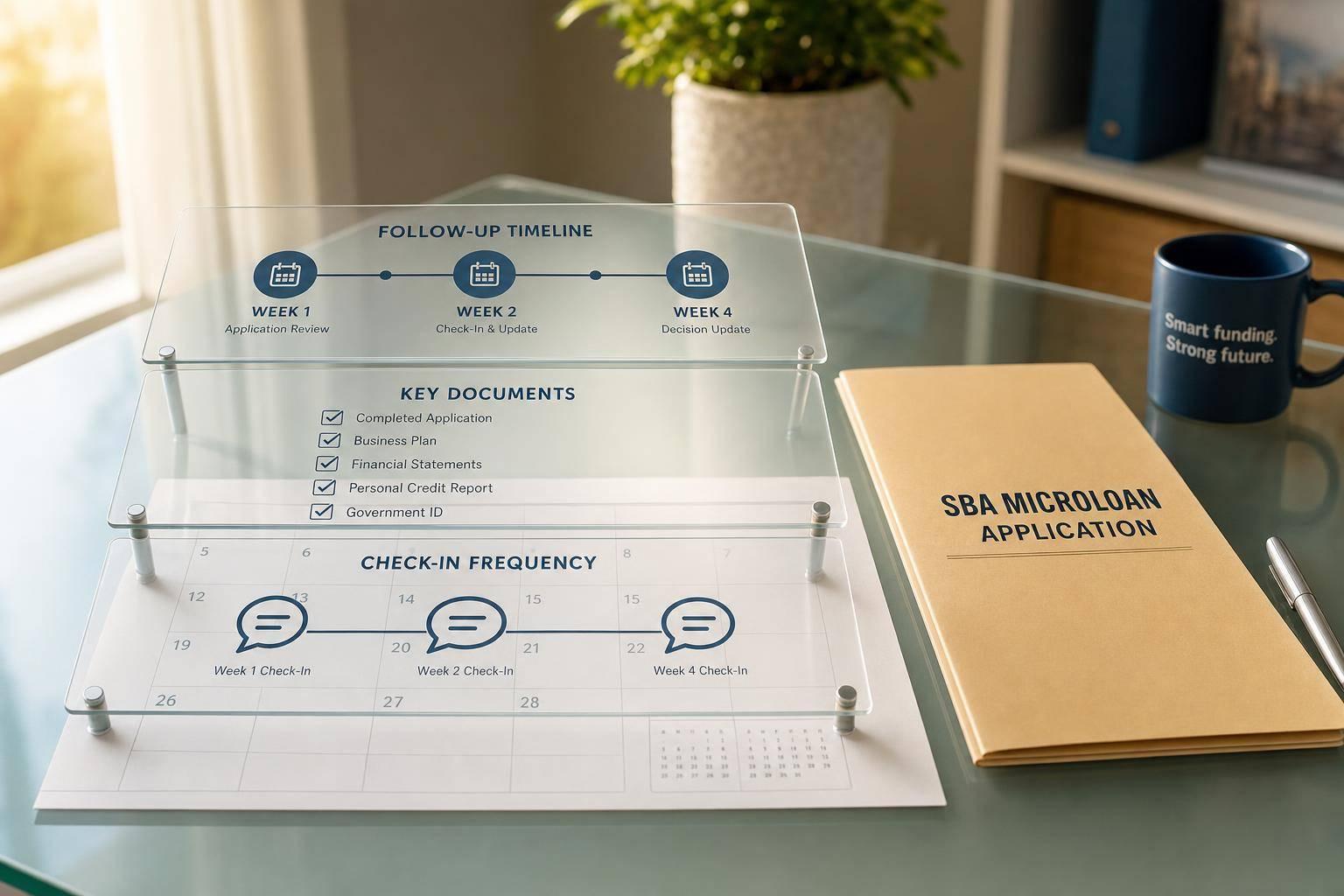
If you contact an SBA microloan lender, don’t expect an instant yes or no. In most cases, I’d expect a basic reply in 2–5 business days, a deeper review or document request in about 5–15 business days, and more back-and-forth after that.
Here’s the short version:
- The SBA usually doesn’t handle the loan directly. A nonprofit intermediary lender does.
- Silence for a few days is normal. I’d usually follow up after 5 business days if I heard nothing.
- Most delays come from missing paperwork. Sending a full, clean file helps keep things moving.
- Underwriting often includes extra questions. That usually means the file is still active, not denied.
- Weekly check-ins are enough. Too many emails or calls can slow things down.
A simple way to think about it: you contact the lender, they confirm receipt, they ask for documents, they review your file, and then they make a decision. During that time, your job is to reply fast, keep your records current, and stay easy to reach.
That’s the whole process in plain English, and I’ll break it down without repeating every step word-for-word from the article.
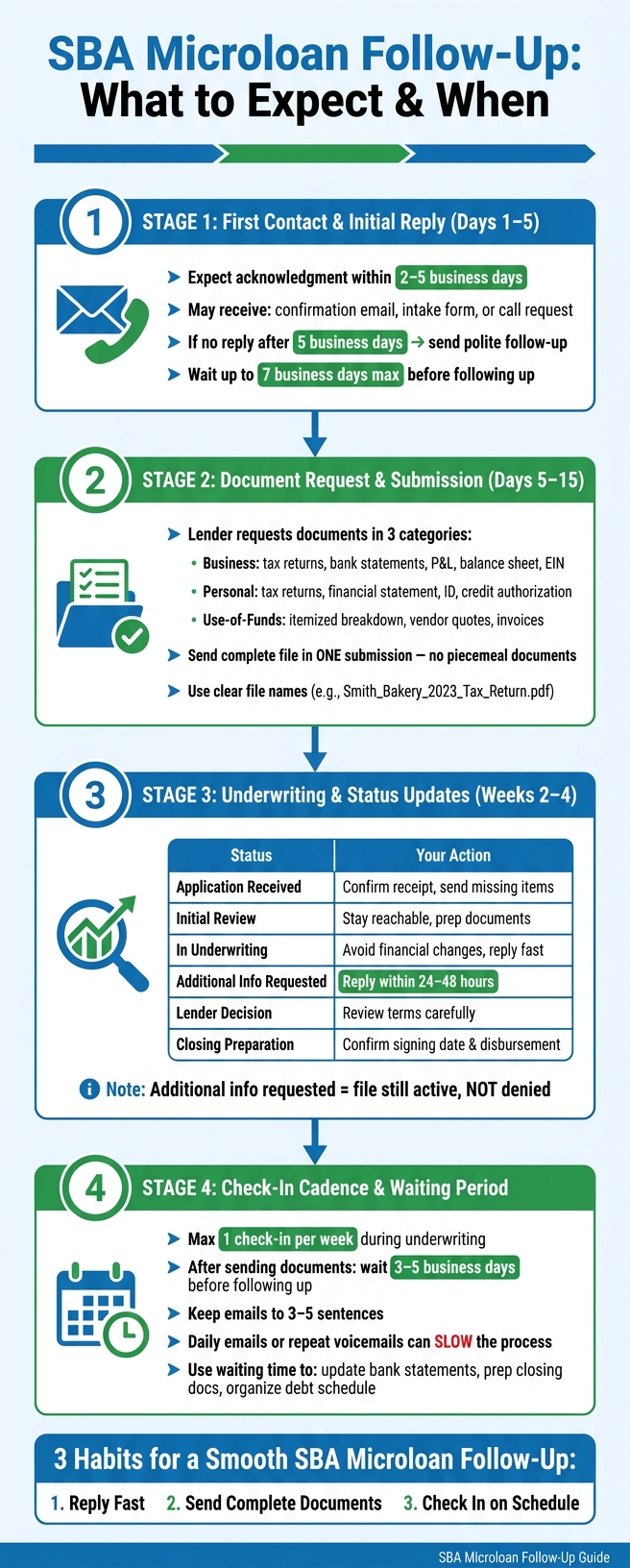
SBA Microloan Follow-Up Process: Step-by-Step Timeline
How LONG the SBA startup loan process take?
sbb-itb-1eb586e
Step 1: Reply Timing After First Contact
After your first outreach to an SBA microloan intermediary, the first reply is often pretty simple: a confirmation email, an intake call, or a request to fill out a form. What happens next depends on the lender. Some set up an intake meeting within one to two weeks, while others send a form right away.
Once that first acknowledgment comes in, the main job is to keep your file from stalling.
When to Follow Up If You Do Not Hear Back
If you have not heard back after five business days, your inquiry may still be sitting in line waiting to be assigned. At that point, a polite follow-up usually makes sense.
If you reach out too early, it can come across as pushy. But if you wait more than seven business days, there is a better chance your inquiry gets missed. If your first follow-up gets no reply, wait another five to seven business days before trying again.
Keep the message short and easy to scan. A subject line like "Status Request – SBA Microloan Inquiry – [Your Business Name]" helps the lender locate your file fast. In the email, mention:
- your original contact date
- the amount you are requesting
- a request to confirm your materials were received
- a short ask for the next step
Then sign off with your name, business name, phone number, and the best time to reach you.
What Your First Lender Response May Include
When the lender sends a full reply, expect questions meant to check whether your business fits the program. For microloans up to $50,000, the first intake form or call often covers:
- Loan amount requested and a detailed use-of-funds breakdown, with dollar amounts for each category
- Business basics such as legal name, date opened, products or services offered, and a brief operating history
- Owner information, including industry experience and ownership percentages
- Revenue and other financial details to gauge the scale of the business
- Credit background and collateral, especially if your credit history is limited
- Whether you have a business plan or financial projections ready
The SBA limits microloan funds to working capital, inventory, supplies, furniture, fixtures, machinery, and equipment. Real estate purchases and debt refinancing are not allowed uses. Lenders often check this at the first stage, so it helps to have a clear dollar-by-dollar breakdown ready. Services like SBA50K can help applicants get that paperwork ready ahead of time, including business plans and application materials. That prep can cut down on back-and-forth and help your file keep moving.
Step 2: Document Requests and How to Keep the File Moving
After the lender sends its first response, the file usually moves into underwriting. That’s when document requests start to roll in.
At this stage, send a complete file in one shot. Missing pages, unsigned forms, or old statements can slow things down fast.
Common Documents Lenders Ask For
Most lenders sort requests into three groups: business documents, personal documents, and use-of-funds support. A standard checklist often includes recent business and personal tax returns, current business bank statements, and year-to-date financials. If you’re funding your startup business with little financial history, the lender may also ask for a cash flow forecast, the owner’s resume, and startup projections to fill in the blanks.
| Category | Typical Documents |
|---|---|
| Business | Business tax returns, bank statements, P&L and balance sheet, business license, formation documents, debt schedule, EIN confirmation |
| Personal | Personal tax returns, personal financial statement, government-issued ID, credit report authorization, personal bank statements |
| Use-of-Funds | Itemized use-of-funds breakdown, vendor quotes or invoices, lease agreements, contracts or purchase orders |
Lenders don’t look at these documents in isolation. They compare bank statements, profit and loss statements (P&L), and tax returns side by side. If the numbers don’t match, that usually leads to follow-up questions and can add days – or even weeks – to the review. It’s worth taking a few extra minutes to reconcile everything before you submit.
How to Respond Without Causing Delays
A complete packet helps keep underwriting on track. Instead of sending documents piece by piece, bundle everything into one package. Use clear file names, like Smith_Bakery_2023_Business_Tax_Return.pdf, so the underwriter can spot what they need right away. Before you hit send, make sure each document is signed, dated, easy to read, and includes every page.
If the lender comes back with clarifying questions, reply within one business day. Be direct. Answer each question clearly, and include any backup documents in the same email.
SBA50K can help applicants get ahead of this part of the process by organizing documents, preparing loan applications, and building a business plan that matches lender expectations, especially for owners with limited or poor credit histories seeking up to $50,000.
Step 3: Status Updates During Underwriting and Review
Once you’ve sent in your documents, the intermediary lender usually becomes your main point of contact during review. At that stage, it helps to know what each status means and what you’re supposed to do next. The goal is simple: match the status to the right action so your file keeps moving.
From Application Received to Lender Decision
Most files move through a pretty standard path: initial review, underwriting, decision, and then closing.
| Status | What the lender is doing | What you should do next |
|---|---|---|
| Application received | Logging the file and checking completeness and eligibility | Confirm receipt and send any missing items right away |
| Initial review | Checking fit and flagging gaps | Stay reachable and keep common documents ready |
| In underwriting | Analyzing financials, credit, cash flow, and collateral | Avoid major financial changes and respond quickly to questions |
| Additional information requested | Waiting for your response before continuing | Reply within 24–48 hours with a complete, organized package |
| Lender decision | Finalizing approval or decline and setting loan amount, rate, and term | Review terms carefully and gather any items needed to satisfy conditions |
| Closing preparation | Drafting loan documents, verifying legal structure, and scheduling signing | Provide final items, confirm the signing date, and verify disbursement details |
Once you know these review stages, the next issue is timing: how often should you check in without getting in the way?
What to Do When the Lender Asks for More Information
An additional information requested status is a normal part of underwriting, not a warning sign. Lenders often ask for more documents, especially during weeks 2–4 of the review process. In plain English, the file is still active.
Your response speed matters a lot here. Try to send everything within 24–48 hours. If the request feels unclear – say the lender asks you to clarify owner compensation – don’t guess. Ask the loan officer what they want, then send the full response in one clean, organized package. A partial reply or a slow follow-up can hold up the decision.
Step 4: Check-In Frequency and What to Do While Waiting
How Often to Check In Without Overdoing It
Once underwriting begins, your follow-up should be short, on time, and matched to the lender’s schedule.
Wait until the lender’s stated review window has passed before you reach out. If a few business days go by after that and you still haven’t heard anything, send one short email with your application date, the date you last sent documents, and a clear question about next steps. Keep it to 3–5 sentences.
After that first check-in, stick to one update per week at most while underwriting is active. If you just replied to a document request, give the lender 3–5 business days to review it before following up again. Daily emails, repeat voicemails, or messages across several channels can slow things down instead of moving them along.
What to Do While Waiting for a Decision
Use this time to get ahead on anything the lender may ask for before approval or closing.
Keep your financial documents current. Have your latest bank statements ready, and make sure your year-to-date P&L and balance sheet show current figures. Lenders often ask for these before closing. It also helps to keep a simple debt schedule on hand that lists current loans, credit lines, or leases, along with balances and monthly payments.
Keep your use-of-funds support ready too. If the lender comes back with questions about your breakdown, you should be able to send vendor quotes or supplier invoices for each line item without scrambling.
Take care of closing documents now, not later. Make sure your LLC operating agreement, articles of incorporation, and EIN confirmation are current and easy to access. If the lender has already mentioned conditions like opening a business checking account or showing proof of insurance, handle those before approval if you can.
SBA50K offers step-by-step funding guides and custom-written SBA-approved business plan support for microloans up to $50,000, especially for applicants with limited or poor credit.
Conclusion: What a Smooth SBA Microloan Follow-Up Looks Like
After first contact, good follow-up comes down to three simple habits: reply fast, send complete documents, and check in on schedule. You should expect a prompt acknowledgment after that first outreach, then respond to document requests as soon as you can and follow up at a steady pace.
Most delays happen for a pretty simple reason: missing documents or documents sent late. If your files are organized and ready to go, the lender can keep the application moving with less back-and-forth.
Once the lender assigns a status, use that label to decide what to do next. It helps you tell whether the file is still moving forward or whether it’s time to follow up.
For limited-credit applicants, SBA50K offers step-by-step guidance and SBA-approved business plan support for microloans up to $50,000.
Good follow-up helps keep the file moving and cuts down on avoidable delays.
FAQs
What happens if my lender goes silent?
If your lender goes quiet, don’t panic. The review process can take two weeks to three months, so some waiting is normal.
While you wait, stay on top of the process by making sure your documents are complete and organized. It also helps to tighten up your business plan and put together extra financial projections that show how you plan to repay the loan.
SBA50K can help you move through the application process and keep your funding efforts on track.
What can slow down an SBA microloan review?
An SBA microloan review can slow down if your document package is incomplete or messy. If details are missing or questions go unanswered, the lender may stop the review and come back with follow-up requests.
Delays can also happen when your paperwork doesn’t line up with the intermediary lender’s exact requirements. To help move things along, have these ready:
- Financial statements
- Debt summaries
- A use-of-funds breakdown
- Explanations for past credit issues
A clean, organized package makes life easier for everyone. It helps the lender review your file with fewer stops and starts.
How can I improve my chances while waiting?
Show that you can repay the loan and that you run your business in a professional way. That starts with a clear, polished business plan built on realistic financial projections, including both busy seasons and slower stretches.
If you don’t have much hands-on experience yet, lean on what you do have. Point to relevant training, certifications, or support from advisors who can help guide the business.
It also helps to be ready for lender questions. If you’ve had credit problems in the past, explain them plainly. Ask for a conservative loan amount, and keep every document organized so the review process doesn’t get held up by missing paperwork.

Leave a Reply