
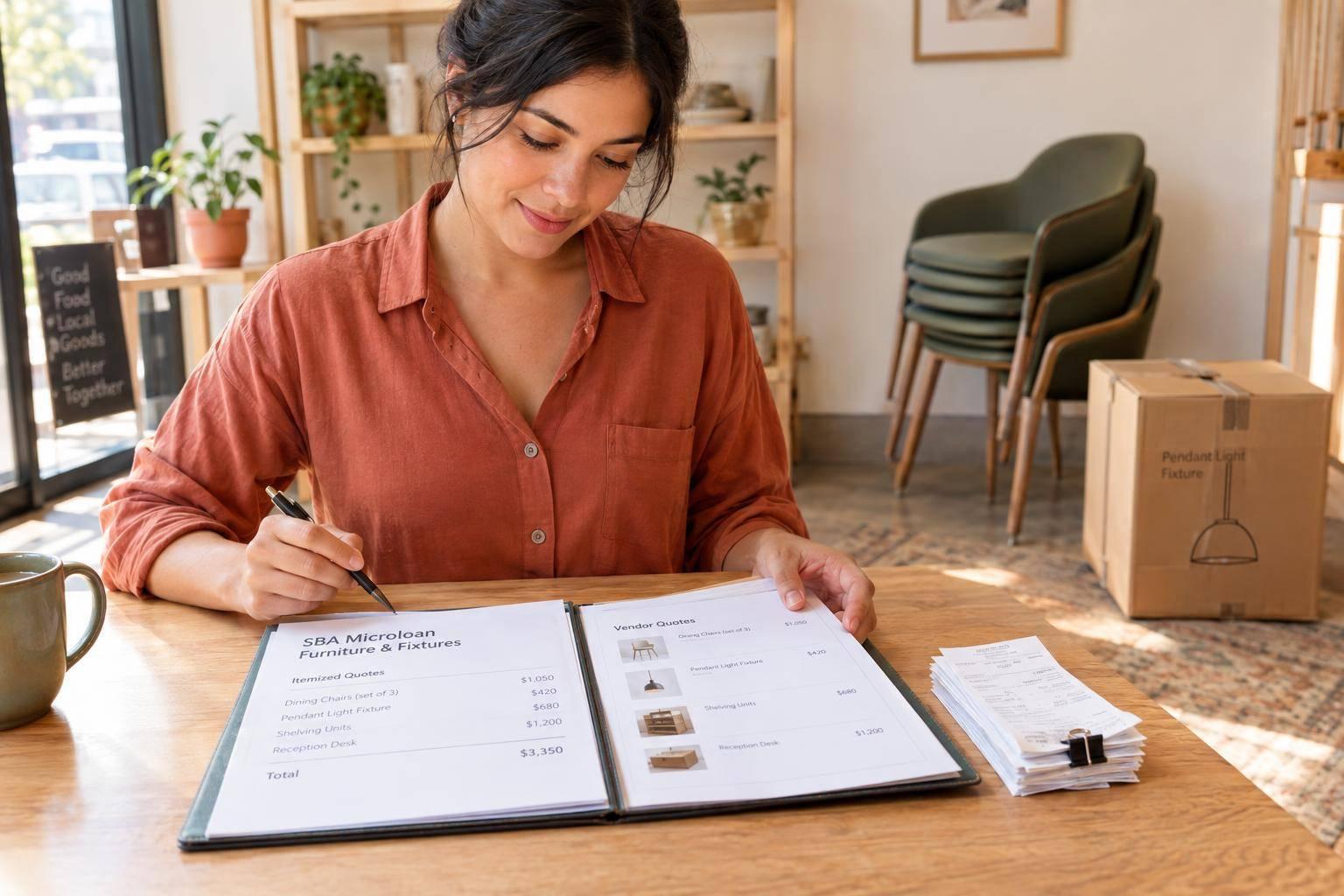
Yes – SBA microloans of up to $50,000 can cover business furniture and fixtures, including desks, shelving, and restaurant seating. Prepare itemized vendor quotes and a monthly repayment budget before applying through an SBA-designated nonprofit intermediary lender – not the SBA itself.
- Eligible uses: Business furniture, fixtures, equipment, supplies, and working capital.
- Excluded uses: Personal purchases, existing debt payments, and real estate purchases.
- Costs to confirm: Delivery, assembly, installation, and leasehold work need lender review.
- Approval requirements: Lenders review credit, cash flow, and business plans, and generally require collateral and a personal guarantee.
An eligible purchase does not guarantee approval. The intermediary sets the loan amount and terms within SBA rules. SBA50K offers application preparation help but cannot guarantee funding.
SBA Microloans Explained: Up to $50,000 for Small Businesses #Shorts
sbb-itb-1eb586e
Which Furniture and Fixtures Can SBA Microloans Fund?
SBA Microloan Furniture Costs: Eligible vs. Excluded
Furniture and fixtures can qualify for SBA microloan funding when they support your business and meet the intermediary lender’s rules. Budget for these purchases separately from other loan uses.
Common Furniture and Fixture Purchases
The purchases below are common examples – not guaranteed approvals. Explain what you plan to buy and how each item serves your business. This is a critical part of your itemized use-of-funds plan.
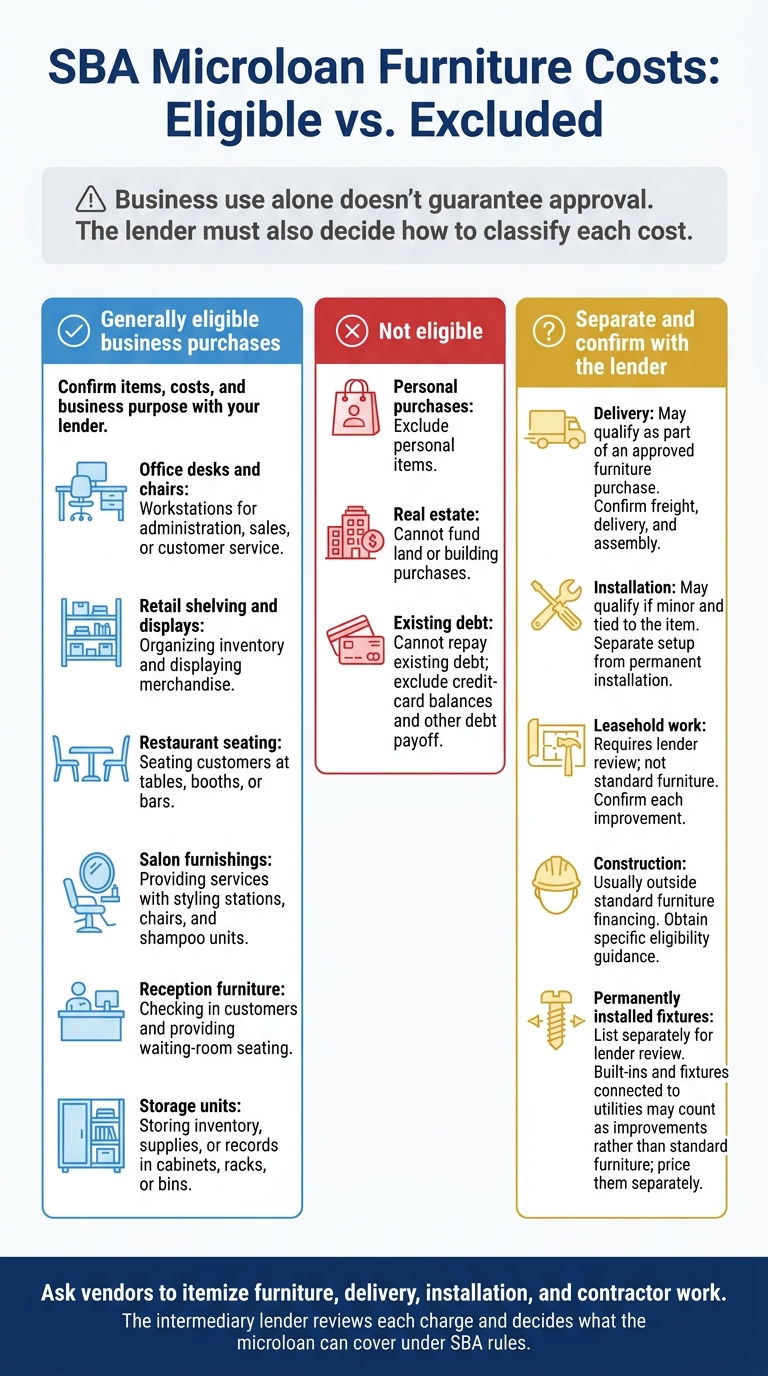
Purchase category Business use Office desks and chairs Workstations for administration, sales, or customer service Retail shelving and displays Organizing inventory and displaying merchandise Restaurant seating Seating customers at tables, booths, or bars Salon furnishings Providing services with styling stations, chairs, and shampoo units Reception furniture Checking in customers and providing waiting-room seating Storage units Storing inventory, supplies, or records in cabinets, racks, or bins
List permanently installed fixtures separately for lender review. Built-ins and fixtures connected to utilities may count as improvements rather than standard furniture, so price them separately.
Business use alone doesn’t guarantee approval. The lender must also decide how to classify each cost.
Prohibited Uses and Costs to Confirm
Not every business expense qualifies. Keep ordinary furniture costs separate from property purchases, debt payoff, and installation.
| Cost category | General treatment | Lender confirmation needed |
|---|---|---|
| Business furniture | Eligible for business use | Confirm items, costs, and purpose |
| Personal purchases | Not eligible | Exclude personal items |
| Real estate | Cannot fund land or building purchases | Exclude property acquisition |
| Existing debt | Cannot repay existing debt | Exclude credit-card balances and other debt payoff |
| Delivery | May qualify as part of an approved furniture purchase | Confirm freight, delivery, and assembly |
| Installation | May qualify if minor and tied to the item | Separate setup from permanent installation |
| Leasehold work | Requires lender review; not standard furniture | Confirm each improvement |
| Construction | Usually outside standard furniture financing | Obtain specific eligibility guidance |
Ask vendors to itemize furniture, delivery, installation, and contractor work in their estimates. This lets the intermediary lender review each charge, check it against SBA rules, and decide what the microloan can cover.
How Do Intermediary Lenders Review Applications?
Furniture costs may qualify for funding, but your application still has to pass the lender’s review. The intermediary – not the SBA – approves or denies the loan. An eligible purchase alone doesn’t mean your business qualifies or can repay the debt.
Business Eligibility and Borrower Requirements
Applicants generally must be U.S. for-profit small businesses, though certain nonprofit child care centers also qualify. For furniture funding, lenders review your business type, owner experience, credit history, cash flow, existing debt, and ability to repay. They generally require collateral and an owner’s personal guarantee. Poor or limited credit alone doesn’t determine approval. Each intermediary sets its own credit standards compared to bank loans.
Show that cash flow left after operating expenses and existing debt payments can cover the new monthly furniture loan payment. Projected revenue alone isn’t enough. If you’re applying as a startup, back up your projections with realistic sales assumptions, relevant experience, and owner investment.
Documents for Your Furniture Funding Request
Document what you plan to buy and how your business will use it. Submit itemized vendor quotes, invoices, or estimates that show quantities, unit prices, and delivery or installation charges. Include a brief explanation of the business use for each cost.
You’ll also need financial statements, bank records, requested tax returns, startup projections, and personal financial and credit information. Include a monthly repayment budget showing revenue, operating expenses, existing debt payments, and enough room for the new loan payment.
SBA Rules and Lender Decisions
Lender terms must follow applicable SBA rules, but each lender sets its own documentation and underwriting requirements. Ask for a written term summary covering the interest rate, fees, payment, collateral, and guarantee. Before relying on an offer, check its rate and term limits against current SBA guidance.
| Decision or requirement | SBA framework | Intermediary lender role | Borrower responsibility |
|---|---|---|---|
| Credit standards | SBA does not approve individual applications. | Reviews credit, experience, and ability to repay. | Explain credit issues and document current finances. |
| Rates, fees, and maturity | Sets program limits on rates, fees, and maturity. | Sets loan terms within those limits. | Check the total repayment cost and whether payments fit your budget. |
| Documentation | Requires records supporting eligibility and permitted uses. | Specifies which application documents you need. | Provide complete, consistent records. |
| Collateral and guarantees | Allows lender-specific security requirements within SBA limits. | Sets required assets and guarantees. | Understand which assets you’re pledging and your personal liability. |
| Startup applications | Permits eligible new businesses. | Reviews projections and prospects for success. | Back up your assumptions and show how you’ll make payments. |
How Do You Prepare a Furniture Funding Request?
Create an Itemized Budget and Repayment Plan
Once you confirm that furniture and fixture costs are eligible, build an itemized budget the lender can review quickly. Group purchases by use, explain their business purpose, and justify the quantities. Make clear which items you need now, which support revenue, and which can wait.
Organize quotes by item, cost, and business function. For each purchase, include the vendor, item, quantity, price, and purchase date. Check when each quote expires. List sales tax separately, along with separate amounts for delivery, installation, and any custom or leasehold-related charges.
Show the total project cost, loan request, owner cash, and other funding sources as separate amounts. Include related supplies and other permitted costs so the request covers the whole project – not just the furniture.
Next, show how the loan payment fits into your monthly cash flow. Your monthly projections and business plan should include sales, operating expenses, owner draws, taxes, and the proposed loan payment. If you’re launching a startup, tie sales estimates to demand, pricing, launch activities, and when the furnishings will be ready to use. Test those projections against slower sales and higher costs. The lender will use them to assess your ability to repay.
Application Support From SBA50K
SBA50K helps applicants put together furniture and fixture budgets, lender materials, and repayment plans for SBA microloans up to $50,000. This help does not replace lender paperwork or underwriting, promise a funding date, or guarantee approval. Approval still depends on your budget, ability to repay, and the lender’s decision.
Conclusion: Eligible Purchases Still Require Lender Approval
SBA microloans of up to $50,000 can usually cover business furniture and fixtures – but not personal purchases, real estate, or existing debt.
Submit an SBA microloan application checklist with itemized quotes, explain how you’ll use the items for your business, and include financial records or projections showing you can repay the loan. Get written confirmation from your lender before using funds for costs you’re unsure about, especially installation or leasehold improvements.
The intermediary lender still decides whether to approve your loan and sets the amount and terms based on your qualifications.
FAQs
Can I buy used furniture with an SBA microloan?
Yes, you can generally use an SBA microloan to buy used furniture, as long as the purchases are reasonably priced and directly tied to your business needs.
To help with approval, list each piece, explain how your business will use it, and include quotes or invoices to support the costs. Intermediary lenders set their own requirements, so check their rules on furniture condition before you apply.
Can I finance furniture for a home-based business?
Yes, an SBA microloan can cover furniture for a home-based business, but the furniture must be strictly for business use. Itemize the costs and explain how each piece, such as a desk or office chair, supports your daily business activities. Lenders may exclude personal or decorative items.
Approval depends on your application and the intermediary lender. Before applying, check the lender’s policies and gather quotes or invoices to document your planned business furniture purchases.
Should I wait for loan approval before ordering furniture?
Yes, wait for loan approval before ordering furniture. Intermediary lenders decide which costs they’ll cover, and requirements vary by lender.
Before placing any furniture or fixture orders, confirm with your lender that your planned purchases qualify. Otherwise, you could end up paying out of pocket for items the loan won’t cover.
Leave a Reply