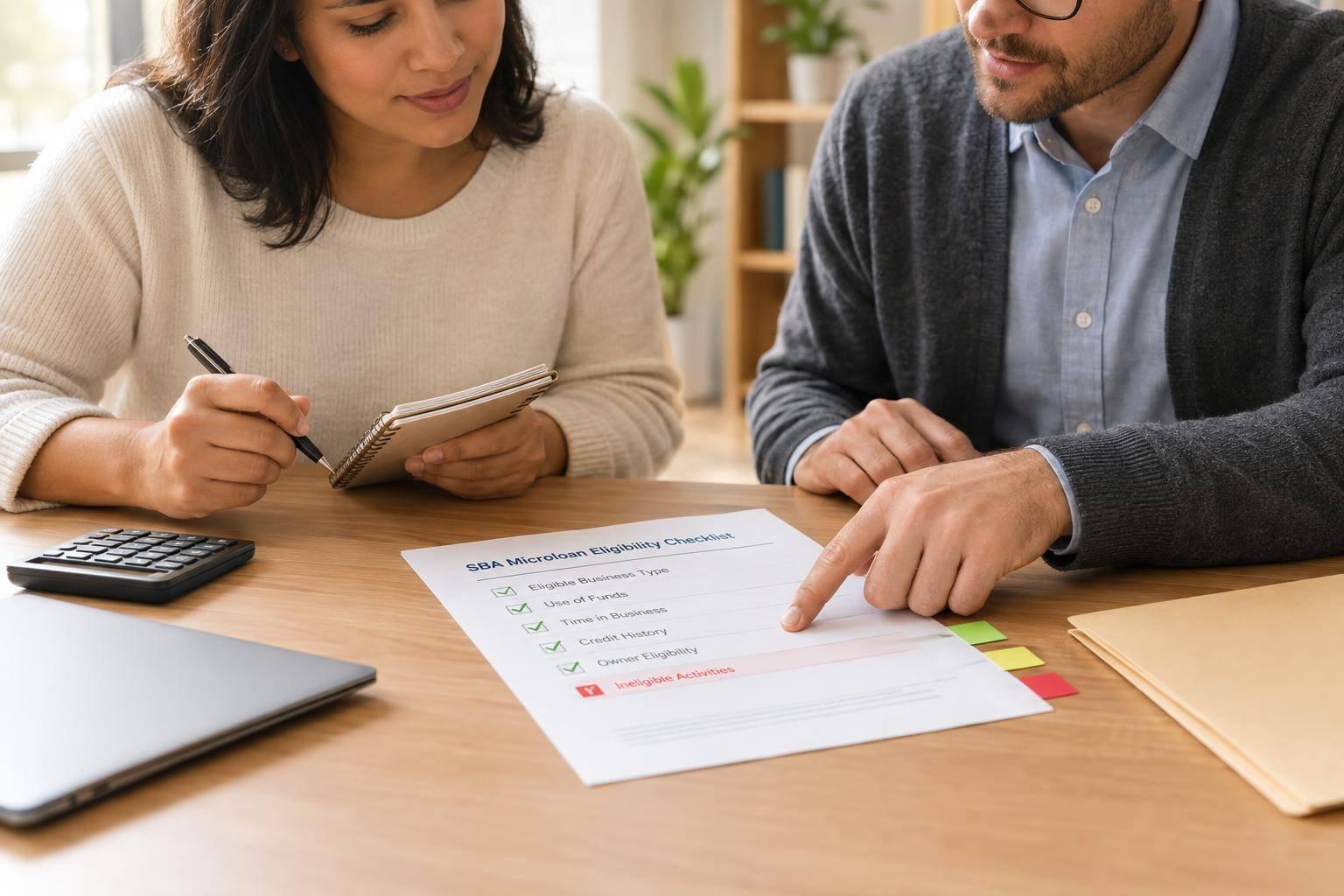
SBA Microloans offer up to $50,000, but both the business and its spending plan must qualify. Before applying, send an SBA-designated nonprofit intermediary a short business summary, ownership details, and an itemized budget.
The main checks are:
- Business activity: Illegal activities, speculative ventures, passive investments, and other excluded businesses may not qualify.
- Ownership and associates: Certain incarceration and childcare-related restrictions can block eligibility.
- Loan use: Working capital, inventory, and equipment may qualify. Real estate purchases and payments on existing debt do not.
- Borrower requirements: Startups and eligible nonprofit childcare businesses can qualify, but lenders also review credit, repayment ability, and required documents.
Ask the intermediary to flag eligibility issues before preparing a full application. An eligible expense – or business type – does not guarantee approval.
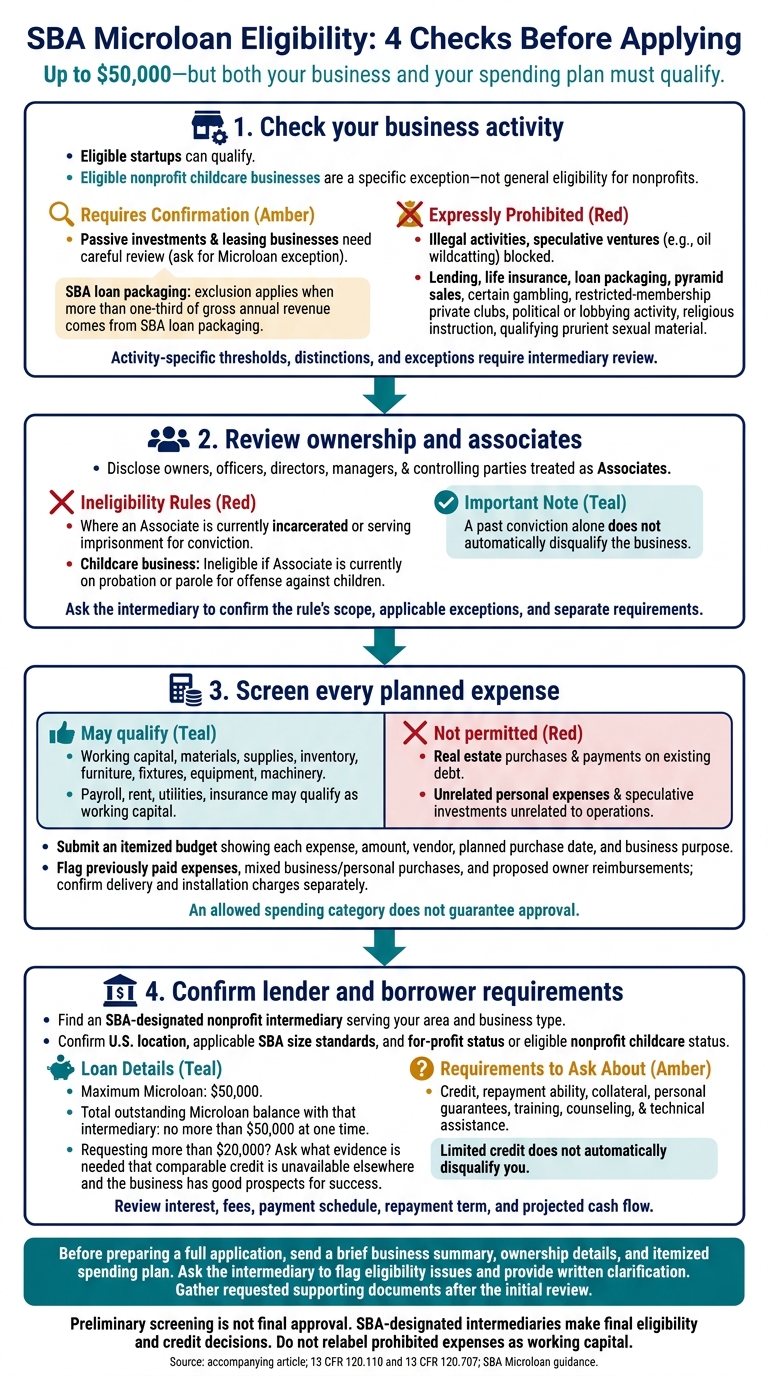
SBA Microloan Eligibility: 4 Checks Before Applying
Business Types and Ownership Restrictions
Illegal Activities and Speculative Ventures
Start with the rules that most often block eligibility. Use 13 CFR 120.110 and 13 CFR 120.707 to screen your business, not to make a final determination. A state or local license does not establish eligibility if the activity violates applicable federal, state, or local law. The regulations also exclude speculative businesses, including oil wildcatting. The intermediary needs to verify that the business is legal and active, with a reliable source of repayment.
Passive Investments and Leasing Businesses
A business that mainly holds investments, owns property for appreciation, or leases assets to others may face eligibility issues. Registering as an LLC does not settle the question.
Send the intermediary your ownership chart, leases, and revenue breakdown so it can distinguish active business operations from investment or leasing activity. Ask whether any exception applies specifically to Microloans. An exception under another SBA program may not apply. If your business has active operations, check the SBA microloan requirements for startups and nonprofits next.
Eligibility for Startups and Nonprofit Childcare Businesses
Eligible startups can qualify, subject to the intermediary’s requirements. Section 120.707 also allows loan proceeds to establish an eligible nonprofit childcare business. This is a specific exception – not general eligibility for nonprofits.
Other Excluded Business Activities
Check for exclusions involving lending, life insurance, and loan packaging businesses that earn more than one-third of gross annual revenue from SBA loan packaging. Other exclusions cover pyramid sales and certain gambling; private clubs with membership limits unrelated to capacity; government-owned entities covered by the rule; political or lobbying activity; and activities involving religious instruction or qualifying prurient sexual material or performances.
These rules can have specific thresholds, exceptions, and distinctions based on the activity. If your business has multiple revenue sources, identify each one and ask the intermediary to determine whether a prohibited activity is primary.
Restrictions Involving Business Associates
List every owner, officer, director, manager, and controlling party the intermediary treats as an Associate. Under the Microloan rule, an intermediary cannot lend to a business with an Associate currently incarcerated. The restriction also covers an Associate serving a sentence of imprisonment imposed after conviction.
A childcare business is also ineligible if an Associate is currently on probation or parole for an offense against children. A past conviction alone does not automatically disqualify the business. Before drawing a conclusion, ask the intermediary to confirm the current rule’s scope, any applicable exception, and separate requirements.
Once business type and ownership eligibility are confirmed, the next check is whether your planned use of the loan is allowed.
sbb-itb-1eb586e
Spending That May Make a Loan Request Ineligible
Business eligibility is only part of the review. The intermediary also checks how you plan to spend the money.
An eligible business can still be denied if its loan request includes prohibited spending. Under 13 CFR 120.707, Microloan proceeds are limited to working capital and purchases of materials, supplies, furniture, fixtures, and equipment. SBA guidance also permits inventory and machinery. The intermediary reviews the business and its spending plan as separate eligibility tests.
Allowed and Prohibited Loan Uses
Payroll, rent, utilities, and insurance may qualify as working capital. But that label doesn’t make every business expense eligible. SBA expressly prohibits using Microloan proceeds to buy real estate or pay existing debts – even when those costs support the business.
Check each expense separately.
Proposed expense Eligibility concern What to confirm with the intermediary Business equipment or machinery Must support operations Whether the model, condition, price, and vendor documentation are acceptable Inventory for resale Must be business stock, not personal goods Whether quantities, supplier terms, and purchase timing qualify Real estate purchase Prohibited use How to exclude it from the request and fund it separately Repayment of existing debt Prohibited use How to exclude debt payments from the request Speculative investments unrelated to operations Outside permitted operating uses How to remove them from the request Unrelated personal expenses No clear business purpose How to separate personal and business spending
Intermediary Requirements for Planned Spending
An allowed category doesn’t guarantee approval. Intermediaries may ask for extra documentation for eligible expenses, such as itemized costs, vendor quotes, invoices, and financial projections. Before adding delivery, installation, or similar charges, confirm whether they qualify.
Give the intermediary a written business plan that lists each expense, amount, vendor, planned purchase date, and business purpose. Flag expenses you’ve already paid, purchases with both business and personal uses, and proposed owner reimbursements. This lets the lender check eligibility and documentation before the application moves forward.
Ask for written guidance before finalizing the budget. Remove prohibited expenses and arrange separate funding for them. Don’t relabel debt repayment, personal spending, or speculative investments as working capital. Keep separate records for every purchase paid with loan proceeds.
How to Confirm Eligibility With an Intermediary
Check the lender’s service area and eligible business types before preparing your application. Start with the SBA-listed intermediary directory. SBA-designated intermediaries issue loans directly, set their own credit terms, and make the final eligibility and credit decisions. Confirm that the lender serves your area and works with your business type, whether that’s a startup, home-based business, nonprofit childcare business, or a business in your industry.
Explain Your Business, Ownership, and Spending Plan
Prepare a brief overview of your business, including what you sell, who buys it, where you operate, and when you launched – or plan to launch. Include ownership percentages, who controls the business, any affiliates, and how you plan to spend the loan.
Describe expenses as they are. Don’t relabel prohibited costs as working capital, inventory, or equipment. Include your licenses, legal structure, and revenue from each activity, especially if the business involves leasing, investment, childcare, regulated activities, or multiple revenue streams. If restrictions may apply, ask for written clarification of your eligibility.
Check Other Borrower Requirements
Once you’ve checked the business model, review the borrower requirements. Confirm that your business is located in the United States, operates for profit or qualifies as a nonprofit childcare business, and meets applicable SBA size standards.
Ask how the intermediary assesses credit, repayment ability, and access to credit elsewhere. Limited credit doesn’t automatically disqualify you. Also check its requirements for collateral, personal guarantees, training, counseling, or technical assistance.
The intermediary also checks loan limits before moving forward with a full application. A Microloan cannot exceed $50,000, and your total outstanding Microloan balance with that intermediary cannot exceed $50,000 at one time.
If you’re requesting more than $20,000, ask what evidence you need to show that comparable credit isn’t available elsewhere and that your business has good prospects for success. Review the interest rate, fees, payment schedule, and repayment term. Make sure the proposed payment fits your projected cash flow.
Gather Documents After the Initial Eligibility Check
If the intermediary gives you a preliminary green light, gather the documents it requests. These may include formation and ownership records, licenses, available tax or financial records, an itemized spending plan, vendor quotes, and repayment projections. Startups should also include startup costs and relevant experience. This is still a preliminary review, not final approval.
Conclusion: Resolve Eligibility Questions Before Applying
Eligibility also depends on whether your business activity, ownership, associates, and planned use of funds meet SBA rules, or if SBA microloans vs bank loans are better for your needs. Those rules restrict illegal activities, speculative ventures, passive investments, and other excluded categories.
After checking the business itself, send an SBA-designated intermediary a brief business summary and spending plan before applying. Ask it to flag any excluded activity, ownership issue, or prohibited expense.
FAQs
Can a small amount of excluded revenue disqualify my business?
Yes. Even a small amount of revenue from prohibited activities can put your eligibility at risk. SBA rules exclude businesses involved in illegal activities, speculative ventures, and passive investment.
Intermediary lenders make the final lending decisions and apply standards to comply with federal guidelines. If any part of your revenue or business model might fall into an excluded category, check your eligibility with your intermediary before applying.
Can I revise my budget if some expenses don’t qualify?
Yes. Remove ineligible expenses from your budget. SBA microloan funds can’t pay for real estate, debt refinancing, personal expenses, or speculative ventures. Including these costs could lead to a denied application.
Before you apply, check every budget item against the program’s permitted uses. If you’re unsure about an expense, ask your intermediary lender, then adjust your funding request to meet the rules.
What should I ask an intermediary during an eligibility check?
Before you apply, check that your business type, size, and location meet SBA rules and the intermediary’s standards. Ask about credit requirements and exceptions for lower scores, collateral, personal guarantees, required training, and paperwork. If you’re launching a startup, ask how they’ll assess its viability without an operating history.
Make sure your planned use of funds is allowed. You can’t use the funds for real estate or debt refinancing. Get written clarification on any unclear requirements so you can submit a complete application.
Leave a Reply