
If you need more than 30 to 90 days to pay delivery and installation costs, an SBA microloan is often the better fit. If cash is coming in soon, vendor terms may cost less.
I’d boil the choice down to this:
- SBA microloan: up to $50,000, usually 8% to 13% interest, and often 30 to 90 days to fund
- Vendor terms: often due in 30 to 90 days, may need a deposit, and can trigger fees if you pay late
- Main trade-off: lower monthly payments over years vs. a short bill that hits fast
- Main question: Will I still have enough cash for payroll and rent after this purchase?
What matters most is not just the equipment price. I’d look at the full bill:
- equipment
- freight
- setup
- installation labor
- sales tax
- permits
- site prep
I’d also check two things before choosing:
- whether the SBA lender will allow delivery and installation as loan uses
- the vendor contract dates for deposit, delivery, acceptance, final payment, and warranty start
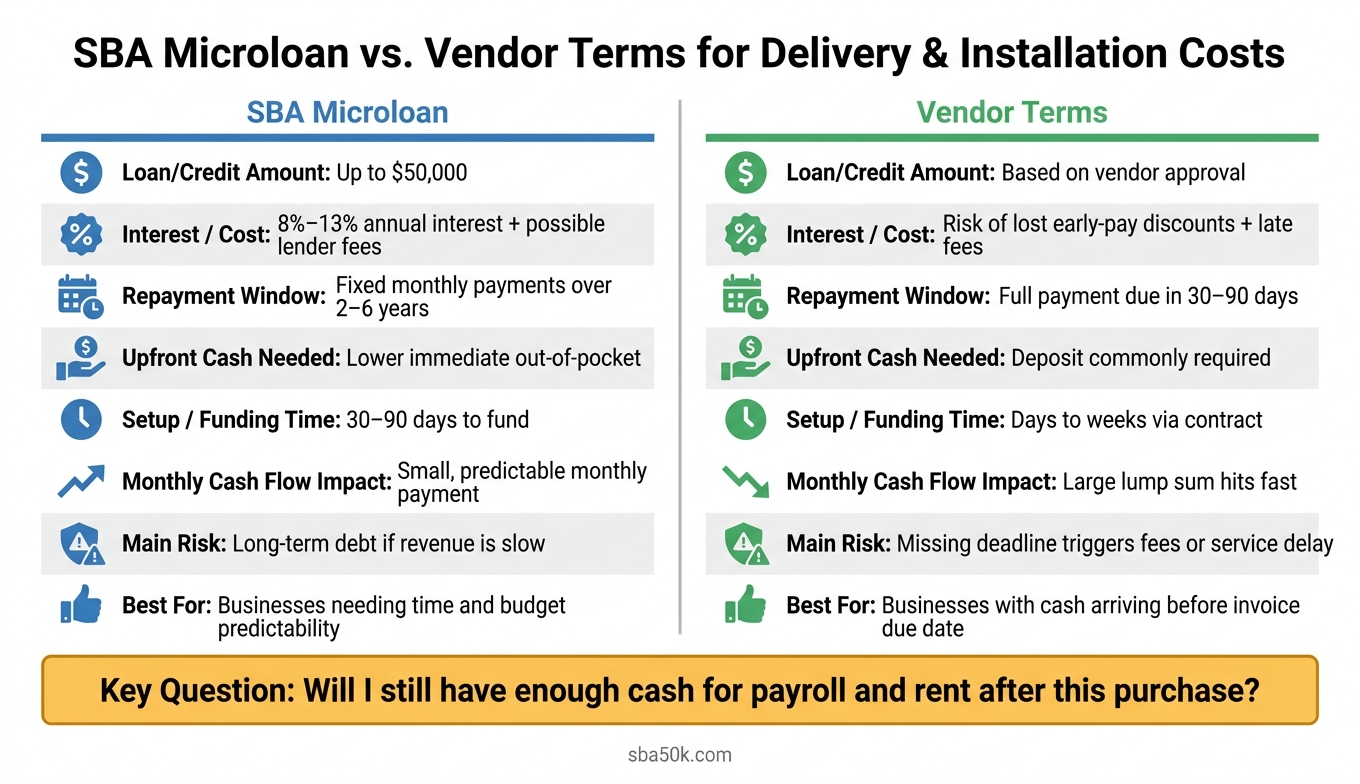
SBA Microloan vs Vendor Terms: Side-by-Side Comparison
Equipment Financing or SBA Loan Which is Better?
sbb-itb-1eb586e
Quick Comparison
| Factor | SBA Microloan | Vendor Terms |
|---|---|---|
| Amount | Up to $50,000 | Based on vendor approval |
| Cost | 8%–13% annual interest, plus possible fees | May look cheaper at first, but discounts can be lost and late fees can apply |
| Payment timing | Fixed monthly payments over 2 to 6 years | Usually full payment in 30–90 days |
| Cash needed now | Often lower upfront | Deposit is common |
| Setup time | Often 30–90 days | Often days to weeks |
| Main risk | Debt lasts longer | Short deadline can strain cash |
My takeaway: if you need time and steady payments, the microloan route usually makes more sense. If you can pay soon and want to avoid a loan, vendor terms can work – but only if the due date lines up with your cash.
That’s the core of this comparison. You might also want to compare SBA microloans and bank loans to see which traditional financing route fits your growth stage.
Using an SBA Microloan for Delivery and Installation Costs
SBA microloans come through intermediary lenders, and those lenders make the final call on how you can use the money. So while freight, delivery, and installation can qualify, they only count if the lender says yes. Setup and installation costs may also be allowed, but check first before you build those line items into your plan.
How SBA Microloans Work for Costs Up to $50,000
Interest rates usually fall between 8% and 13%. That means a microloan can turn delivery and installation costs into monthly payments instead of one large upfront bill. For a small business, that can change the math in a big way, especially when cash is tight at the start of a project.
The catch is timing. From application to funding, the process usually takes 30 to 90 days. If your vendor expects payment on delivery or by a fixed due date, you’ll want to get moving early. And if the lender won’t cover these costs, or that 30- to 90-day window doesn’t fit your schedule, vendor terms may be the faster route.
Approval Factors and Paperwork to Prepare
Borrowers need to provide a detailed business plan, financial statements, and projections. Lenders may also ask for a personal guarantee and, in some cases, collateral.
When you prepare your paperwork, break out each cost clearly, including:
- equipment
- freight
- installation labor
- sales tax
That gives the lender a full view of the invoice and makes review easier. It also shows why microloans take more work upfront. There’s more paperwork, more review, and usually more waiting. All of that affects both speed and cash flow, which is why lender terms and vendor terms are usually the two main options to weigh.
Vendor Payment Terms for Delivery and Installation
If a microloan feels too slow or too rigid, and you haven’t finished applying for the SBA microloan program, vendor terms can help cover the gap between purchase and delivery. They let you take delivery now and pay later, which can leave more cash on hand for day-to-day operations.
But there’s a catch. If you miss a due date, the vendor may pause work, add fees, or damage your business credit.
Common Vendor Term Structures
Vendors usually use three setups:
- A deposit-based arrangement means you pay part of the cost before the vendor puts delivery on the schedule.
- Progress payments tie each payment to a milestone, such as shipment or completed installation.
- Deferred invoice terms, such as Net 30, make the full invoice amount due within 30 days of delivery or acceptance.
Your contract should spell out the dates that drive the deal: the deposit, delivery date, installation milestone, acceptance date, final due date, and any late charges. When those details are clear from the start, cash flow planning gets a lot easier.
The structure matters, but the contract terms matter more.
Contract Terms That Change the Real Cost
The headline payment schedule is only one piece of the bill. The fine print can change what you end up paying.
Before you sign, check whether a delayed payment leads to a late fee, an interest charge, or even a price increase. Warranty timing matters too. If coverage starts at delivery instead of after installation, you can lose part of the warranty before the equipment is even fully in use.
Late payments can also hurt your business credit, which may make future financing harder or more expensive.
SBA Microloan vs. Vendor Terms: Cost, Cash Flow, and Risk
Both options can pay for delivery and installation, but they behave in very different ways once you look past the sticker price. For a small business owner, the big issues are cost, timing, and what happens if cash shows up later than expected.
| Factor | SBA Microloan | Vendor Terms |
|---|---|---|
| Interest or charges | 8%–13% annual interest, plus possible lender fees | Lost early-pay discounts or late fees |
| Upfront cash needed | Lower immediate out-of-pocket; loan can cover the full cost | Deposit often required |
| Repayment window | Up to 6 years in fixed monthly installments | Typically 30–90 days |
| Monthly cash flow impact | Small, predictable payment each month | Large, short-term lump sum that hits fast |
| Approval or setup time | 30–90 days through an intermediary lender | Days to weeks via contract negotiation |
| Main risk | Carrying long-term debt if the project doesn’t generate cash quickly | Missing a short deadline and triggering fees or a service delay |
Total Cost and Payment Timing
The invoice amount doesn’t tell the whole story. With an SBA microloan, you know the borrowing cost upfront and spread it across fixed monthly payments. That makes planning a lot easier, especially if you need room in your budget over the next several months.
Vendor terms can seem cheaper at first glance. But that can change fast. If you miss an early-pay discount, or get hit with late fees, the final cost may end up higher than it first appeared.
Which Option Fits Different Cash-Flow Situations
The better option comes down to your cash timing and how much you can pay today. An SBA microloan makes sense when you need more time than the vendor offers and want a set monthly payment you can build into your budget.
Vendor terms make sense when you expect cash to arrive before the invoice is due and want to avoid debt that lingers for years. The catch is simple: you need to be sure that money will land on time. If it doesn’t, you could face late fees, lose discounts, or deal with a service delay.
Decision Checklist and Final Takeaway
Use the cost, timing, and risk gaps above to figure out which path fits your cash flow.
What To Collect Before Choosing
Before you decide, add up the full landed cost: equipment, freight, installation labor and materials, sales tax, permits, and site prep. Then read the vendor contract line by line. Check the deposit schedule, see when acceptance is triggered, and confirm exactly what the warranty covers.
Next, write down your expected revenue start date from the new equipment. Then calculate how much cash you’ll still have after the down payment or first installment, and after payroll and rent. Put that number next to the vendor’s due date or the loan timeline. If the reserve looks thin, a short vendor deadline can turn into a serious problem.
Key Points to Keep in Mind
An SBA microloan can spread eligible delivery and installation costs into fixed monthly payments, but funding can take 30–90 days. That usually means smaller, steadier monthly payments, which can help protect your cash reserve for day-to-day bills. The downside is simple: funding takes longer, so you need to start well before the payment is due.
If speed matters more than a longer repayment period, vendor terms may still be the better fit – but only if the cash shows up on time. Vendor terms can cut what you need to pay today, yet the repayment window is often short. Price the deal across the full term, including late fees and any discounts you could lose.
One step people often skip: check with your intermediary lender that delivery and installation costs are eligible uses of loan funds before you apply. Lenders want a clear, itemized use-of-funds statement, so having quotes and a cost breakdown ready can help move things along. The simplest rule is this: pick the option that leaves enough cash for payroll and rent while still lining up with the vendor’s payment schedule or the loan funding timeline. SBA50K helps small business owners prepare SBA microloan applications and business plans.
FAQs
Can an SBA microloan cover site prep and permits too?
Yes. An SBA microloan can help pay for site prep, permits, licenses, and other working capital needs.
It usually can’t be used to buy real estate. But it can help cover construction- or renovation-related costs.
If you’re planning to apply, SBA50K can help with funding guidance, business plans, and lender connections.
What if my vendor due date comes before microloan funding?
If your vendor due date hits before your SBA microloan funds, you could run into a cash flow gap. That’s why timing matters. Since approval often takes 30 to 90 days, it helps to apply as early as you can.
It may also help to ask vendors for payment terms that line up better with your expected funding schedule. SBA50K can help with a step-by-step funding guide and custom-written business plans to support a smoother application.
How do I compare the true cost of each option?
Look past the sticker price. What matters is the full cash flow impact.
With an SBA microloan, compare:
- the interest rate
- the repayment term
- the total interest paid
- whether your next 12 months of cash flow can cover the monthly payment
For vendor terms, weigh the upfront cash you need against any deferred-payment fees. Then check the itemized costs for delivery, installation, and training.
SBA50K can help you organize those costs in a business plan and a sources-and-uses schedule.

Leave a Reply