

If you want to start a business with less than $50,000, an SBA microloan can fit. These loans top out at $50,000, average about $13,000, and usually cover inventory, equipment, supplies, payroll, licenses, marketing, and working capital. They do not cover real estate or debt payoff.
If I were sizing up whether a microloan makes sense, I’d keep it simple: the best fit is a business with low startup costs, clear use of funds, and a path to bring in money without a long delay.
The five business types in this article are:
- Mobile food business
- Home-based retail or e-commerce shop
- Residential cleaning company
- Landscaping and lawn-care service
- Small repair business
What they have in common:
- They can often start with modest equipment
- They use funds for day-to-day business costs
- They can stay under the $50,000 cap
- They still need a clear plan for cash flow and repayment and a solid business plan
The short version: if your business needs a storefront build-out, land, or debt refinancing, this loan is probably not the right match. If you need tools, starter inventory, permits, supplies, or cash to cover the first few months, it may be worth a look.
SBA Microloans: A Complete Guide for Startups and Small Businesses
sbb-itb-1eb586e
Quick Comparison
| Business | Main startup need | Cash-flow issue to watch | Likely fit for an SBA microloan |
|---|---|---|---|
| Overview | Program Details | Max Amount | SBA Microloan Program |
| — | — | — | — |
| Mobile food | Trailer/cart, kitchen gear, permits | Slow early sales, fuel, food costs | Yes |
| Home-based retail/e-commerce | Inventory, website, marketing | Stock tying up cash | Yes |
| Residential cleaning | Supplies, equipment, licenses | Time to build repeat clients | Yes |
| Landscaping/lawn care | Mower, trimmer, trailer | Seasonal slow periods | Yes |
| Small repair | Tools, diagnostic gear, parts | Paying for parts before customers pay | Yes |
I’d read this article as a simple filter: Does my business need a small amount of money for items the SBA allows, and can I show how you’ll use the funds? If the answer is yes, these five business models are among the best places to start.
What an SBA Microloan Can and Cannot Pay For
SBA microloans make the most sense when startup costs are fairly low and the money goes toward everyday business expenses. Nonprofit intermediary lenders handle these loans, and they set the exact terms, rules for who qualifies, collateral needs, and paperwork. Interest rates usually fall between 8% and 13%, and repayment can stretch up to six years in this SBA Microloan application guide.
That setup means some businesses are a much better match than others.
In most cases, microloan funds can be used for working capital, inventory, supplies, furniture, fixtures, machinery, equipment, licenses, marketing, branding, and payroll. On the flip side, ineligible uses include buying real estate, refinancing or paying off current debt, and repaying withholding taxes.
Here’s the plain-English version:
| Category | Eligible | Not Eligible |
|---|---|---|
| Operations | Working capital, payroll, supplies | Refinancing existing debt, repaying withholding taxes |
| Physical assets | Inventory, equipment, furniture, fixtures | Real estate purchases |
| Growth | Marketing, licenses, branding | – |
How to Know If Your Business Is a Good Microloan Match
Not every startup fits a microloan. The best fit is usually a business that can start lean and bring in revenue without a long wait. The five business types below line up with those limits in different ways.
The average microloan is about $13,000, far below the $50,000 cap. So this kind of funding works best for modest startup budgets, not big build-outs or heavy equipment purchases.
A good fit usually has clear one-time startup costs and modest monthly expenses. One-time costs can include equipment, furniture, business licenses, or opening inventory. Monthly costs often cover supplies, payroll, and marketing. Lenders want to see where each dollar will go, plain and simple.
Microloan lenders also often work with founders who have limited credit or who need training and technical help. That matters because a microloan isn’t just about the money. In many cases, it’s also about showing that you have a focused plan and a business model that can get off the ground without burning through cash.
Here’s how those standards apply to five real startup models.
1. Mobile Food Business
A mobile food business sells food from a cart, food trailer, or small truck instead of a fixed storefront. That makes it a good fit for a microloan because startup costs stay centered on equipment and early operating expenses. In plain English: you’re not taking on the cost of a full retail space right out of the gate.
This setup lines up well with microloan funding because the money can go toward cooking equipment, refrigeration, inventory, supplies, permits, and early payroll. That’s the kind of budget microloans are often meant to handle.
A cart or food trailer is also a contained, equipment-based launch. Costs are easier to map out, more predictable, and closely tied to the items the business needs to open.
Working capital can also help cover early cash gaps, like fuel, ingredients, and slower first weeks while sales build. The same lean startup logic carries into the next business type.
2. Home-Based Retail or E-Commerce Shop
A home-based retail or e-commerce shop lets you sell products online or from home without paying for a storefront or commercial lease. That lower overhead is a big reason this model can work on a microloan budget.
The loan can go toward the main startup costs for this setup: inventory, supplies, materials, equipment, business licenses, marketing, and working capital. In plain terms, the money stays focused on the things that help you open the business and start selling.
Because fixed costs are low and starting inventory can stay small, early cash flow is often easier to handle. A smaller loan can also make repayment less stressful while sales are still picking up. The same lean setup can work well for service businesses that only need a small amount of equipment.
3. Residential Cleaning Company
A residential cleaning company is a strong fit for a microloan because startup costs are relatively low, and the funds can go toward the basics you need to get moving. That includes equipment, supplies, licenses, and early working capital. Items like vacuums, mops, steamers, cleaning solutions, and personal protective equipment all qualify as microloan expenses. The loan can also help pay for business licenses, marketing and branding, and early payroll.
The tough part usually isn’t launching the business. It’s paying the bills before you build a steady base of repeat clients. That gap can sneak up on new owners. Since recurring customers often take time to line up, it makes sense to set aside part of the loan for operating expenses while your schedule fills up.
This lean cost setup makes residential cleaning a close match for landscaping, which also tends to rely on modest equipment purchases and working capital.
4. Landscaping and Lawn-Care Service
Like residential cleaning, a landscaping business can get off the ground without a huge setup cost. You don’t need a full fleet on day one. In many cases, a mower, trimmer, and trailer are enough to start serving clients and bringing in cash.
That’s why landscaping and lawn care are a good match for startup small business loan funding. Startup costs tend to center on equipment, and those costs are usually within reach. The average SBA microloan is about $13,000, which can cover starter gear like a mower, trimmer, and trailer.
Microloan funds can also pay for fuel, hand tools, and early operating cash. That gives a new lawn-care business room to open, book jobs, and keep moving without a big upfront spend.
One thing sets landscaping apart from cleaning: seasonality. Lawn-care income often drops during off-season periods, so it makes sense to hold back part of the loan for slower months. Lenders want to see that your cash flow can still handle repayment even when business slows down.
That same lean setup is also why small repair businesses tend to work well with microloans.
5. Small Repair Business
A small repair business is another solid fit for an SBA microloan. Like the businesses above, you can start lean with modest equipment and low overhead.
Most startup costs usually come down to tools, parts, and cash to keep things moving. Microloan funds can cover specialized tools and diagnostic equipment, an initial inventory of replacement parts, business licenses, marketing, and working capital to help cover early operating expenses.
Those are the main costs at the start. And in this kind of business, working capital matters just as much as the tools. You may need to buy parts upfront before the customer pays you, so having cash on hand can save you a lot of stress.
The SBA microloan vs bank loan comparison shows that microloan sizes line up well with many repair startups. For many new repair businesses, it’s enough to buy core tools and starter parts without pushing the budget too far.
Keeping the business mobile or running with low overhead can make that budget go a lot further. It also helps to set aside part of the loan for working capital, especially when repair jobs require you to pay for parts before money comes in.
Business Comparison Table
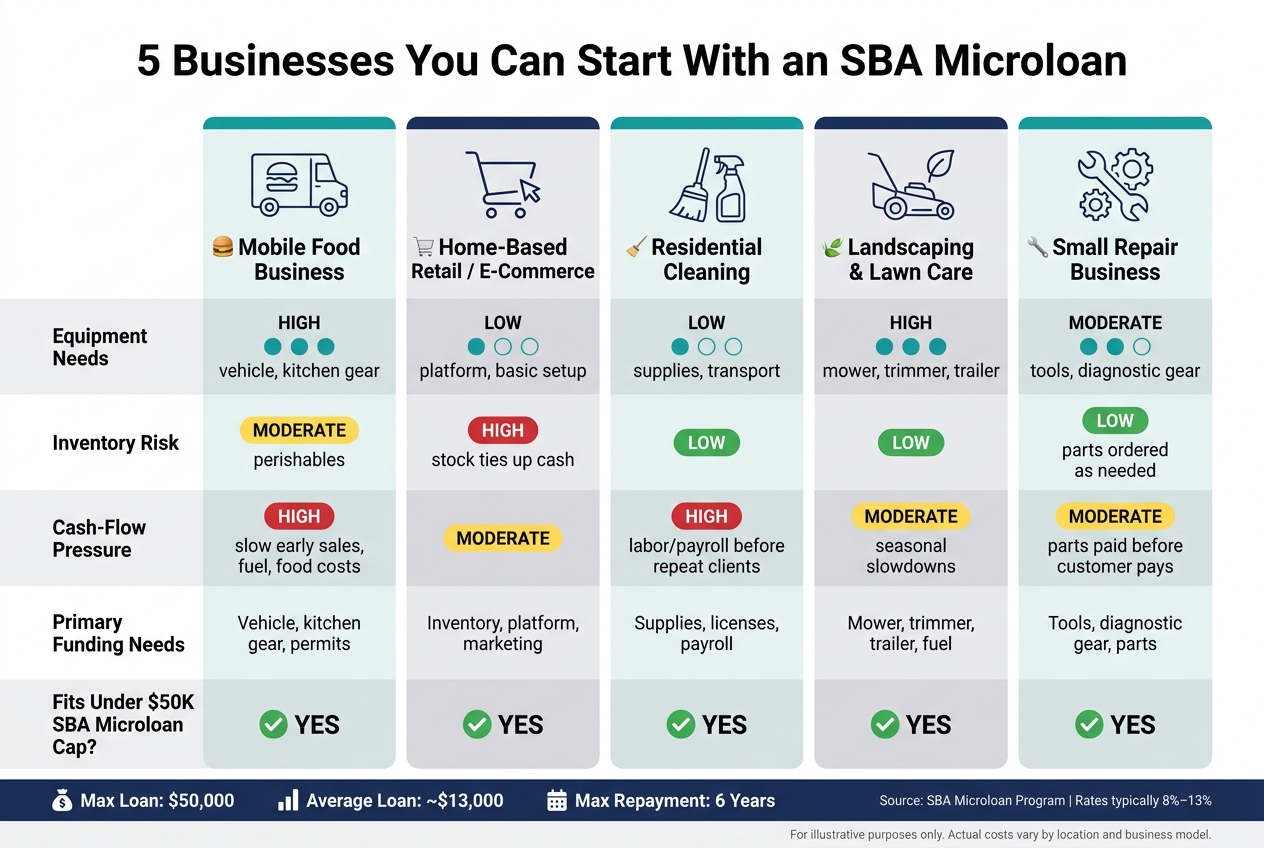
5 Businesses to Start with an SBA Microloan: Side-by-Side Comparison
These businesses use microloan funds in different ways. Some need money for gear first. Others need inventory or extra cash to keep day-to-day operations moving. The table below puts those tradeoffs side by side.
| Business Type | Primary Funding Needs | Equipment Needs | Inventory Risk | Cash-Flow Pressure | Fits Under $50k? |
|---|---|---|---|---|---|
| Mobile Food | Vehicle, kitchen gear, permits | High | Moderate (perishables) | High | Yes, especially with a used trailer |
| Home-Based Retail / E-Commerce Shop | Initial stock, platform, marketing | Low | High | Moderate | Yes |
| Residential Cleaning | Supplies, transport, insurance | Low | Low | High (labor/payroll) | Yes |
| Landscaping | Mowers, blower, truck/trailer | High | Low | Moderate (seasonal) | Yes |
| Small Repair | Specialized tools, diagnostic gear | Moderate | Low (parts as needed) | Moderate | Yes |
Use this alongside a written business plan, not a cost estimate or approval guarantee. Actual costs vary by location, business model, and individual circumstances.
A quick pattern stands out. Cleaning and home-based retail have the lowest equipment needs, so more of the loan can go toward marketing or working capital. Landscaping and mobile food need more money upfront for equipment, but that’s exactly the kind of purchase microloans can help cover.
Inventory risk matters too. E-commerce and mobile food can tie up more cash because money gets locked into stock or perishables. Service businesses like cleaning and repair usually face less inventory risk than retail or food businesses.
So don’t look at loan size alone. A business can seem affordable on paper and still put pressure on cash flow if income builds slowly. Use the table to compare risk, not just startup cost, then line up your budget with the documents you’ll need for the application.
How to Prepare Before You Apply
Once you know which business model fits your budget, the next step is simple: prove the numbers. Before you reach out to an intermediary lender, get your paperwork in order. Lenders want to see that you’ve thought the business through, not just that you need money.
Use the business comparison table above to line up your startup budget with the right loan request. The most important item is a SBA microloan business plan. It should explain your background, value proposition, market, competition, marketing, and management plan.
You’ll also want to include:
- A startup budget that shows what you need to buy and what each item costs
- A cash-flow forecast for the next three to five years
- A use-of-proceeds schedule that shows exactly how you’ll spend the loan
Lenders also ask for personal financial information. That usually includes tax returns, 24 months of bank statements, and a credit report. Add a resume that shows relevant experience. If you’ve done this kind of work before, say so. That kind of detail can help.
Check your credit report early. If there are errors or problem spots, fix them before a lender reviews your file. If your credit history is thin, be ready to offer collateral or name a co-signer, since some intermediaries may ask for extra documents to lower their risk.
SBA50K has tools built for this stage. Its Small Business Funding Guide walks you through the process step by step, and its lender-preparation checklist helps you organize the documents intermediaries often request.
With your documents in order, you can move into the application process with a clearer and stronger request.
Conclusion
These businesses work because they stay lean and match startup budgets that fit a microloan. Strong applicants spell out exactly how each dollar will be used for [startup costs SBA microloans cover](https://www.sba50k.com/sba-microloans-costs-covered-women-startups/) and how the business can handle repayment over the loan term. Hands-on experience can also help your application, especially in cleaning, landscaping, or repair.
Pick the model you can start at low cost, explain in plain terms, and back up with steady cash flow. When your budget, experience, and loan plan line up, you’re in a good spot to apply.
FAQs
How much should I ask for?
Ask for an amount that lines up with your documented startup costs and projected cash flow needs, not just the $50,000 cap.
Start by adding your one-time startup costs and 3 to 6 months of working capital. Then subtract your personal equity and any other committed funding.
Your final number should be backed by:
- A business plan
- A line-item budget
- 12-month cash flow projections
This way, you’re not picking a number out of thin air. You’re showing exactly how much money you need, where it will go, and how it supports the business in its first year.
What credit score do I need?
There’s no single minimum credit score for an SBA microloan. In most cases, lenders care more about whether you can repay the loan than whether your credit file looks perfect.
That said, many intermediaries work with applicants in the 550 to 675 range. If your credit is poor or you don’t have much credit history, you may still have a shot if you bring a strong business plan, realistic financial projections, and clear documentation of your startup costs.
Some lenders may also ask for a co-signer or collateral.
What documents should I prepare?
To apply for an SBA microloan, gather documents that show two things: your business can work and you can pay the loan back.
That usually includes a business plan, a use-of-funds statement, a startup cost worksheet, a cash flow forecast, tax returns, bank statements, a profit-and-loss statement, a balance sheet, a debt schedule, ID, business formation papers, a resume, a personal financial statement, and support materials like vendor quotes, signed leases, contracts, or business licenses.
Leave a Reply