

Yes – startups with few or no assets may qualify for an SBA microloan of up to $50,000. Before applying, check an SBA-approved nonprofit lender’s collateral rules and prepare a clear plan showing how the business will repay the loan.
Limited assets don’t automatically mean denial. Lenders also review credit, cash flow, business plans, and personal guarantees. Equipment or inventory bought with the loan may count as collateral if the lender accepts it.
- Eligible uses: Working capital, inventory, supplies, and equipment – not real estate or existing debt.
- Application needs: Documented startup costs, financial records, and monthly cash-flow projections.
- Approval limits: Each lender sets its requirements. Application support, including help from SBA50K, does not guarantee funding.
The first step is to find an authorized intermediary that serves the business’s area and accepts startups.
What Do Lenders Review Besides Collateral?
When assets are limited, lenders put more weight on your ability to repay, your credit, and your plan for the business.
Will Cash Flow Cover Loan Payments?
Prepare a monthly cash-flow forecast that shows collections, operating expenses, existing debt payments, the proposed loan payment, and when you expect to break even.
Support revenue estimates with documented pricing, demand, capacity, launch timing, and payment terms. Keep confirmed orders separate from estimated sales, and spell out which expenses you can cut if sales are slow. If cash flow looks weak, lenders will next review credit and personal guarantees.
How Do Credit and Personal Guarantees Affect Approval?
Lenders check payment history, balances, credit utilization, collections, bankruptcies, and other negative marks. Poor or limited credit doesn’t automatically rule you out, but approval standards vary.
Owners with at least a 20% stake generally must sign a personal guarantee. That means they’re personally liable if the business defaults.
How Do Business Plans, Experience, and Owner Funds Help?
Your business plan should tie together your business description, target customers, pricing, marketing, startup costs, detailed use of funds, and monthly financial projections.
Explain whether the loan will pay for equipment, supplies, working capital, leasehold improvements, or another eligible purpose. Include relevant management experience, skills, and required licenses to show you can put the plan into action.
Back up owner contributions with bank statements, receipts, or invoices. Verified startup funds can lower the amount you need to borrow and show your commitment.
sbb-itb-1eb586e
How to Apply With Few Assets
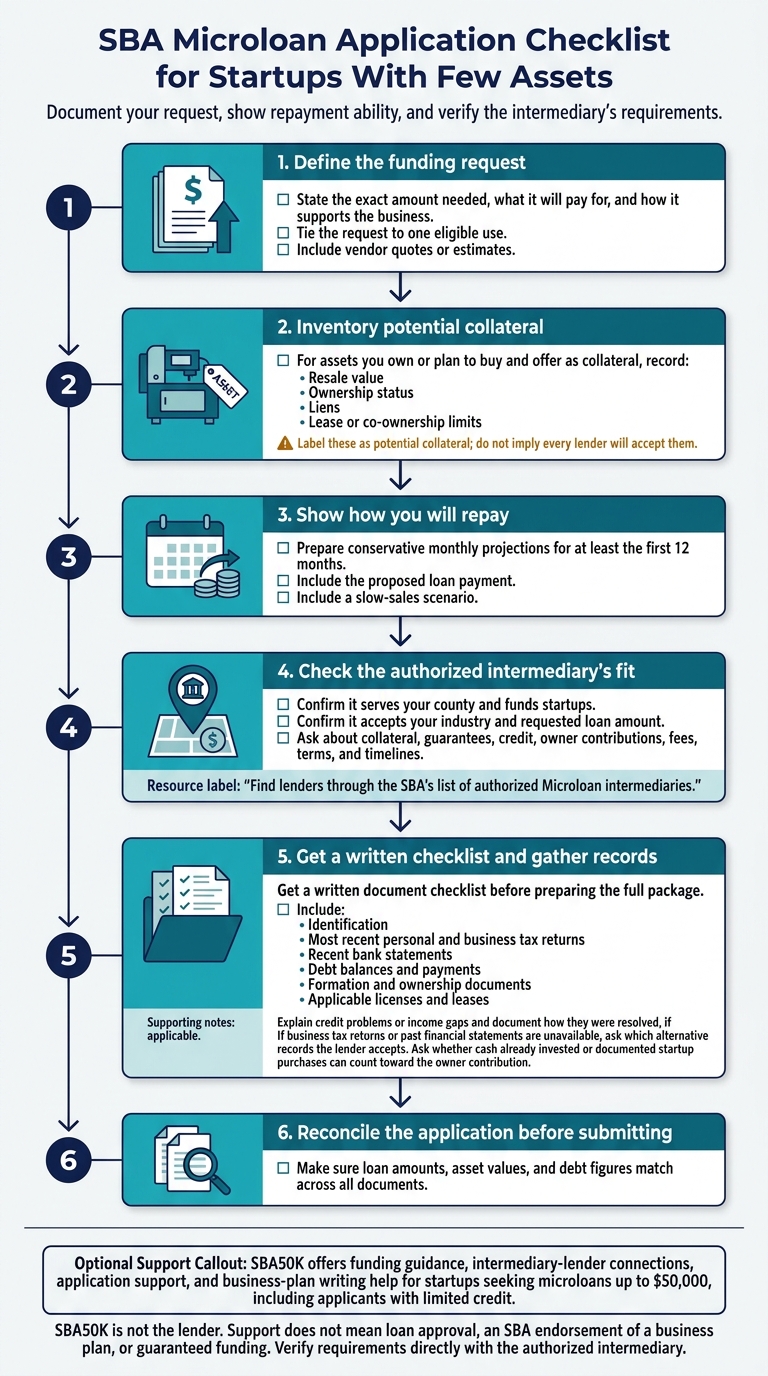
SBA Microloan Application Checklist for Startups With Few Assets
Document Your Loan Amount, Assets, and Repayment Plan
If your startup has few assets, show how you’ll repay the loan and document any collateral you can offer. Write a short funding summary with the exact amount you need, what it will pay for, and how it will support your business. Tie the request to one eligible use, and include vendor quotes or estimates.
For each asset you own or plan to buy and offer as collateral, list its resale value, ownership status, liens, and any lease or co-ownership limits. Prepare conservative monthly projections for at least the first 12 months. Include the proposed loan payment and a scenario showing how you’d handle slow sales.
Gather Records and Check Lender Requirements
With your loan purpose and collateral outlined, check the intermediary’s requirements. Start with the SBA’s list of authorized Microloan intermediaries. Confirm that the lender serves your county, funds startups, and accepts your industry and requested loan amount. Ask about its rules for collateral, guarantees, credit, owner contributions, fees, terms, and timelines.
Gather your identification, most recent personal and business tax returns, recent bank statements, debt balances and payments, formation and ownership documents, and any applicable licenses and leases. Explain credit problems or income gaps and document how you resolved them, if applicable. Don’t have business tax returns or past financial statements yet? Ask what other records the lender accepts as proof of repayment ability and usable assets.
Get a written document checklist before preparing the full package. Ask whether cash you’ve already invested or documented startup purchases can count toward your owner contribution. Before submitting, check that loan amounts, asset values, and debt figures match across all documents. That saves the lender from having to sort out conflicting numbers.
How SBA50K Helps With Application Preparation
SBA50K offers step-by-step funding guidance, intermediary-lender connections, application support, and business-plan writing help for startups seeking microloans up to $50,000, including applicants with limited credit.
These services help you prepare your application. SBA50K is not the lender, and its support does not mean loan approval, an SBA endorsement of a business plan, or guaranteed funding. Verify requirements directly with the authorized intermediary.
When Can Limited Assets Lead to Denial?
Limited assets can lead to denial if the lender cannot accept the collateral you have available.
An unclear or prohibited use of funds can also lead to denial, especially if the request involves real estate or refinancing existing debt. Here’s what lenders look for:
| What helps approval | What can cause denial |
|---|---|
| Disclosed collateral that meets lender policy, including eligible financed assets | Not enough acceptable collateral |
| Willingness and ability to sign a required personal guarantee | Refusal or inability to sign the required personal guarantee |
| A specific funding request for eligible expenses | An unclear or prohibited use of funds |
If you’re declined, ask the SBA microloan intermediary for the exact reason, rather than a general reference to limited assets. Ask whether a smaller request, more supporting records, or an acceptable financed asset would address the issue.
Conclusion: Check Requirements Before Applying
Having few assets doesn’t automatically rule out an SBA microloan of up to $50,000. Approval still depends on the lender’s collateral rules and your ability to repay.
Match your application to the lender’s exact requirements, or compare SBA microloans and bank loans to see which fits your needs. Base your request on documented startup costs, and check the intermediary’s rules for collateral, personal guarantees, and owner investment before applying.
Wait for written approval before committing any money. Don’t pay nonrefundable fees or commit to purchases until the lender confirms the loan in writing.
FAQs
Can I qualify for an SBA microloan before earning revenue?
You can qualify for an SBA microloan before your business earns revenue. With no past sales to review, lenders look at your ability to repay through other resources, such as savings or outside income. They also check your credit history.
You’ll need a solid business plan, realistic financial projections covering 12 to 24 months, and a detailed budget that explains how you’ll use the loan funds to bring in revenue.
Does a personal guarantee put my personal assets at risk?
Yes. A personal guarantee is a legal promise to repay a loan if your business can’t. If the business defaults, lenders may go after your personal income, money in your bank accounts, and other non-exempt property. That can include your home if the loan is tied to it.
Lenders often require guarantees from owners with 20% or more equity. This gives lenders a backup source of repayment when the business has limited assets or financial history.
How do lenders value equipment offered as collateral?
Lenders use liquidation value – what equipment could realistically sell for in a short time – not its original purchase price. They account for depreciation and how easily the equipment can be resold, so valuations often fall well below what the borrower paid.
New equipment may be valued at up to 75% of its cost, while used equipment often counts for about 50% of book value. Old, outdated, or highly specialized equipment typically gets a lower valuation.
Leave a Reply