
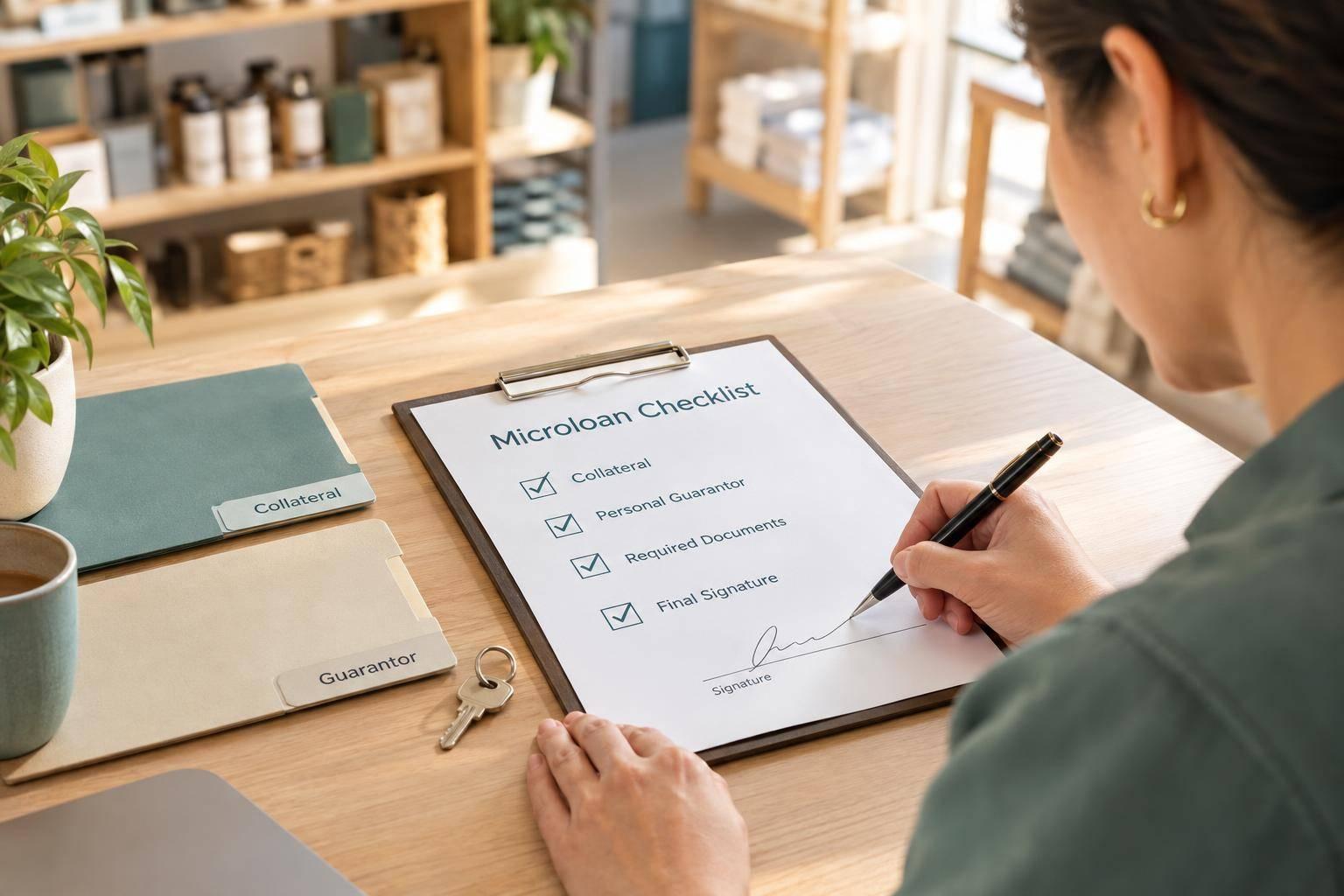
SBA microloans of up to $50,000 usually require collateral and a personal guarantee – even for women-owned businesses. Before applying, ask the nonprofit lender which assets it accepts, who must guarantee repayment, and how it handles limited collateral.
Women follow the same lending rules as other applicants. Each intermediary sets its own credit standards and requirements; the SBA does not set a universal minimum credit score for Microloan applicants. Repayment terms can extend up to seven years.
The key distinction: collateral is pledged property; a personal guarantee is a promise to repay. Applicants should prepare asset and ownership records, disclose existing liens, and check the final loan papers for payment terms, default rules, and conditions for releasing liens and guarantees. An LLC does not remove an owner’s obligation under a signed personal guarantee.
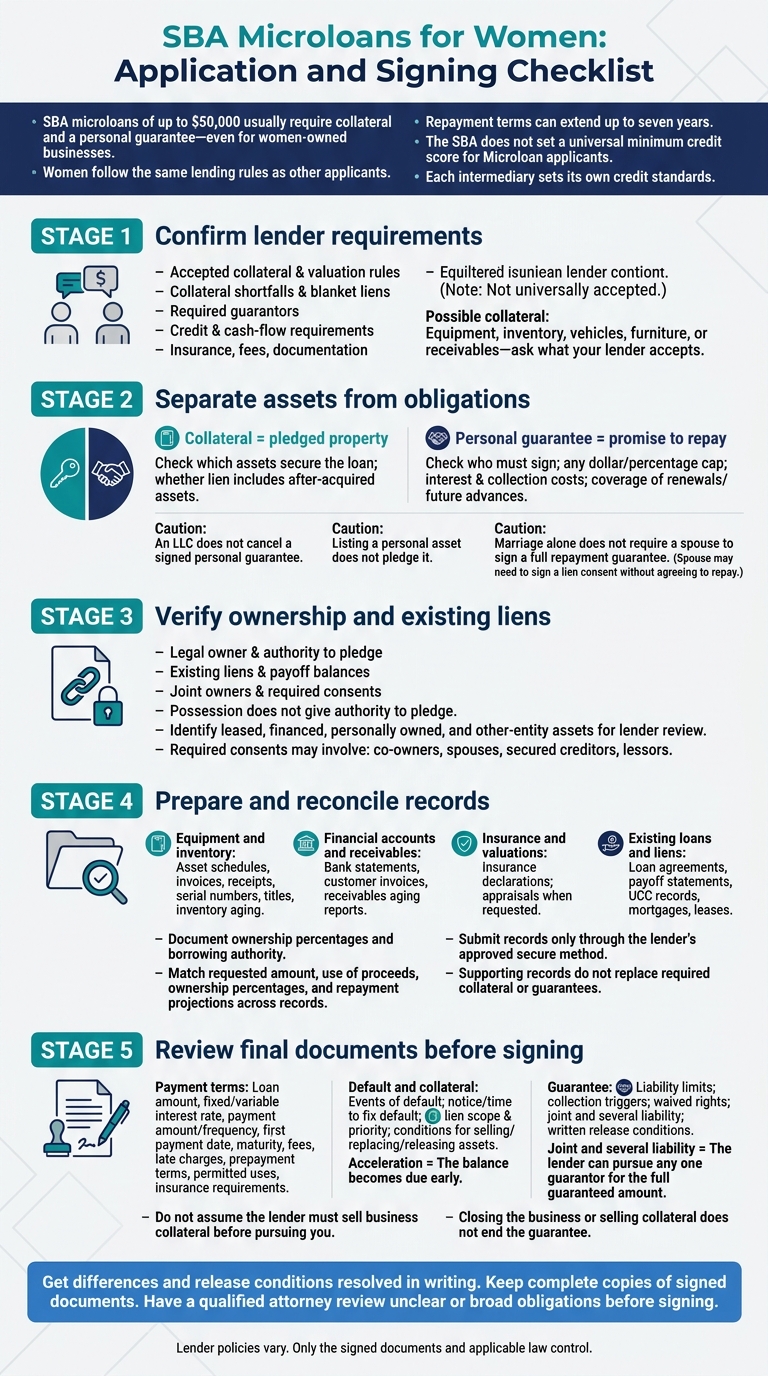
SBA Microloans for Women: Application and Signing Checklist
Collateral and Guarantee Rules for Women Applicants
Once you understand the difference between collateral and personal guarantees, check how each applies to your loan. Women applicants follow the same rules as other borrowers. The details depend on the lender’s policies and loan terms.
Assets a Microlender May Accept
Ask which assets the microlender accepts – equipment, inventory, vehicles, furniture, or receivables – and how it values them. Also, check whether it allows a collateral shortfall.
A microloan of $50,000 or less is not automatically unsecured. Confirm the intermediary’s current policy, including whether it requires a blanket lien.
Who Must Sign a Personal Guarantee
Ask the lender to name every required guarantor based on business ownership and control. Check whether each guarantee is limited or unlimited and whether it includes fees and collection costs. If several people must guarantee the loan, look for joint and several liability: this lets the lender pursue any one guarantor for the full amount. An LLC does not cancel a signed personal guarantee.
Marriage alone does not require a spouse to sign a full repayment guarantee. A spouse may need to sign a lien consent without agreeing to repay the loan. Ask what each signature covers, and get legal advice if a document’s scope is unclear.
Applying With Limited Collateral or Poor Credit
With limited collateral, lenders place more weight on your ability to repay and your guarantors’ backing. Before applying, request the lender’s exact credit, collateral, guarantor, documentation, and cash-flow rules. The SBA does not set a universal minimum credit score for Microloan applicants. Each intermediary sets its own standards.
Back up your request with a realistic business plan, bank statements, sales records, signed contracts, and a use-of-funds schedule linking purchases to repayment cash flow. Accurately disclose past credit issues and existing liens. These records help the lender assess your application, but they do not replace required collateral or guarantees.
sbb-itb-1eb586e
Asset and Ownership Records to Prepare
Once you identify acceptable collateral, gather records that prove ownership and value. Before you start, ask the intermediary for its current checklist and the reporting period each document must cover. Submit records only through its approved secure method.
Business and Personal Asset Records
| Document category | Typical records | Lender purpose |
|---|---|---|
| Equipment and inventory | Asset schedules, purchase invoices, receipts, serial numbers, titles, inventory aging | Verify ownership, cost, condition, and resale value |
| Financial accounts and receivables | Bank statements, customer invoices, receivables aging reports | Assess cash flow, liquidity, and collectibility |
| Insurance and valuations | Insurance declarations; appraisals when requested | Check coverage and support current value |
| Existing loans and liens | Loan agreements, payoff statements, UCC records, mortgages, leases | Identify prior claims, balances, and restrictions |
Personal records may include a personal financial statement, bank or investment account statements, real estate ownership details, debts, and other guarantees. Listing a personal asset does not pledge it.
Proof of Ownership and Authority to Pledge Assets
With your asset list ready, document who legally controls each item. Gather formation documents, operating or partnership agreements, ownership percentages, membership or stock records, and any required borrowing resolution. Add applicable DBA registration, identification, and requested tax information. These records show who owns each asset and who has the legal authority to pledge it.
Possession does not give authority to pledge. List the lessor for leased assets. For financed assets, provide the lender, payoff balance, and title records. Identify every joint owner and get any required consent. Assets owned personally or by another entity need separate review – even when the business uses them.
Keep Your Application Records Consistent
Check every record against your SBA micro loan application before submitting it. Create an asset schedule with each asset’s description, location, owner, purchase date, original cost, estimated current value, existing liens and balances, and supporting document file names. Reconcile the schedule with your application, balance sheet, and tax filings. Explain any legitimate ownership changes in writing.
Review Loan Terms Before Signing
Use your asset schedule and ownership records to check that the final loan papers match what you disclosed. Compare the promissory note and loan agreement with the lender’s offer. Check the loan amount, fixed or variable interest rate, payment amount and frequency, first payment date, maturity date, fees, late charges, prepayment terms, permitted uses, insurance requirements, and events of default.
SBA Microloan terms are set by the intermediary, with a maximum repayment term of seven years. Get any differences resolved in writing before you sign.
Read the default provisions closely. Can transferring assets without permission, letting insurance lapse, or defaulting on another debt put this loan in default? Check what notice you’re entitled to, how long you have to fix a default, and whether the lender can accelerate the loan, making the balance due early.
Once the payment terms match the offer, turn to the collateral documents.
Check Which Assets Secure the Loan
Read the collateral schedule, security agreement, and any UCC financing statement or other lien document together. Check whether the lien covers specific assets or broader business property, including after-acquired assets.
The security agreement controls the lien; the UCC filing gives public notice. Ask the lender to explain existing lien priority in writing, along with the conditions for selling, replacing, or releasing pledged assets. You may need the lender’s consent to sell. If the proceeds don’t cover the debt, the remaining balance may still be collectible.
Review Your Personal Guarantee
After checking the collateral, read the personal guarantee separately. Confirm any dollar or percentage cap, whether it includes interest and collection costs, and whether it covers renewals or future advances.
With joint and several liability, the lender can pursue one guarantor for the full guaranteed amount. Check what allows the lender to begin collection and which rights you waive. Don’t assume the lender must sell business collateral before pursuing you.
Get any release conditions in writing. Closing the business or selling collateral does not end the guarantee. Only the signed documents and applicable law control. Before signing, have a qualified attorney review unclear or unlimited liability, personal real estate collateral, shared ownership, broad waivers, or obligations involving multiple guarantors.
Conclusion: Application and Signing Checklist
Before you sign, check that the lender’s collateral and guarantee terms match your records.
Use this checklist to review the details:
- Check lender requirements: Confirm the collateral list, required guarantors, insurance requirements, valuation rules, fees, and how the lender handles insufficient collateral.
- Separate assets from obligations: Keep pledged business assets separate from personal guarantee obligations.
- Verify ownership and liens: Check ownership, lien status, and authority to pledge each asset. Obtain any required consent from co-owners, spouses, secured creditors, or lessors.
- Match your records: Make sure the requested amount, use of proceeds, top uses for the funds, ownership percentages, and repayment projections agree across the application and business plan.
- Review the final terms: Before signing, review default, acceleration, cure, lien-release, and guarantee-release terms. Keep complete copies of all signed documents.
FAQs
Can I limit my personal guarantee?
It depends on the intermediary lender, which sets the loan terms. Many guarantees are unlimited, but some may be negotiable. Before signing, ask whether your guarantee can be capped at a set dollar amount or percentage, or limited in other ways.
Get any limits in writing. Consider having an attorney review the agreement so you understand what you’re personally responsible for repaying before putting your personal assets at risk.
How does an existing lien affect my eligibility?
An existing lien won’t automatically disqualify you, but it can have a major effect on how lenders review your application. List all existing liens in your asset schedule so lenders can assess available equity and check whether an asset is already pledged to another creditor.
Provide accurate ownership and lien records. Missing or unclear details can leave lenders with concerns about your application.
What happens to my guarantee if I sell my business?
A personal guarantee is your legal promise to repay a debt yourself. It generally stays in effect until the loan is paid off. Selling your business does not automatically release you from that promise.
Check your agreement for terms about restructuring or refinancing. Before selling, ask your lender whether the guarantee can be transferred, satisfied, or released when ownership changes.
Leave a Reply