

If you need business funding now, an SBA microloan is usually the better bet. If you want to avoid debt, a grant may be worth the wait.
Here’s the short answer: microloans must be repaid; grants do not. That one point affects everything else, including who can apply, how long funding takes, how much money you may get, and what you can spend it on.
If I were choosing between the two, I’d look at these five points first:
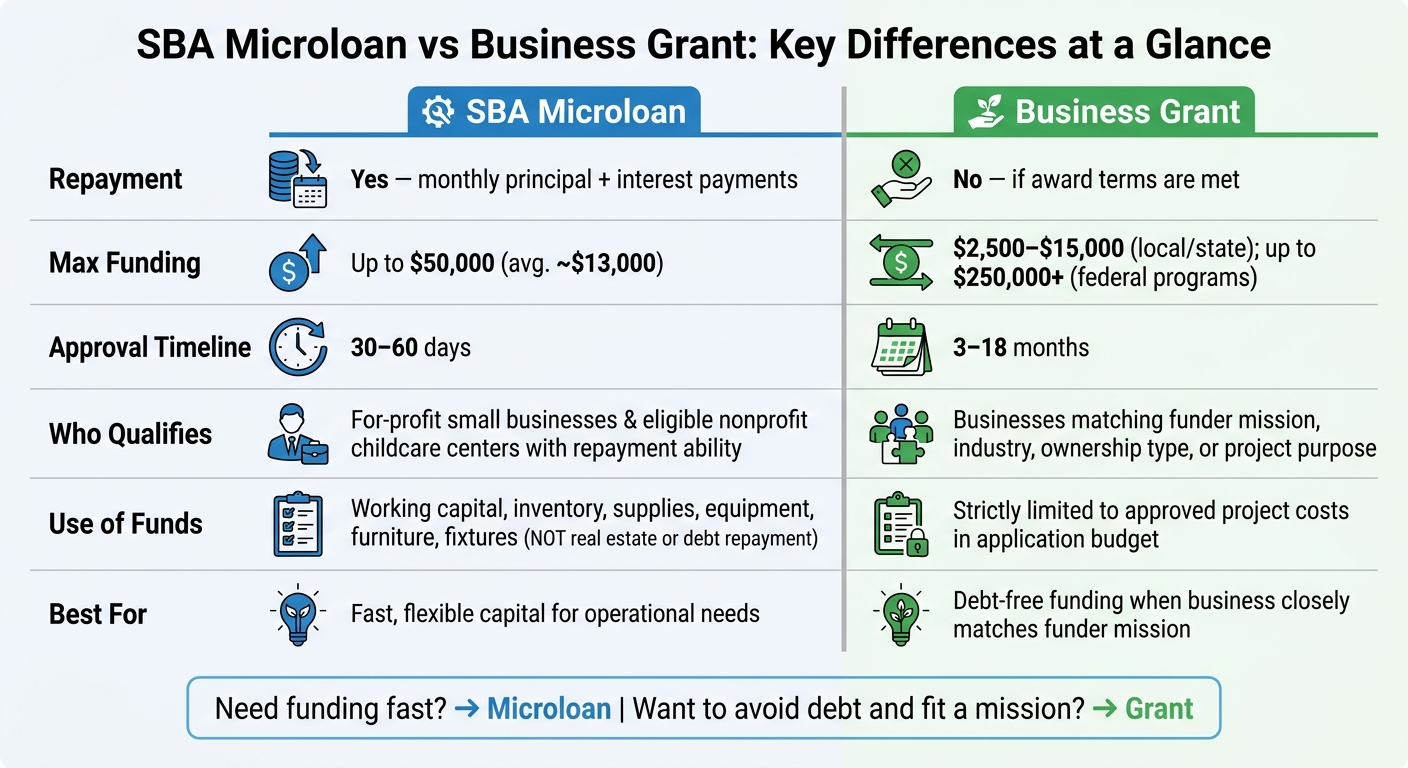
- Repayment: SBA microloans come with monthly payments and interest; grants usually do not.
- Funding amount: SBA microloans go up to $50,000. Grants vary a lot, from small local awards like $2,500 to $15,000 to much larger program-based awards.
- Timing: Microloans often fund in about 30 to 60 days. Grants may take 3 to 18 months.
- Eligibility: Microloans are often open to many for-profit small businesses and some nonprofit childcare centers. Grants are usually limited to a mission, group, industry, or project.
- Use of funds: Microloans can cover things like inventory, equipment, supplies, and working capital. Grants often have tighter spending rules and may only pay for approved project costs.
A simple example: if I run a bakery and need $30,000 for ovens and stock, a microloan may fit better if I can repay it. If I find a grant that fits my business type and purpose, I may avoid debt, but I may also face a longer timeline and more competition.
SBA Microloan vs Grant: Side-by-Side Comparison
Beyond Grants: Unlock Your Business Potential with SBA Microloans
sbb-itb-1eb586e
Quick Comparison
| Factor | SBA Microloan | Grant |
|---|---|---|
| Repayment | Yes | No, if terms are met |
| Max/common funding | Up to $50,000; average about $13,000 | Varies a lot |
| Approval timeline | About 30–60 days | About 3–18 months |
| Best for | Working capital, inventory, equipment loan for startup business, short-term funding needs | Project-based funding, debt-free support |
| Main tradeoff | You take on debt | Harder to win and often slower |
Bottom line: if speed, flexible use, and access matter most, I’d look at an SBA microloan first. If no repayment matters most and my business fits a grant’s rules, I’d apply for grants too.
SBA Microloan vs Grant: The Core Differences
The big split is simple: SBA microloans must be repaid, while grants do not. From there, the day-to-day differences come down to repayment, eligibility, timing, and how you can spend the money.
SBA microloans are open to for-profit small businesses and certain nonprofit childcare centers that can show they can repay what they borrow. Grants usually work the other way around. They tend to be limited to businesses that fit a program’s mission, industry, ownership type, or project goal, such as R&D, innovation, underserved communities, or women-owned businesses.
Put plainly, microloans cast a broader net. Grants are narrower and tied to a specific purpose. The SBA also does not offer general-purpose grants for most for-profit small businesses. For those businesses, SBA help mainly comes through loan programs like the microloan. That gap shows up most clearly in three places: who qualifies, whether repayment is required, and what the funds can be used for.
Side-by-Side Comparison Table
| Factor | SBA Microloan | Grant |
|---|---|---|
| Repayment | Monthly payments of principal plus interest; terms up to about 6 years | No repayment if award terms are met; misuse can trigger repayment |
| Who qualifies | For-profit small businesses and eligible nonprofit childcare centers; lenders review credit and repayment capacity | Businesses or organizations that match the program’s mission, industry, ownership type, or project purpose |
| Typical funding range | Up to $50,000 | Varies widely; many smaller grants are in the $5,000–$25,000 range, while some federal programs can award $50,000 to over $250,000 in Phase I |
| Approval speed | Rolling applications; decisions often take weeks | Fixed deadlines; decisions often take months |
| Use restrictions | Working capital, inventory, supplies, and equipment; not for real estate or debt repayment | Strictly limited to approved project activities and budget line items |
What the Table Means for Your Business Decision
A microloan usually makes more sense when you need flexible capital and want a faster route to funding. A grant makes sense only if your business lines up closely with the program’s rules.
The next section breaks down who can qualify, what repayment looks like, and where each funding option can be used.
Eligibility, Repayment, and Allowed Uses
Who Can Qualify for an SBA Microloan vs. a Grant
Repayment is only one part of the split. Eligibility, funding size, and how you can spend the money also shape the decision.
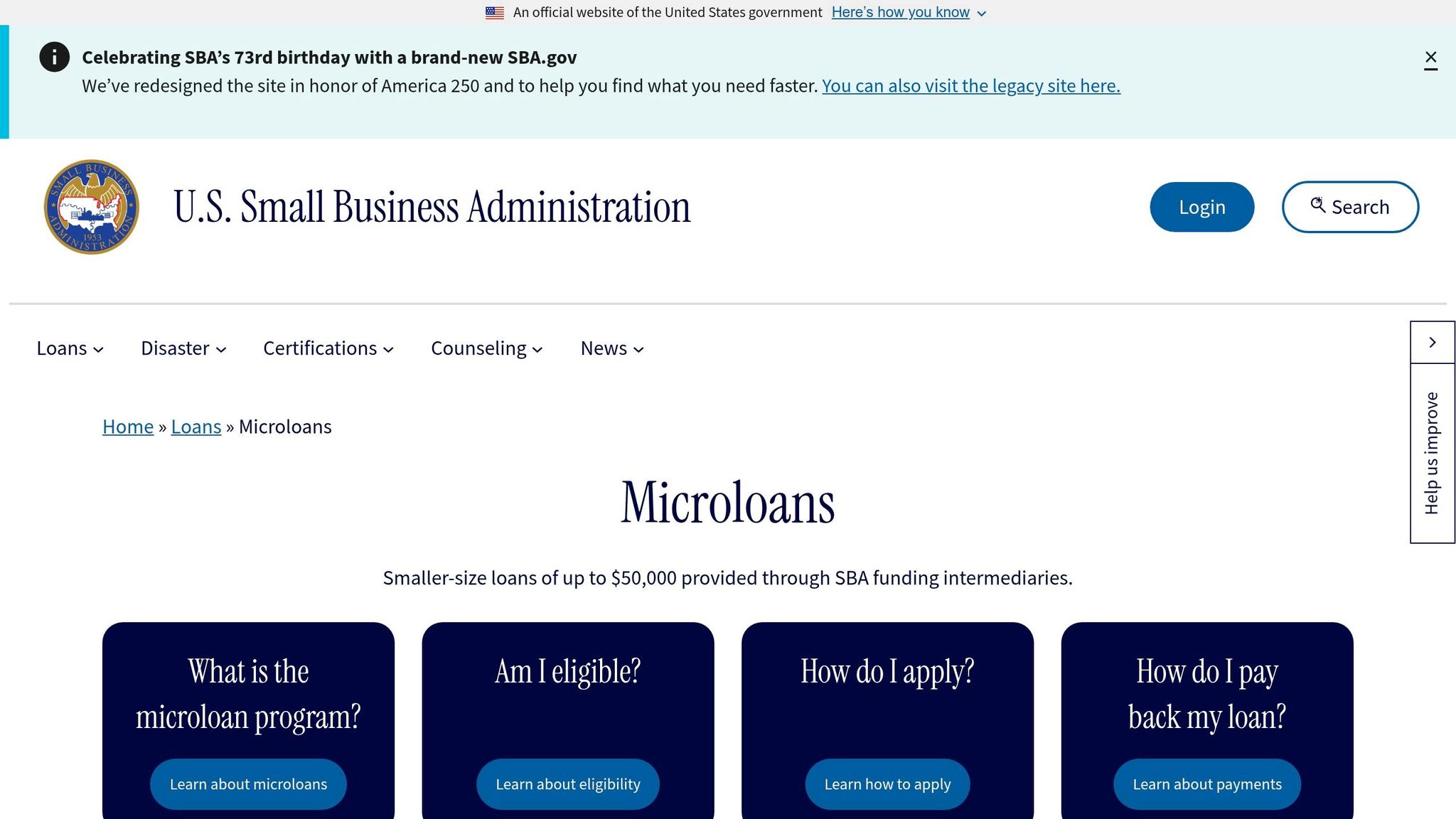
SBA microloans are available to for-profit small businesses and certain nonprofit childcare centers that meet SBA size standards. To qualify, borrowers must operate mainly in the United States and show creditworthiness plus a reasonable ability to repay. In plain terms, lenders usually look at your personal and business credit history, cash flow, and how solid your business plan looks. Your business stage and credit profile often carry a lot of weight.
Grants play by a different set of rules. Grant makers usually aren’t asking, “Can you pay this back?” They’re asking whether your business fits the program. That can include your location, industry, ownership category, business stage, or the exact project you want to fund.
Repayment Rules and Funding Amounts
An SBA microloan is paid back through monthly principal-and-interest payments, with terms up to six or seven years. If you own 20% or more of the business, you’ll usually need to sign a personal guarantee, and some lenders may ask for collateral too. For many owners, that’s the core tradeoff: is it worth taking on debt to get more predictable access to funding?
The SBA microloan cap is $50,000, and the average loan is about $13,000. Grants, on the other hand, usually don’t need to be repaid if you follow the award terms. But there’s a catch: they’re often tied to a project and tend to be smaller. Many local and state programs award between $2,500 and $15,000. If you misuse the funds or fail to meet the terms, repayment or clawback can happen.
What the Money Can Be Used For
Microloan funds can be used for:
- Working capital
- Inventory
- Supplies
- Furniture
- Fixtures
- Machinery and equipment
But they can’t be used for real estate or existing debt. A startup bakery, for instance, could use a microloan to buy ovens and stock up on inventory.
Grants are usually tighter on spending. In most cases, they only cover approved project costs listed in the application budget, and many do not pay for general operating expenses unless those costs are directly tied to the project. Some programs also work on a reimbursement basis, which means you pay upfront and submit records before the money is released.
That distinction starts to matter a lot when timing and access to cash become part of the choice.
Speed, Fit, and Tradeoffs
Approval Timelines and Why Grants Often Take Longer
After eligibility and allowed uses, timing is often the deciding factor. SBA microloans usually go from a completed application to funding in about 30 to 60 days.
Grants run on a much slower schedule. In many cases, it takes 3 to 18 months from application to funding. That gap comes from how grant programs are set up: many follow fixed application windows, ask for detailed proposals, move through several review stages, and may include post-award reporting or reimbursement steps before funds are released.
Put simply, the biggest difference shows up in speed and application workload.
When an SBA Microloan Is the Better Fit
An SBA microloan makes more sense when you need funding soon and can handle repayment. That’s why it often works well for startups, side-hustle owners, and small businesses with fair or limited credit. Even early-stage businesses may qualify if they can show a reasonable ability to repay.
The tradeoff is pretty simple: you get faster and more flexible access to up to $50,000, but you’ll repay that money with interest over time. If cash is urgent, that faster timeline often matters more than the chance of waiting on a grant.
When a Grant May Be the Better Fit
A grant can make more sense when repayment is the main concern and timing is less urgent. This path works best when your business lines up closely with the funder’s mission, such as community development, innovation, rural growth, minority-owned business support, or local economic impact.
For example, a childcare center applying for funding for a workforce training program that matches the grant’s mission may avoid repayment completely if the program is carried out as described.
That said, grants are rarely a good match for routine operating cash. If you need money for day-to-day expenses or want to grow on a short timeline, strict spending rules and uncertain timing usually make a grant a weaker stand-in for a loan.
Conclusion: Match Your Funding Choice to Repayment, Flexibility, and Timing
After looking at repayment, eligibility, funding limits, use cases, and timing, the decision comes down to three simple questions: Can you repay the money? How fast do you need it? Does your business qualify?
SBA microloans provide up to $50,000 in funding that must be paid back and can be used for business expenses. That means interest, monthly payments, and a lender review. But there’s a trade-off: funding can arrive faster than grants, often within weeks.
Grants don’t need to be repaid, which is the big draw. Still, they tend to be more limited, harder to win, and slower to pay out.
If your need is urgent and tied to day-to-day business costs, a microloan is usually the better choice. If your business lines up closely with a funder’s mission and you have time to wait, a grant may make more sense.
Use microloans for predictable costs. Go after grants only when the match is strong.
FAQs
Can I apply for both a microloan and a grant?
Yes. You can apply for both, but they’re separate processes.
An SBA microloan is a loan of up to $50,000 that must be repaid through an SBA-approved nonprofit intermediary. A grant, on the other hand, is non-repayable funding.
That means you’ll need to submit separate applications for each one. For the microloan, be clear about how you plan to use the money and how you’ll repay the loan. Those two points matter a lot in the review process.
Will a microloan help build business credit?
Yes. An SBA microloan can help build business credit if you pay on time. Each on-time payment adds to your repayment history and shows lenders that your business handles debt well.
Over time, that track record can make it easier to qualify for larger financing as your business grows. It can also help you build professional relationships with lenders, which often matters more than people think.
What if I use grant money the wrong way?
Using grant money for anything outside the grant agreement can cause major problems. You might lose the grant, have to pay back the full amount right away, and even face legal action for fraud or breach of contract.
It can also block you from getting future grants or other government funding. On top of that, it can damage your business’s credibility. The safest move is simple: stick to the approved budget and follow the use-of-funds rules exactly.

Leave a Reply