
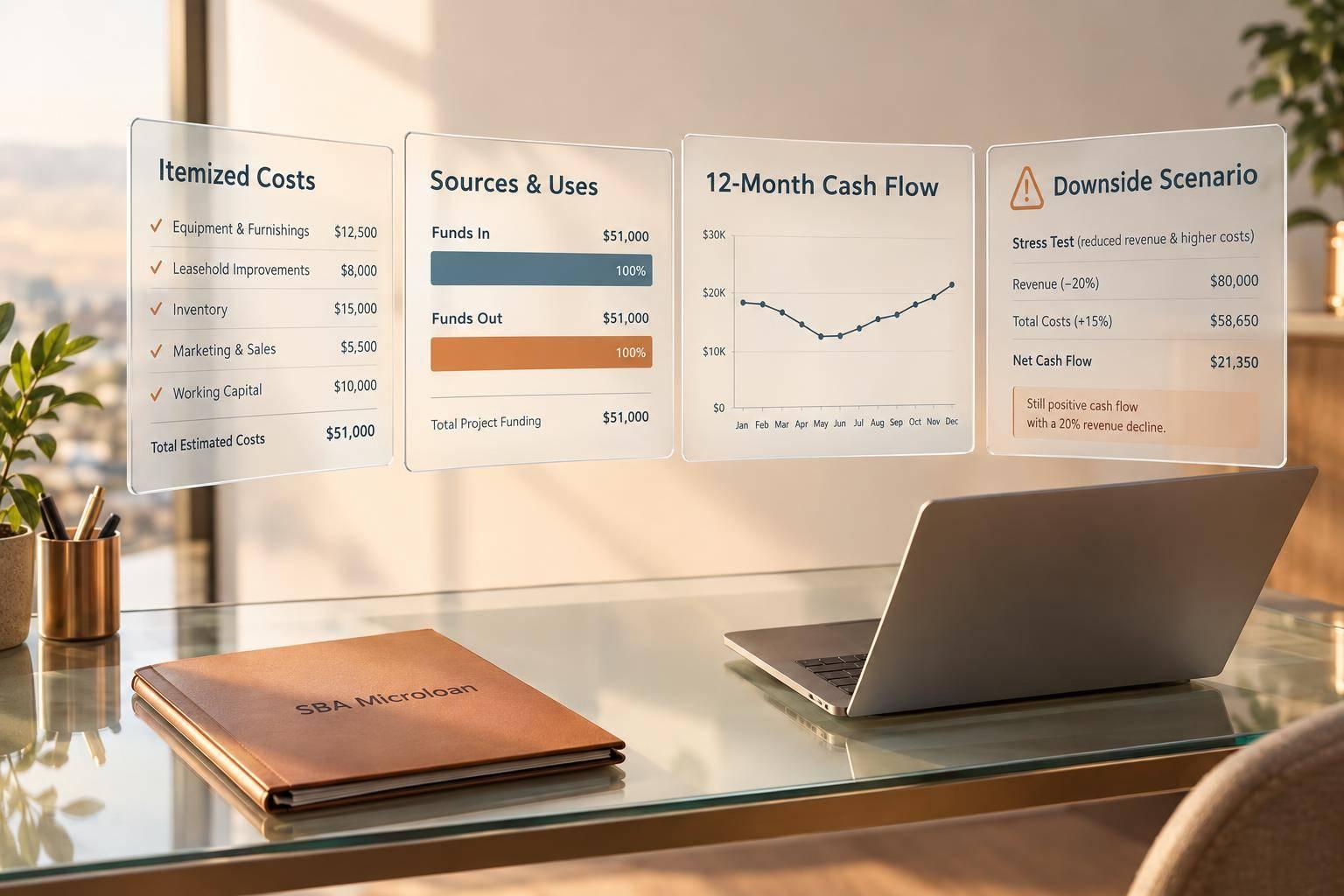
For an SBA microloan up to $50,000, I’d prepare itemized costs, price quotes, and a 12-month cash-flow forecast showing how I’ll cover expenses and loan payments. An SBA-approved intermediary – not the SBA – reviews the application and decides whether to lend.
I’d focus my budget on three questions:
- What will I spend? Separate one-time purchases from monthly bills, document estimates, and confirm eligible loan uses.
- Where will the money come from? Match every cost to loan proceeds, owner cash, or other documented funds – without counting costs twice.
- Can I repay the loan? Show when customer payments arrive, explain sales assumptions, and test a slower-sales scenario.
My final check: <u>make every figure agree</u> across the budget, forecast, and application. Application support can help organize the paperwork, but it cannot guarantee approval.
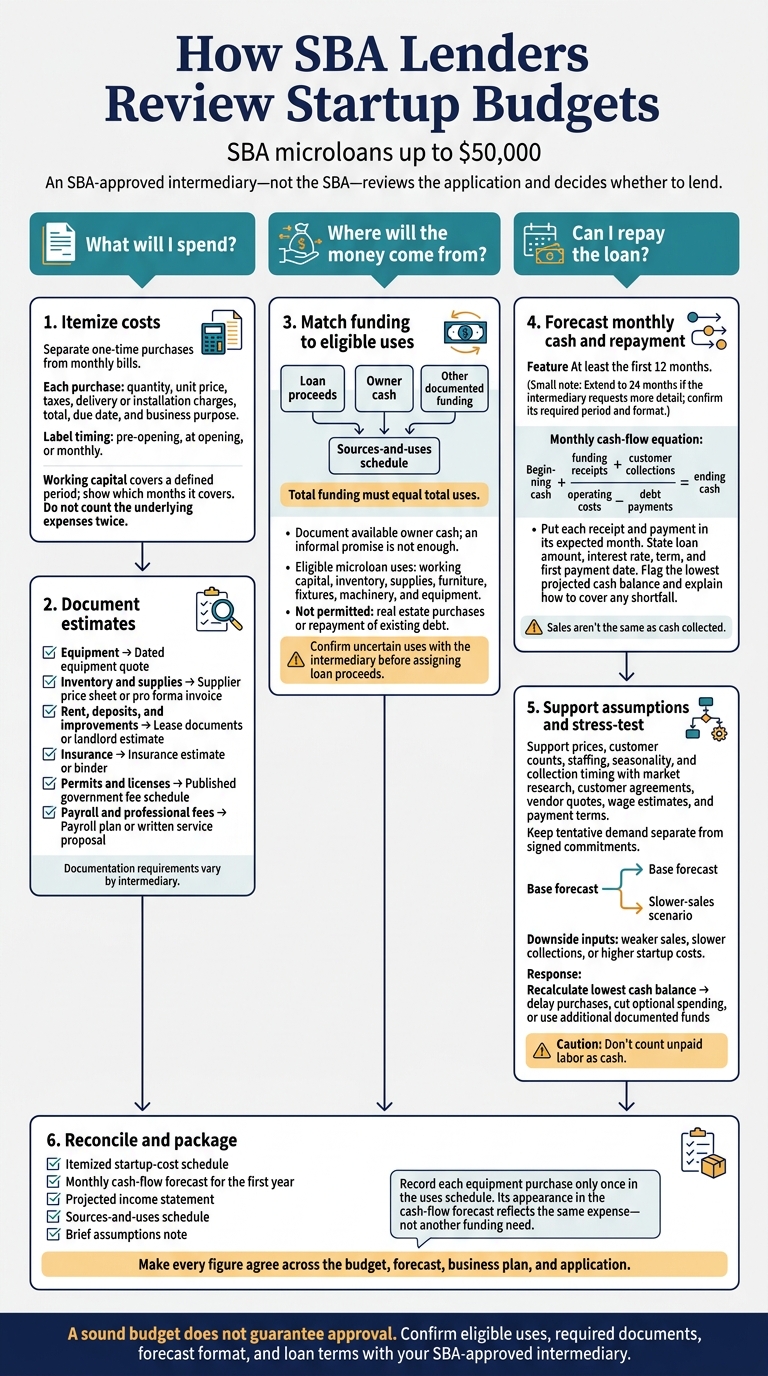
How SBA Lenders Review Startup Budgets
SBA Microloans: A Complete Guide for Startups and Small Businesses
sbb-itb-1eb586e
How Lenders Review Startup Costs
Once lenders understand the overall plan, which is why your business plan matters during the application process, they review each line item in your startup budget.
Separate One-Time Costs From Monthly Expenses
Give each purchase its own line. Include the quantity, unit price, taxes, delivery or installation charges, total, due date, and business purpose.
Lenders want a clear split between launch costs and recurring expenses. Keep startup purchases separate from rent, software, insurance, payroll, payroll taxes, and inventory replenishment. Label payments pre-opening, at opening, or monthly, and include due dates for premiums and deposits.
Treat working capital as cash that covers a defined period – not as another startup expense. Show which months it needs to cover. Check the budget against your forecast so you don’t count the same cost twice.
Document Budget Estimates
An itemized budget needs support. Lenders want to trace major estimates to current market prices. Each lender’s documentation requirements may differ, so gather the records yours requires for each major cost.
| Budget category | What lenders verify | Supporting document |
|---|---|---|
| Equipment | Model, quantity, price, delivery, installation, and quote expiration | Dated equipment quote |
| Inventory and supplies | Opening quantities, unit prices, and first-order total | Supplier price sheet or pro forma invoice |
| Rent, deposits, and improvements | Due dates, lease terms, and tenant obligations | Lease documents or landlord estimate |
| Insurance | Coverage period, premium, and payment schedule | Insurance estimate or binder |
| Permits and licenses | Required approvals, fees, and timing | Published government fee schedule |
| Payroll and professional fees | Staffing, pay rates, start dates, and service scope | Payroll plan or written service proposal |
Match Funding Sources to Eligible Uses
Lenders check that every dollar has a documented source and a permitted use. Add a sources-and-uses schedule that assigns each cost to loan proceeds, owner cash, or other documented funding. Total funding must equal total uses.
Show owner cash as available funds, not an informal promise. Provide bank statements or other evidence when requested. Also flag any major cost whose timing could delay opening.
SBA microloans can pay for eligible working capital, inventory, supplies, furniture, fixtures, machinery, and equipment. They cannot pay for real estate purchases or repayment of existing debt.
An eligible cost still needs to be necessary and reasonably priced. Describe any uncertain uses – such as renovations, owner compensation, marketing arrangements, or specialized professional fees – and confirm them with the intermediary before assigning loan proceeds.
How Lenders Check Cash Flow and Owner Estimates
After lenders verify how you’ll use the money, they check whether your monthly cash can cover repayment. They look at sales, when customers pay, expenses, and debt payments to see whether you can make payments. Before building your cash forecast, confirm the intermediary’s required forecast period, format, and supporting documents.
Project Monthly Cash Needs and Loan Payments
Build a month-by-month forecast for at least the first 12 months. Extend it to 24 months if the intermediary requests more detail. Include beginning cash, confirmed funding, loan proceeds, collections, operating costs, capital spending, and debt payments. Put each funding receipt and payment in the month you expect it to occur.
State the loan amount, interest rate, term, and first payment date. Flag your lowest projected cash balance and explain how you’ll cover any shortfall.
Sales aren’t the same as cash collected. Use customer payment terms and expected delays to place receipts in the right month. A profit on paper doesn’t mean you have cash for deposits or loan payments. Lenders need to see what’s left after all cash payments. Those totals also need sales and expense assumptions backed by records.
Support Sales and Expense Assumptions
Back up your forecast with market research, customer agreements, vendor quotes, wage estimates, and payment terms. Attach a custom business plan assumptions schedule explaining how you calculated prices, customer counts, staffing, seasonality, and collection timing. Keep tentative demand separate from signed commitments.
If you project unusually high costs or fast growth, show the staff, equipment, inventory, and working capital needed to support those figures. Experience helps, but it doesn’t replace documentation. Existing businesses can provide historical financial statements and collection trends. Startups must rely more heavily on documented assumptions.
Test a Slower-Sales Scenario
Run a downside forecast with weaker sales, slower collections, or higher startup costs. Recalculate your lowest cash balance. Then identify specific purchases you could delay, optional spending you could cut, or additional documented funds you could use. Don’t count unpaid labor as cash. Owner contribution rules vary by intermediary.
Budget Errors That Can Hurt Approval Odds
After reviewing cash flow, lenders check for errors that misstate how much funding you need or what you can repay.
Fix Missing Costs and Conflicting Figures
Include every launch or operating cost that affects your funding needs: payroll taxes, insurance, permits, utilities, shipping, processing fees, maintenance, and professional services. Replace vague “miscellaneous” amounts with specific line items and supporting documents. Remove personal purchases, explain every other funding source, and back up sales projections with documented calculations.
Your loan request should match your sources-and-uses schedule. An unexplained gap can weaken your application. Keep owner contributions and revenue timing consistent across documents. Explain any timing differences, such as a deposit paid before closing.
Once the figures match, organize the documents for lender review.
Prepare a Lender-Ready Budget Package
Your package should include an itemized startup-cost schedule, a monthly cash-flow forecast for the first year, a projected income statement, a sources-and-uses schedule, and a brief note explaining your assumptions. Check each document against your business plan and application.
Record each equipment purchase only once in the uses schedule. When that purchase appears in your cash-flow forecast, it should reflect the same expense – not another funding need.
A sound budget does not guarantee approval. Lenders still consider eligibility, credit history, repayment ability, business viability, and collateral or guarantees when applicable.
Application support can help you put these documents together faster.
How SBA50K Helps With Application Preparation
SBA50K offers SBA microloan application support, business-plan writing help, and lender connections for borrowers seeking loans up to $50,000. It does not make credit decisions or guarantee approval.
Conclusion: Build a Budget That Supports Your Loan Request
Lenders review your costs, funding sources, and ability to repay. Give every dollar a clear purpose. Match each itemized cost to a funding source and account for it in your monthly cash flow. Show that you’ll have enough cash to cover operating expenses and loan payments during slower months. Remove inflated costs and close any unexplained funding gaps before you submit.
Ask your SBA-approved intermediary to confirm eligible uses, required documents, and its preferred forecast format before submission. Check that the interest rate, fees, and repayment terms in your forecast match the loan you’re seeking.
FAQs
How can I justify sales estimates without customers yet?
Build a conservative, bottom-up forecast using measurable inputs: local demand data, industry benchmarks, and a documented marketing plan. Back each assumption with evidence, such as market research or conversion rates. Then check your sales estimates against the number of customers your staff or equipment can serve.
Keep those projections in line with your cash flow, use-of-funds breakdown, and operating costs. SBA50K can help you build these projections and a lender-ready business plan.
How much cash cushion should my startup budget include?
Include at least 12 months of working capital to cover short-term cash flow gaps, recurring expenses like rent, payroll, and utilities, and monthly loan payments during slower periods.
Lenders typically want cash flow to cover these obligations by 1.15x to 1.25x. Base your month-by-month projections on conservative, realistic estimates – not best-case forecasts – and clearly document how you’ll maintain this reserve.
Which budget errors could cause a lender to reject my application?
Lenders may reject your application if your budget has conflicting figures, leaves out details, or doesn’t show how you’ll repay the loan. Common mistakes include numbers that don’t match across financial documents, vague spending categories without itemized costs or timing, and sales forecasts without supporting evidence.
Other red flags include overlooking seasonal slowdowns, underestimating operating expenses, and leaving loan payments out of cash flow projections. Even with those payments included, your projections may show too little cash to cover debts during slower months.
Leave a Reply