
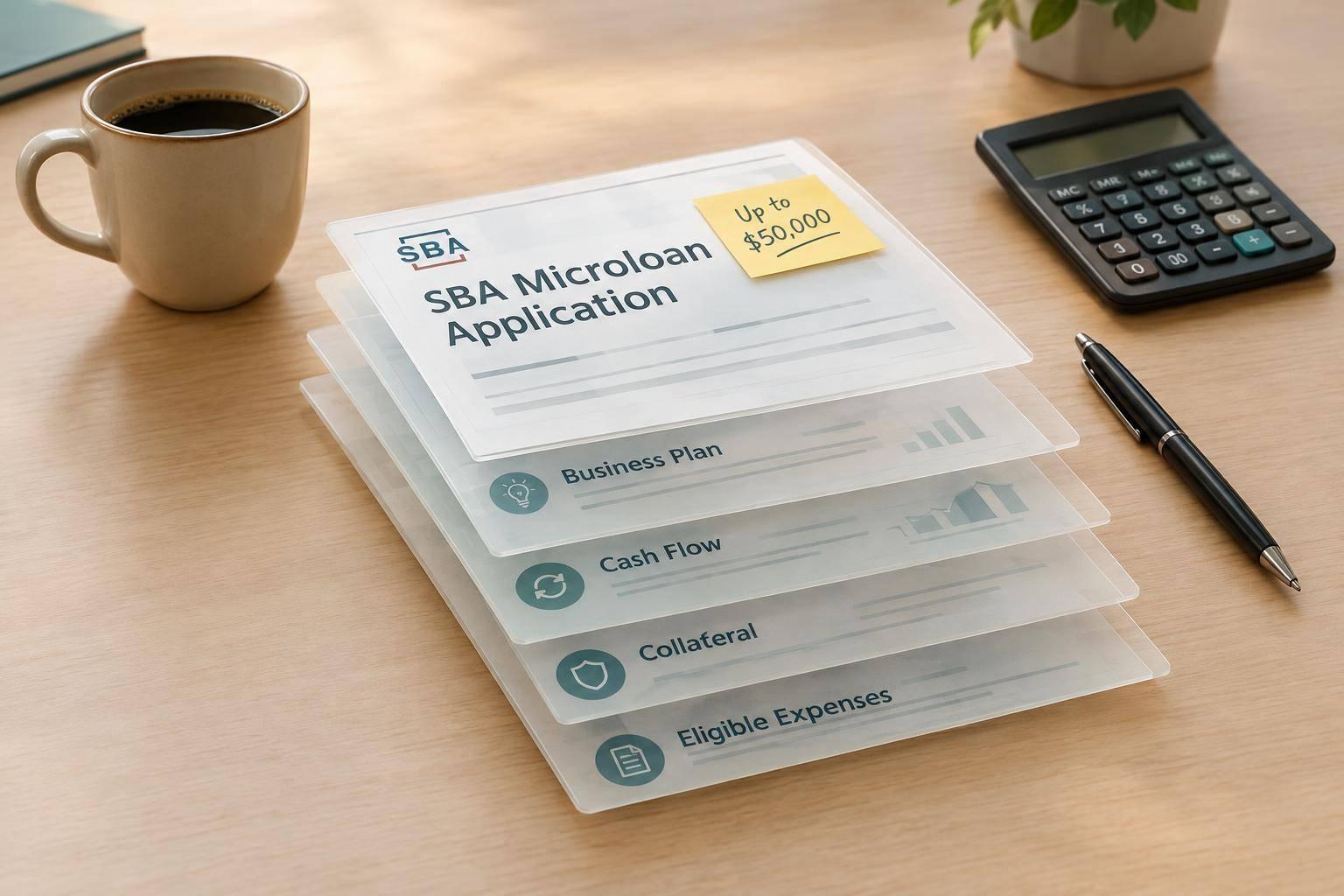
A business loan can help turn a promising idea into a working operation – but finding a funding program is only the beginning. The harder part is understanding who reviews your application, what you need to demonstrate, and whether the financing fits your business.
The video introduces SBA microloans as a potential source of up to $50,000 for eligible business expenses. Its most useful message is that preparation matters as much as discovering the program.
For entrepreneurs with poor or limited credit, that opportunity deserves a closer look. However, the video’s broad claim about credit and collateral needs qualification: it does not establish that every applicant can qualify without either. Here is a practical framework for understanding the opportunity and preparing to investigate it.
Key Takeaways
- $50,000 is the stated maximum, not a promised approval amount. Build your funding request around an actual business need.
- The application route involves an SBA-approved intermediary. Identifying the organization that will review your request is an essential first step.
- Potential uses mentioned include working capital, equipment, and inventory. Confirm whether your specific expenses qualify before applying.
- Do not assume poor credit or a lack of collateral will be overlooked. Specific credit standards and collateral requirements are not specified in the video.
- Prepare a clear explanation of what you need, how you will use it, and how the business could repay it.
- Rates, repayment terms, fees, document requirements, and approval timelines are not specified in the video. These are important questions to resolve before accepting financing.
sbb-itb-1eb586e
What the Video Explains – and What It Leaves Open
The video describes a lending route in which entrepreneurs seek financing through an SBA-approved intermediary. That distinction matters: knowing the program’s name is not the same as knowing where to submit an application.
It also identifies several potential uses for the money:
- Working capital: Funding for eligible operating needs.
- Equipment: Purchases that support business activity.
- Inventory: Stock needed to serve customers.
- Other qualifying expenses: Additional uses subject to eligibility.
The exact boundaries of those categories are not specified in the video. A broad label such as "working capital" should therefore be treated as a starting point for questions, not permission to spend loan proceeds however you choose.
The same caution applies to the advertised funding amount. "Up to" describes a ceiling; it does not tell you how much a particular business will qualify to borrow.
Poor Credit: An Opportunity to Explore, Not an Approval Guarantee
The video presents microloans as accessible to entrepreneurs without strong credit or collateral. That message may encourage people who assume all business financing is out of reach.
But accessibility and guaranteed approval are different things.
Specific credit thresholds, collateral policies, and other underwriting requirements are not specified in the video. It also does not explain whether those conditions differ among intermediaries. Readers should not interpret the presentation as confirmation that their credit history is irrelevant or that security will never be requested.
A more useful approach is to turn the claim into questions:
- Does this intermediary consider applicants with my credit profile?
- What information will it use to assess my application?
- Will collateral or a personal guarantee be required?
- What could strengthen an application with limited business history?
For a business owner rebuilding credit, getting those answers early can prevent wasted effort and unrealistic expectations.
A Step-by-Step Framework for Preparing to Apply
The video raises the right process questions but does not provide a complete application checklist. The following framework adds practical preparation guidance; it is not a statement of official program requirements.
1. Define the Business Need Before Choosing the Loan Amount
Start with the expense, not the maximum available funding.
For example, a business that needs inventory and a specific piece of equipment should separate those costs rather than simply request $50,000. An itemized plan makes it easier to explain the purpose of the loan and assess whether borrowing is worthwhile.
A preparation worksheet might include:
| Planned expense | Estimated cost | Business purpose |
|---|---|---|
| Equipment | Based on a current quote | Increase production capacity |
| Inventory | Based on supplier pricing | Fulfill expected customer demand |
| Operating needs | Based on a budget | Support eligible day-to-day expenses |
These are illustrative planning categories, not confirmation that a particular purchase qualifies.
2. Identify the Intermediary and Ask About Its Process
Because the video identifies an intermediary as the application channel, your next task is to understand that organization’s process.
Before assembling a large application package, clarify:
- Whether it considers businesses at your stage.
- Whether it serves your location.
- Whether your proposed use of funds is eligible.
- What documents it requests.
- How it evaluates credit and repayment ability.
- What its review process involves.
The answers to these questions are not specified in the video. Resolving them first helps you prepare for the actual reviewer rather than an imagined universal application.
3. Organize Evidence Behind Your Request
A persuasive funding request connects three things: the expense, the business benefit, and a realistic repayment plan.
As a preparation exercise, consider organizing any relevant business records, sales information, expense estimates, and financial projections you already have. Ask the intermediary which materials are required before treating any checklist as definitive.
For a startup without established sales, clearly separate assumptions from confirmed facts. Expected customer demand is not the same as completed orders, and projected revenue is not cash already available for payments.
4. Test Affordability, Not Just Eligibility
Qualifying for a loan and comfortably repaying it are separate questions.
Consider how the proposed purchase would affect cash flow. Would it help generate sales, reduce costs, or support work you can already secure? What happens if those benefits arrive later than expected?
The video does not specify interest rates, payment amounts, fees, or repayment periods. Without those details, you cannot fully judge affordability. A useful decision requires the proposed loan terms alongside your business budget.
5. Let Readiness Guide Your Timing
The video emphasizes understanding when to pursue funding, but it provides no approval or funding timeline.
That means the program should not be treated as a guaranteed solution to an immediate cash emergency. If an expense has a firm deadline, ask about timing before relying on the loan to cover it.
Readiness matters, too. Applying with a defined purpose and organized information puts you in a better position to explain your needs than applying simply because a funding opportunity sounds attractive.
Why the Process Matters More Than the Headline
The most valuable idea in the video is not the dollar amount. It is the distinction between searching for money and preparing to use financing responsibly.
A large headline can draw attention, especially for entrepreneurs shut out of conventional borrowing. But the meaningful questions are more specific:
- Is this financing available to my business?
- Does it cover the expense I need?
- Can I support the amount I am requesting?
- Can the business handle repayment?
Those questions shift the focus from approval alone to business fit. They also help reveal missing information before an owner commits time or money to an application.
Conclusion
SBA microloans may offer a funding avenue worth exploring for entrepreneurs seeking up to $50,000 for eligible business needs. The video introduces that possibility, but it does not establish individual eligibility, guarantee approval with poor credit, or provide complete loan terms.
The strongest next step is preparation: define the expense, identify the appropriate intermediary, clarify its requirements, and evaluate repayment against realistic cash flow. The right funding amount is the amount your business can justify and responsibly repay – not automatically the maximum advertised.
Source: "How to Actually Use the SBA to Get Funded" – SBA50K, YouTube, Oct 1, 2026 – https://www.youtube.com/watch?v=EmsOA4jlclk
Leave a Reply