

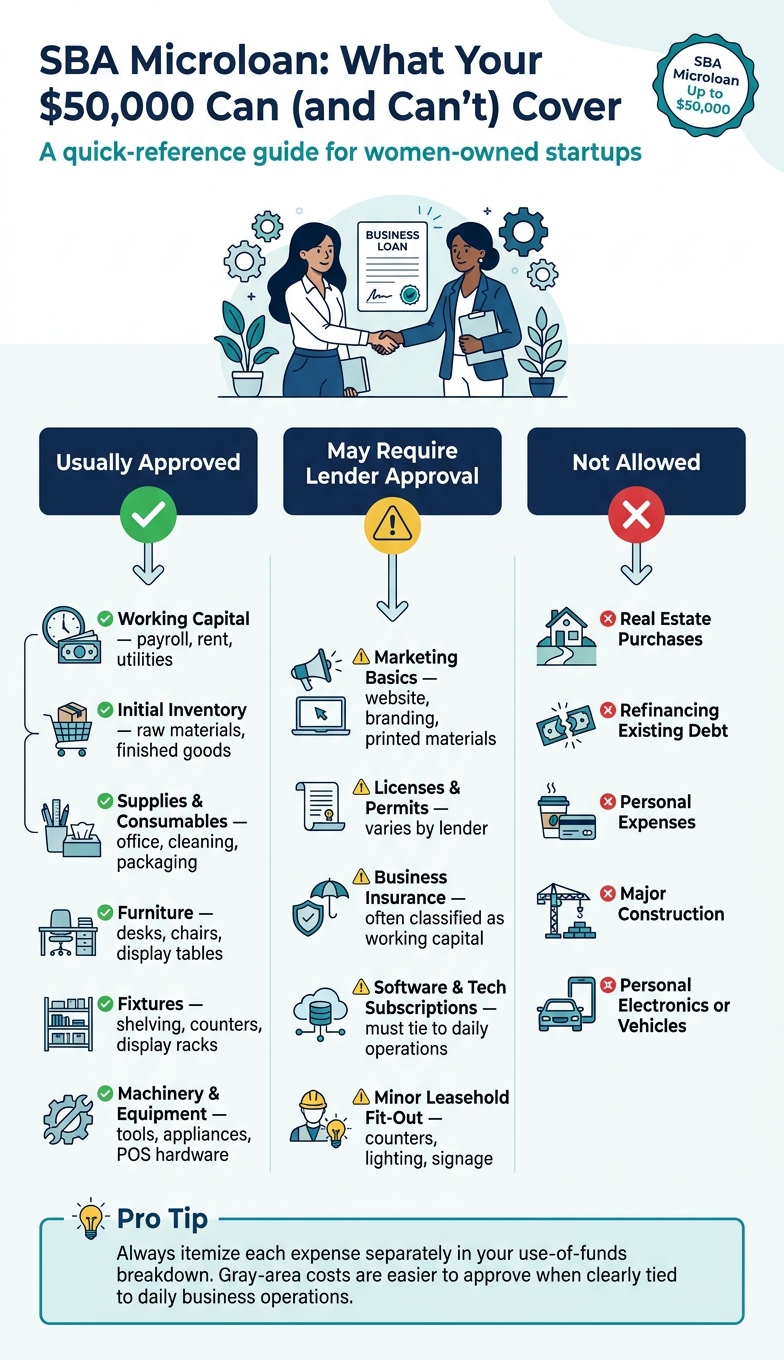
If you need up to $50,000 to start a business, an SBA microloan can pay for many launch costs – but not all of them. The clearest approved uses are working capital, inventory, supplies, furniture, fixtures, machinery, and equipment. Costs like marketing, software, licenses, permits, and insurance may also fit, but some lenders only approve them when they fall under working capital.
Here’s the short version:
- You can use SBA microloans for day-to-day startup costs
- You can often use them for inventory, tools, and basic setup
- You usually cannot use them for real estate, debt payoff, or personal spending
- You need a clear business plan and budget with each expense listed on its own
That means the loan can help cover:
- Working capital
- Initial inventory
- Supplies and consumables
- Furniture
- Fixtures
- Machinery, tools, and equipment
- Minor leasehold setup
- Marketing basics
- Licenses, permits, and insurance
- Technology hardware and software
The main thing I’d watch is the gray-area spending. A laptop for your business is often easy to explain. A website redesign or ad spend may need more detail. If the cost does not clearly connect to how the business runs, a lender may push back.
Quick Comparison
| Cost Type | Usually Covered? | Notes |
|---|---|---|
| Working capital | Yes | Often includes rent, payroll, utilities |
| Inventory | Yes | Best for product-based startups |
| Supplies | Yes | Daily-use business items |
| Furniture | Yes | Desks, chairs, display tables |
| Fixtures | Yes | Shelving, counters, built-in items |
| Equipment and tools | Yes | Machines, appliances, POS hardware |
| Minor fit-out | Often | Must be tied to business use |
| Marketing | Maybe | Often reviewed under working capital |
| Licenses, permits, insurance | Maybe | Rules can vary by lender |
| Software | Maybe | Easier when tied to daily business use |
| Real estate | No | Not allowed |
| Debt refinance | No | Not allowed |
| Personal expenses | No | Not allowed |
If you’re building your startup budget now, the safest move is simple: separate approved costs from gray-area costs before you apply.
SBA Microloan Eligible vs. Ineligible Startup Costs
Top 9 Business Loans for Women-Owned Businesses in 2025
sbb-itb-1eb586e
What SBA Microloans Cover and What They Do Not
SBA microloans can pay for many common startup costs, but not every expense gets a green light by default. Some items fit the rules with little debate. Others sit in a gray area and may only work if the lender treats them as working capital.
That matters for costs like marketing, branding, websites, software, licenses, permits, and professional fees. These may qualify, but approval often comes down to how closely the lender ties each expense to day-to-day startup operations.
Some uses are off the table from the start. SBA microloans generally can’t be used for real estate purchases, refinancing existing debt, or personal expenses.
One thing lenders want to see: a detailed use-of-funds breakdown. Don’t lump expenses together. List each cost as a specific dollar amount so the lender can see where the money will go. The 10 cost categories below show how these rules usually play out in a startup budget.
Costs That Usually Fit SBA Microloan Rules
The uses that most often fit SBA microloan rules include working capital, inventory, supplies, furniture, fixtures, machinery, and equipment.
Costs That May Depend on Lender Approval
Some startup costs need a closer look. Marketing, branding, websites, software, licenses, permits, and professional fees may qualify only if the lender classifies them as working capital. In plain English, the lender wants to know whether the expense directly helps the business get up and running or keep operating.
Uses That Are Generally Not Allowed
Real estate purchases, refinancing existing debt, and personal expenses are generally not allowed.
Use the table below as a quick eligibility check.
| Expense Type | Eligibility |
|---|---|
| Inventory, supplies, machinery, equipment | ✅ Usually approved |
| Furniture and fixtures | ✅ Usually approved |
| Working capital (payroll, rent, operations) | ✅ Usually approved |
| Marketing, software, licenses, permits, professional fees | ⚠️ May require lender approval |
| Real estate purchases | ❌ Not allowed |
| Refinancing existing debt | ❌ Not allowed |
| Personal expenses | ❌ Not allowed |
1. Working Capital for Early Operating Expenses
Working capital pays for the costs that keep a startup moving day to day. For SBA microloans, this is one of the main uses. It can cover payroll, rent, utilities, and other daily expenses from launch through the first few months of operation.
For women founders starting with limited cash flow, this is often the first gap a microloan helps fill. The idea is simple: keep the business running while sales start to come in. And because repayment terms can extend up to six years, the loan can give founders more room to manage costs until revenue is steady.
For product-based startups, the next major use is initial inventory.
2. Initial Inventory for Product-Based Startups
SBA microloans can help product-based startups pay for initial inventory, whether that means raw materials or finished goods for early sales. For a lot of new businesses, that first inventory order is what gets sales moving.
That said, lenders usually want to see more than a basic shopping list. They need proof that the inventory can lead to sales and help you repay the loan. So it makes sense to include cash flow projections and a clear sales plan with your application.
Approval rules can change from one lender to another, which is why it’s smart to check inventory guidelines with your local intermediary before you apply. The same lender review also applies to other day-to-day startup purchases that help keep operations running.
Inventory is just one startup cost SBA microloan program can cover. Another common use is daily operating supplies.
3. Supplies and Consumables for Daily Operations
After inventory, the next repeat expense is supplies and consumables. SBA microloans can help pay for the items a startup needs to stay open and keep work moving each day. These are the routine purchases that quietly keep the lights on.
Whether these costs qualify depends on the lender’s rules and where the business is in its life cycle. Supplies may be eligible during startup and early growth.
Here are some common examples:
| Business Type | Typical eligible supplies |
|---|---|
| Office/Admin | Paper, ink, stationery, and postage |
| Service-based (salons, cleaning businesses) | Salon supplies, cleaning supplies, PPE |
| Product-based | Packaging, shipping labels, boxes |
| Food service | Disposables, smallwares, napkins |
Add each supply cost to your business plan. Be clear about which costs repeat each month or each week, so lenders can see exactly where the funds will go.
Next come one-time setup costs such as furniture and fixtures.
4. Furniture for Offices, Studios, and Retail Spaces
Furniture is an explicitly approved use of SBA microloan funds. That includes desks, chairs, shelving, display tables, and reception area furniture when those items support day-to-day operations or help set up a customer-facing space.
This expense often comes up early, especially when a woman founder is opening her first office, studio, or retail location. A salon might need styling chairs and shampoo bowls. A retail shop might need shelving or display tables. The key is to show how each item connects to the work of the business.
Be specific. List each furniture item by name and tie it to a clear operating need. Itemize every piece so the lender can see exactly how it supports the business.
One line matters here: if an item is permanently attached to the space, it belongs in fixtures, not furniture.
Built-in items belong in the fixtures category, which comes next.
5. Fixtures and Basic Store Setup
Unlike movable furniture, fixtures are built-in or attached items that help a business run day to day. Think shelving, display racks, checkout counters, and point-of-sale stations. SBA microloans can cover these fixture and basic store setup costs when they support normal business operations. This tends to matter most when the business is in a rented space.
Lenders usually take a closer look at fixture costs in leased locations. If your credit is poor, the lender may ask for a personal guarantee or a co-signer. They also want to see a direct connection between the fixture and revenue. For example, specialty salon chairs or food-service counters are often easier to approve because they play a clear role in bringing in sales.
Keep your fixture budget reasonable and in line with the loan amount. A simple breakdown helps:
- List each fixture
- Include the cost
- Explain its business purpose
That way, the lender can review the request fast and see how each item supports the business.
6. Machinery, Tools, and Production Equipment
After furniture and fixtures, microloans can help pay for the equipment that does the actual work. SBA microloans can cover machinery, tools, and production equipment needed to get a business up and running.
That can include things like production machinery, specialized tools, commercial appliances, and other equipment used to make a product or deliver a service.
One upside here is pretty simple: lenders will often accept the equipment itself as collateral. For a startup with limited assets, that can make funding a bit easier to get.
If the business rents its space, the next cost category is leasehold fixtures and minor interior fit-out.
7. Leasehold Fixtures and Minor Interior Fit-Out
For women opening a salon, boutique, café, or studio, getting the space ready is often one of the first big checks they have to write. SBA microloans can help pay for setup costs like shelving, service counters, partitions, lighting, basic signage installation, and minor build-out work needed before opening day. The key is to itemize every cost so the lender can see how each expense connects to day-to-day business use.
Small fit-out work tied directly to operations is usually easier to explain than a broad remodel. This kind of spending comes up most often when opening a first leased location or moving into a larger space.
There are clear limits. Microloan funds can’t be used to buy real estate or refinance debt you already have. That’s why it helps to focus on plain, easy-to-document items such as counters, cabinetry, shelving, sinks, flooring, or basic lighting.
To make the request easier for a lender to review, use simple categories and include vendor quotes. In most cases, that means listing costs under furniture, fixtures, or equipment instead of framing them as real estate work. Your business plan should also spell out how the fit-out will support sales, whether that’s through more seating, added treatment stations, better display areas, or smoother customer service.
8. Marketing Basics and Launch Materials
Once your space is ready, the next spend is getting the word out. SBA microloans can help cover launch items that bring in early customers, like website development, signage, branding, printed launch materials, and basic ads. For a new business, that makes this a practical use of launch-stage funding.
That said, some of these costs can land in a gray area. Lenders usually want to see a direct link to sales. So your business plan should connect each marketing expense to expected revenue. If a cost feels even a little unclear, check with the lender before you apply.
9. Licenses, Permits, and Business Insurance
Once you’ve covered launch materials, the next startup costs are the compliance items you need to open legally. Business licenses are an approved microloan use. Permits may qualify too, depending on the lender’s rules. Insurance usually falls under working capital.
It helps to keep these costs separate in your loan request. Why? They often get grouped in with other launch expenses, and that can make your use-of-funds breakdown look muddy.
These costs matter most for childcare, beauty, and mobile-service startups that need to operate legally from day one.
List each fee on its own in your use-of-funds breakdown. And before you send in your application, ask your SBA-approved intermediary whether licenses, permits, and insurance premiums qualify.
10. Technology Hardware and Software
The last common startup category is the tech a business needs to function day to day. SBA microloans can pay for hardware a new business may need to get off the ground, including computers, laptops, tablets, and point-of-sale systems. Website setup and replacement equipment may also qualify, especially when they support a business system like a booking site or e-commerce setup.
Hardware is usually pretty simple to document. Software is where lenders tend to look more closely.
Software subscriptions often qualify only if they connect directly to business operations. A scheduling platform or design software might fit, but it’s smart to confirm each cost with your intermediary before adding it to your budget. List each tech purchase on its own and explain what it does for the business. Software and subscriptions often get the most lender scrutiny.
Where Borrowers Should Be Careful
Once you know what SBA microloans can pay for, the next step is simple: avoid the costs that tend to set off lender concerns.
Uses That Usually Cause Problems
Real estate purchases, debt refinancing, personal expenses, and major construction are not covered.
Gray-Area Costs That May Be Approved as Working Capital
Some costs aren’t flat-out banned, but they do need cleaner paperwork. Marketing, branding, website development, and software subscriptions may qualify if they’re clearly tied to day-to-day business operations and included in the lender-approved budget.
This is where borrowers can get tripped up. A website redesign might look like a growth expense to you, but a lender may want to see exactly how it supports operations. Same idea with software. If it’s part of how you run the business, spell that out in the budget.
How to Avoid Use-of-Funds Mistakes
Start by checking any unclear expense with your intermediary before you send in the application. That step matters because intermediaries set their own rules within SBA guidelines.
It also helps to get your setup in order early. Open a dedicated business bank account and secure your EIN before applying so business and personal funds stay separate. Then line up each planned expense with a recognized SBA category, such as:
- working capital
- inventory
- supplies
- furniture
- fixtures
- machinery and equipment
If a cost doesn’t fit one of those categories, don’t assume it’s covered. Ask the lender first. A clear, itemized budget is usually the easiest way to keep everything clean and easier to approve.
Eligible Costs and Common Exclusions: Quick Reference Table
Use this table as a quick gut check before you lock in your itemized budget.
| # | Startup Cost Category | Typical Expense Example | SBA Category | Common Exclusion |
|---|---|---|---|---|
| 1 | Working Capital | Payroll, monthly rent, utilities | Working Capital | Refinancing existing debt |
| 2 | Initial Inventory | Raw materials, ready-to-sell stock | Inventory | Real estate purchase |
| 3 | Supplies & Consumables | Office stationery, cleaning materials | Supplies | Personal items |
| 4 | Furniture | Desks, chairs, retail display tables | Furniture | Home furniture not used for business |
| 5 | Fixtures | Retail shelving, display cases | Fixtures | Major structural changes |
| 6 | Machinery & Tools | Commercial ovens, power tools, production kits | Equipment | Vehicles for personal use |
| 7 | Leasehold Improvements | Minor interior fit-out, lighting | Fixtures | Major real estate construction |
| 8 | Marketing Basics | Website development, branding, printed flyers | Working Capital (marketing) | Political advertising |
| 9 | Licenses, Permits & Insurance | Business permits, insurance premiums | Working Capital | Personal insurance or penalties/fines |
| 10 | Technology | POS systems, computers, business software | Equipment | Personal electronics |
When you are ready to get $50,000 from the SBA, If an item falls into a gray area, check with your lender before you apply.
Conclusion
SBA microloans can be a solid way for women-owned startups to fund the early stages, especially when the amount needed is fairly small. Before applying, women founders should map out the costs they plan to cover.
The clearest approved uses include working capital, inventory, supplies, furniture, fixtures, machinery, and equipment.
It also helps to keep your budget itemized. Separate approved costs from gray-area expenses before you submit your application.
If you need help with the business plan or application, SBA50K offers business plan writing support and funding guidance to improve your approval odds.
FAQs
How do lenders decide if a gray-area expense qualifies?
Lenders look at one core question: Will this expense help the business repay the loan?
The SBA gives broad rules, but intermediary lenders can set their own limits and terms. So even if one lender is fine with an expense, another may take a different view.
To make the case, show in your business plan and financial projections how the expense supports growth, day-to-day operations, or profit. Keep it concrete. Spell out what the money will be used for, why the business needs it, and how that use ties back to revenue or smoother operations.
If you’re not sure whether an expense will qualify, a plain, direct explanation of the business need can go a long way.
What should I include in my SBA microloan budget?
Focus on startup and day-to-day costs like:
- Inventory, supplies, raw materials, and equipment or machinery
- Marketing, branding, and website development
- Staff wages, rent or lease costs, and working capital for daily operations
SBA50K helps small business owners and startups go after SBA microloans of up to $50,000. That includes help with funding guidance, business plans, and application support.
Can I use an SBA microloan before my business opens?
Yes. You can use an SBA microloan to start a new business, even before it opens.
To qualify, you’ll usually need a polished business plan that shows you understand your market, have clear financial projections, and know how the business will make money.
SBA50K can help you put that paperwork together and connect you with lenders, which may improve your chances of getting approved.
Leave a Reply