
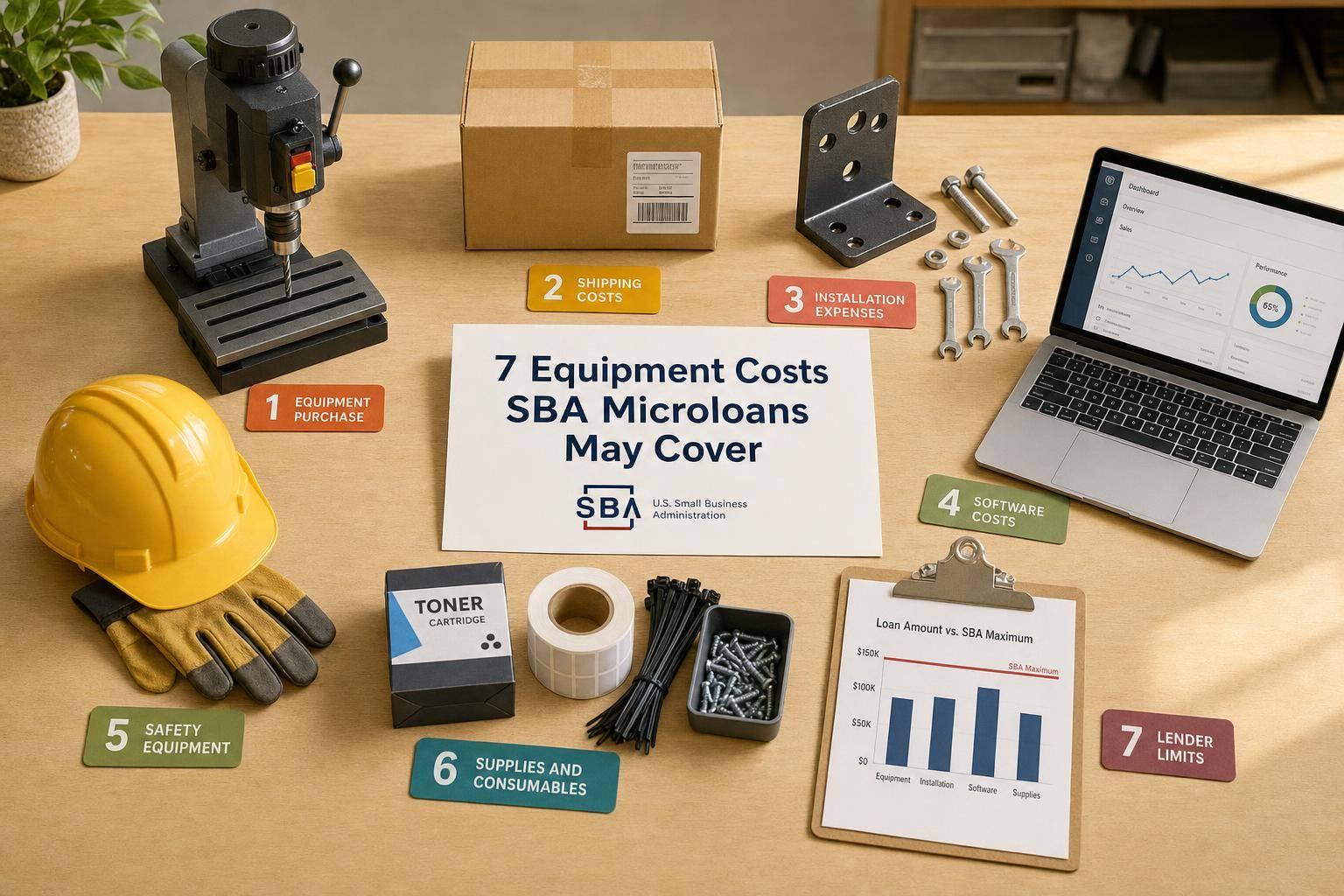
An SBA microloan can cover more than just the machine itself. If you borrow up to $50,000, the loan may also pay for shipping, setup, software, safety gear, supplies, and some furniture or fixtures. But there’s a catch: the intermediary lender decides what to allow within SBA rules.
Here’s the short version:
- You can use SBA microloans for equipment, machinery, inventory, supplies, and working capital
- You can’t use them for real estate or paying off old debt
- The easiest costs to get approved are often:
- equipment purchase price
- shipping and freight
- setup and installation
- Costs that may get more review include:
- software
- safety items
- consumables
- furniture and small support items
- You’ll usually need itemized quotes or invoices, plus a business plan that shows how each cost helps your business run
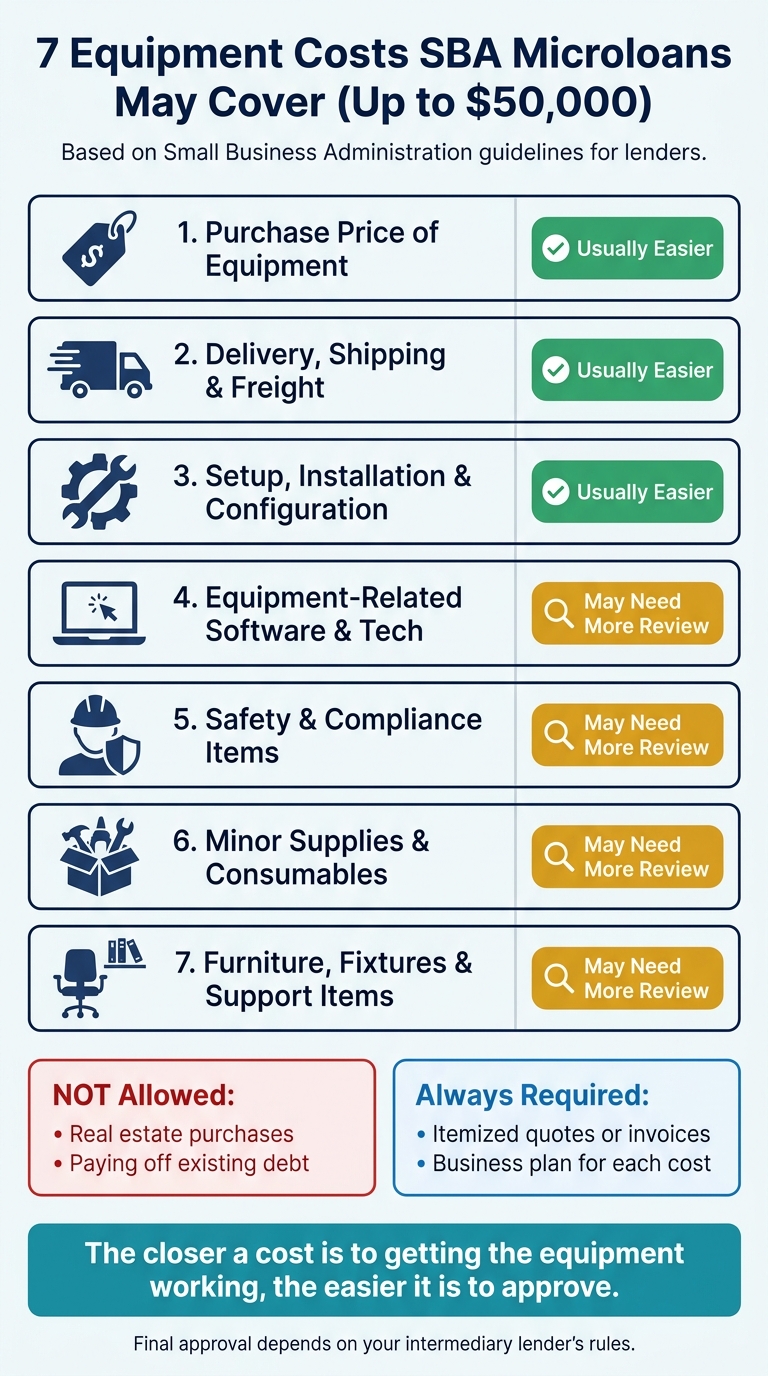
The 7 cost types covered in this article are:
- Purchase price of eligible equipment
- Delivery, shipping, and freight
- Setup, installation, and configuration
- Equipment-related software and tech
- Safety and compliance items
- Minor related supplies and consumables
- Furniture, fixtures, and small support items
7 Equipment Costs SBA Microloans May Cover: Approval Difficulty at a Glance
SBA Microloans: A Complete Guide for Startups and Small Businesses
sbb-itb-1eb586e
Quick Comparison
| Cost type | Often easier to approve? | What lenders usually want |
|---|---|---|
| Purchase price | Yes | Vendor quote or invoice |
| Shipping/freight | Yes | Separate line item tied to equipment |
| Setup/installation | Yes | Itemized labor or service quote |
| Software/tech | Sometimes | Clear link to the equipment |
| Safety items | Sometimes | Proof the item is needed for the job |
| Supplies/consumables | Sometimes | Itemized list, not vague estimates |
| Furniture/fixtures | Sometimes | Proof the item supports business use |
If I were applying, I’d treat this as a simple rule: the closer a cost is to getting the equipment working, the easier it is to support.
What Counts as an Equipment Cost Under an SBA Microloan
Not every equipment expense gets treated the same way. The purchase price is usually simple. But software, safety gear, and related supplies often get a closer look from the lender.
The main question is pretty simple: Is this cost needed to get the equipment up and running? If the answer is yes, it’s often easier to support. If the connection is weak, the lender may push back.
Lenders want costs that are tied to the business purpose and needed to use the equipment. They also look at detailed business plans to decide which expenses match the loan request.
Costs That Are Usually Easier to Document
The purchase price, freight, and vendor installation are usually the easiest items to document. They tend to show up clearly on vendor quotes and invoices, which makes the lender’s review a lot more direct.
Costs That May Face Closer Lender Review
Software, safety items, consumables, and small fixtures may still qualify, but they often need more backup. Lender rules for these add-on costs can vary. Some lenders want each item listed on its own and matched with vendor documents.
From there, the seven most common equipment cost categories start to split based on how easy they are to support. The categories below move from the easiest costs to justify to the hardest.
1. Purchase Price of Eligible Equipment
The purchase price is the most direct cost in an SBA microloan request. It’s simply the amount you pay the vendor for the equipment itself, before extras like delivery or installation. Because of that, it’s usually the easiest cost to explain and back up.
This amount only counts if the equipment is for an eligible business use. That can include machinery, tools, furniture, fixtures, or other operating equipment.
For the purchase price, lenders usually focus on one main item: a clear vendor quote or invoice. In most cases, they want a document that shows the equipment price and its business purpose.
Final approval still depends on the SBA microloan eligibility and intermediary lender’s rules.
After the equipment price, lenders often move on to delivery and freight costs.
2. Delivery, Shipping, and Freight Costs
The equipment price isn’t always the full picture. In many cases, lenders may also cover the cost of getting the equipment to your business. That means shipping and freight can be included as part of the total equipment cost.
Must Be Tied to Eligible Equipment
Shipping counts only when it’s directly tied to eligible equipment. If the charge isn’t linked to the equipment being financed, it usually won’t qualify.
Must Be Documented with Quotes or Invoices
You’ll want shipping or freight listed as a separate line item on the vendor quote or invoice. That makes the charge easy to verify and helps avoid back-and-forth later.
May Be Limited by Intermediary Lender Rules
Rules can vary by lender, and high or expedited shipping often gets a closer look. Large freight charges, rush fees, and unusual delivery costs are more likely to draw scrutiny.
After shipping, the next piece is installation and what it takes to get the equipment up and running.
3. Setup, Installation, and Configuration Costs
Setup, installation, and configuration costs can also qualify when they’re required to make eligible equipment usable. Once the equipment arrives, the next step is simple: what does it take to get it up and running?
Must Be Directly Tied to Business Operations
These costs are more likely to qualify when they’re necessary to make the equipment work as intended. That usually means expenses tied directly to the equipment itself, like assembly or calibration labor.
Must Be Documented with Quotes or Invoices
Lenders usually want a line-item quote or invoice that clearly separates the cost of the equipment from setup and installation charges.
May Be Limited by Intermediary Lender Rules
Some lenders place limits on how setup funds can be used. It’s smart to check with your intermediary before you apply so you don’t run into last-minute surprises.
Next, lenders may also review software or other tech needed to run the equipment.
4. Equipment-Related Software and Technology
Equipment-related software may qualify if it serves a direct business purpose and helps operate the equipment being financed. The main job is showing that the software is needed to use the equipment the way it’s meant to be used.
Must Support the Equipment and Business Operations
Eligible software should help run, connect, or upgrade the equipment being financed. It should also support the equipment itself or an operating system the business already uses. When that link is easy to see, it’s much simpler to explain the cost to a lender.
Must Be Documented with a Clear Explanation
Lenders usually want a business plan and a plain explanation of how the software supports both the equipment and the business. That detail helps them tell the difference between software tied to day-to-day operations and software that falls under general overhead.
May Be Limited by Intermediary Lender Rules
Approval often comes down to a few practical points: whether the software appears on the quote, whether it’s tied to the equipment, and whether it’s explained in the loan request. Each intermediary lender can set its own terms and decide if a given software cost is an allowed use of proceeds.
"The SBA only establishes some parameters in regards to the interest rates and loan uses. The intermediaries are left to decide the terms, and more importantly, who shall receive the microloans." – SBA50K
Final approval still depends on the intermediary lender’s rules.
After software, lenders often look next at safety and compliance costs.
5. Safety Equipment and Compliance-Related Items
Safety and compliance items can qualify if they are needed to keep equipment or day-to-day operations running safely. The main test is pretty simple: the item must be required, documented, and clearly tied to the business’s daily work.
Must Be Directly Tied to Business Operations
You need to show that the item isn’t just nice to have. It must be required for the job and directly connected to daily operations.
Must Be Documented with Quotes or Invoices
Each item should appear on a quote or invoice. Add a short explanation that shows why the item is required.
May Be Limited by Intermediary Lender Rules
Final approval still depends on the intermediary lender, so it’s smart to confirm what’s covered before you apply.
Next, lenders may also cover small related supplies when those supplies directly support the equipment.
6. Minor Related Supplies and Consumables
Small supplies and consumables can qualify if they directly support the financed equipment or the work around it. Since these costs are usually modest, lenders often expect a clear itemized breakdown instead of a broad estimate.
Must Meet Allowed Use Rules
The SBA microloan program permits funds for supplies needed to start or expand a business. That can include small day-to-day items tied to the equipment you’re financing, like printer cartridges or paper. The main point is simple: the supplies need to serve the business, not personal or unrelated spending.
Must Be Directly Tied to Business Operations
Lenders want each supply item tied to a clear business use. That means you shouldn’t submit a line like “miscellaneous supplies” with no detail. Spell out each item and connect it to a job it handles, such as printer cartridges for office equipment or materials used in daily production.
Must Be Documented with Quotes or Invoices
If you want funding for consumables, you need a paper trail. Use an itemized vendor quote or invoice that shows each supply separately. That makes it much easier for the lender to see what you’re asking for and why it belongs in the request.
May Be Limited by Intermediary Lender Rules
Rules on consumables can differ from one lender to another. Intermediary lenders can set their own rules within SBA limits, so it’s smart to confirm any caps or restrictions before you apply. The next category looks at furniture, fixtures, and other small supporting items.
7. Furniture, Fixtures, and Small Supporting Items
Furniture, fixtures, and small supporting items can qualify if they’re needed to use the financed equipment or keep the business running. That can include office furniture, shelving, tools, or office supplies. Lenders often allow these purchases, but they may look at them with more caution than the main equipment request.
Must Fit SBA-Allowed Use of Proceeds
SBA microloan funds can cover fixtures or furnishings that support the business’s operating space. Stick to items tied to daily business use, not décor-only purchases.
Must Be Directly Tied to Business Operations
Each item needs a clear job in the business. If you can’t explain how an item helps you operate, a lender may push back.
Must Be Documented with Quotes or Invoices
Use itemized vendor quotes or invoices that list each item separately. That gives the lender a clean view of what you want to buy and why.
May Be Limited by Intermediary Lender Rules
Intermediary lenders set their own documentation and funding rules, so requirements can vary. If furniture costs make up a big share of the request, a lender may cap that portion. Check lender rules before you apply. For example, some intermediary lenders like PeopleFund provide specific guidance on how they handle these requests. That’s where coverage often gets narrower in practice.
How Lender Limits Can Affect What Gets Covered
Even if a cost falls into one of the seven eligible categories, the lender still has the final say on how much they’ll pay for. Intermediary lenders, which are often nonprofit organizations, set their own rules for equipment-related funding. That means coverage can change from one lender to the next.
Common Lender Restrictions on Equipment Costs
Some lenders want proof that the equipment will stay useful long enough to match the loan term. That matters even more with used equipment. In those cases, you may need to show extra documentation proving it can keep doing the job for the full life of the loan.
Other lenders may ask for a minimum borrower contribution, a personal guarantee, or collateral. This tends to come up more often for larger requests near the $50,000 cap and for borrowers with a thin credit history. Add-on costs can also get extra review. That includes software-related expenses, consumables, and minor supplies, which may face lender-set caps.
Documents Lenders Usually Want Before Approval
Before approval, lenders usually ask for itemized quotes, invoices, or purchase orders for each equipment cost. Most intermediaries also want:
- Business registration details
- An EIN
- Bank statements
- Tax returns
- Financial projections for the next three to five years
Your business plan should also connect each purchase to revenue or day-to-day operations. In plain English, the lender wants to see why this item matters and how it helps the business make money or run better.
Equipment Cost Categories and Possible Lender Limits
These limits usually show up during documentation review and underwriting. The table below shows where lenders often draw the line.
| Equipment Cost Category | Potentially Eligible Items | Common Lender Limits or Documentation Issues |
|---|---|---|
| Major Equipment & Machinery | Major operating equipment | May require collateral; must be tied to revenue generation in the business plan |
| Technology & Software | Equipment-related technology | Must be a business-related expense and may face closer review if it is subscription-based |
| Supplies & Materials | Minor operating supplies | Often grouped under working capital; may be limited by cash flow |
| Furniture & Fixtures | Supporting fixtures and furnishings | Must be itemized; lenders may cap this category if it makes up a large share of the request |
Because microloans top out at $50,000, they usually work best for specific equipment purchases rather than full buildouts.
When SBA50K May Be Helpful

If lender rules make your equipment request tough to package, SBA50K can help pull the loan file together. And if you’re ready to apply for equipment financing, it can help organize the application and connect you with intermediary lenders, which may be useful if you have limited credit.
For borrowers with limited credit or a thin file, the main draw is application prep. SBA50K works with small business owners and startups seeking SBA microloans of up to $50,000. Its role is helping shape the application package, not repeating the document checklist covered earlier.
That usually means help with:
- custom SBA-approved business plans
- financial projections
- use-of-funds details
- lender-ready applications for equipment financing through microloans up to $50,000
In plain English, SBA50K is most useful when the financing amount fits the microloan range and you need help turning your information into a lender-ready file.
Conclusion
Equipment-related microloan coverage goes beyond the sticker price. An SBA microloan can pay for the equipment itself, plus costs tied to getting it up and running, like delivery, installation, software used with the equipment, and small supplies.
The intermediary lender makes the final call on approval rules. Before you buy, check which costs are covered, what paperwork the lender wants, and any lender-specific rules. If you skip that step, you could end up paying for items the loan won’t cover. A fast check with the lender can help you avoid denied costs and last-minute changes.
FAQs
Can I use an SBA microloan for used equipment?
Yes. SBA microloan funds can be used to buy machinery and equipment, and the program doesn’t specifically bar used equipment.
That said, check with your lender about any rules on equipment condition before you apply.
What documents do lenders usually require?
Lenders usually ask for paperwork that shows two things: you can pay the loan back and your business is legit.
That often includes:
- a business plan
- personal and business identification
- financial statements or projections
- business registration, EIN, and a dedicated business bank account
If that sounds like a lot, SBA50K can help you get these documents in order so your application has a better shot at approval.
Which equipment costs are hardest to get approved?
It’s often harder to get approval when the equipment doesn’t look central to your day-to-day business or when there isn’t a clear case for more revenue or better efficiency.
Approval can also get tougher if your business doesn’t have a solid financial history. Some lenders may put limits on how the equipment can be used. If your credit is thin or poor, they may also ask for collateral or a co-signer.
Leave a Reply