

Yes – an SBA microloan can help cover payroll, but only when payroll fits a short-term working capital need. If you need help with wages because cash is delayed, sales are slow, or you’re hiring before revenue catches up, this program may fit. But the loan must be tied to normal business costs, a clear repayment plan, and records that show exactly where the money will go.
Here’s the short version:
- Loan size: up to $50,000
- Repayment term: up to 6 years
- Rates: often 8% to 13%
- Use of funds: payroll may qualify as working capital
- Apply through: SBA-approved intermediary lenders, not the SBA directly
- Common review points: cash flow, credit, repayment ability, and payroll records
- Timing: approval often takes 30 to 90 days
If I were applying, I’d keep the request tight and simple:
- show the exact payroll gap
- limit it to a short period, like 2 to 3 pay cycles
- include bank statements, profit and loss records, tax returns, and payroll details
- explain how revenue will cover repayment
- keep a paper trail after funding
One point matters most: this is not a fix for old debt or personal bills. It’s for business use tied to day-to-day costs. For startups, lenders may lean more on a business plan, hiring plan, and 3- to 5-year projections.
| Item | What to know |
|---|---|
| Max loan | $50,000 |
| Term | Up to 6 years |
| Rate | 8%–13% |
| Payroll fit | Short-term working capital |
| Best use | Cash-flow gaps, startup hiring, growth hiring |
| Not allowed | Debt payoff, refinancing, personal costs |
If you want to use an SBA microloan for payroll, the path is simple: prove the gap, prove the use, and prove repayment.
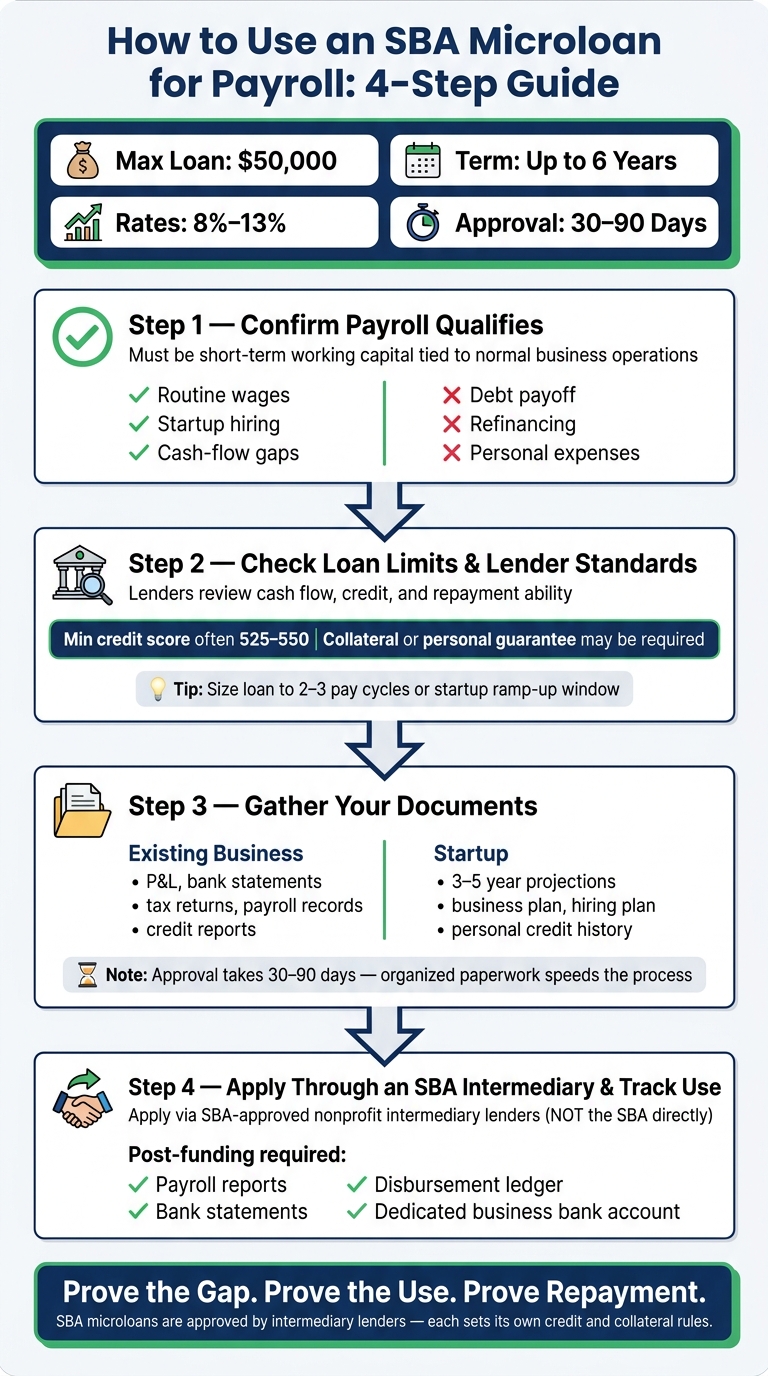
How to Use an SBA Microloan for Payroll: 4-Step Guide
SBA Microloans: A Complete Guide for Startups and Small Businesses
sbb-itb-1eb586e
Step 1: Confirm Payroll Qualifies as Working Capital
Before you apply, make sure the payroll need fits the lender’s definition of working capital. Payroll usually counts only when the lender sees it as a short-term operating expense tied to normal business activity. That’s the line that separates payroll requests that tend to get approved from the ones that get turned down.
Lenders also want proof that the business can repay the loan from current cash flow or realistic projections.
Payroll Uses That Usually Fit Lender Rules
Routine wages, salaries, and other day-to-day payroll costs are usually the clearest fit. A payroll request also tends to make more sense when the funds will cover startup hiring, support expansion, or help the business get through a temporary cash-flow gap.
Uses That Do Not Fit SBA Microloan Rules
The table below shows which payroll uses usually fit lender rules and which ones usually do not.
| Allowed Uses | Not Allowed |
|---|---|
| Ordinary wages and salaries for staff | Paying off existing business or personal debt |
| Short-term payroll during a cash-flow gap | Refinancing existing debt |
| Startup or expansion hiring costs | Personal expenses or non-business costs |
| Payroll requests the lender cannot tie to repayment |
Step 2: Check Program Limits and Intermediary Lender Standards
Once payroll counts as working capital, the next thing to figure out is simple: how much can you borrow, and what will the lender look at?
SBA microloans cap at $50,000, usually have repayment terms of up to six years, and come with rates set by the intermediary lender within SBA limits. If you’re asking for funds to cover payroll, lenders usually want to see three things: cash flow, ability to repay, and a clear fit with working capital.
What Lenders Review on Payroll Requests
If payroll is the main reason for the loan, lenders usually review your business plan, credit history, cash flow, and whether the business can repay the loan through current revenue or projected income.
Some lenders may accept credit scores as low as 525 to 550. They may also ask for collateral or a personal guarantee. In plain English, they want proof that the business can carry the loan and that the payroll request makes sense.
How to Size the Loan to the Payroll Gap
Keep the loan amount tied to the actual payroll shortfall. That might mean two to three pay periods or a startup ramp-up window. If the business doesn’t have revenue yet, include three- to five-year projections showing how future revenue will support payroll.
It also helps to name the request clearly as working capital tied to payroll. That framing matters. It shows the lender this isn’t a vague funding ask – it’s a focused request tied to a normal operating need.
Once the amount matches the payroll gap, the next step is pulling together the records that show both the need and the path to repayment.
| SBA Microloan Feature | Program Limit |
|---|---|
| Maximum loan amount | $50,000 |
| Maximum repayment term | 6 years |
| Interest rate range | 8%–13% |
| Minimum credit score (varies) | Often 525–550 |
Step 3: Gather Documents Before You Apply
After you know your payroll gap, pull together the records that back it up and show you can repay the loan. Approval usually takes 30 to 90 days, so clean, organized paperwork can help keep things moving.
Financial and Payroll Documents Lenders Commonly Ask For
What a lender asks for can vary by intermediary, but the core paperwork tends to look pretty similar. Most lenders ask for:
- Bank statements
- A P&L
- Tax returns
- EIN
- Ownership ID
- Credit reports and debt history
If payroll is the main reason for the loan, add cash flow records and a clear payroll-use breakdown that shows how the funds will cover payroll costs. That extra detail matters. It helps the lender see not just that you need the money, but how you plan to use it.
What Startups Need to Show When Payroll Is the Main Use
Startups usually can’t lean on a long revenue track record, so projections do more of the heavy lifting. That means submitting a business plan, 3 to 5 years of projections, a hiring plan, and monthly expense estimates.
The table below shows how document needs shift based on where your business stands:
| Document Category | Existing Business | Startup |
|---|---|---|
| Financials | Recent P&L statements, bank statements | 3–5 years of financial projections, monthly expense estimates |
| Business Plan | Updated plan showing expansion or stability | Comprehensive plan with market and competitor analysis |
| Tax / Legal | Past tax returns, business registration, EIN | Business registration, EIN, personal tax returns |
| Credit | Business and personal credit reports | Personal credit history and personal background |
| Payroll Use | Current payroll records and gap analysis | Hiring plan and planned payroll budget |
Where SBA50K Fits in the Preparation Process

SBA50K helps applicants get ready for SBA microloans up to $50,000 with a step-by-step funding guide, custom SBA-approved business plans, application help, and lender connections.
With these documents in place, you’re ready for the intermediary lender application.
Step 4: Apply Through an SBA Intermediary and Track Payroll Use After Funding
With your paperwork in place, the next step is to find an SBA-approved intermediary lender and submit your application. These intermediaries are nonprofit organizations, and they often offer mentoring or training to help you use the funds the right way. If payroll is your main use of funds, that extra guidance can help a lot.
How to Present the Payroll Request Clearly
Once you’re ready to apply, present the payroll request in plain terms through the intermediary lender. List the exact dollar amount you need for payroll, the specific time period it covers, and a clear reason the shortfall exists.
You should also show how the business plans to repay the loan through current cash flow or projected revenue. Keep the request tied to a specific pay period and a set amount. That makes the ask easier to follow and easier to review. Interest rates usually range from 8% to 13%, and repayment terms can run as long as six years.
What Records to Keep After Disbursement
Once the funds land in your account, there’s still work to do. Microloan proceeds can only be used for approved working-capital purposes, so you need a clean paper trail showing the money went to payroll.
Keep records such as:
- Payroll reports
- Tax records
- Bank statements
- A simple ledger matching each disbursement to each pay period
A dedicated business bank account and EIN make it much easier to keep microloan proceeds and payroll costs separate from personal finances. The goal is simple: every payroll dollar should be easy to trace.
Key Points Before You Use an SBA Microloan for Payroll
Before you apply, keep the request as small as the payroll gap you can prove. Payroll can qualify, but only as a short-term operating need tied to documented cash-flow gaps.
One thing trips people up all the time: SBA microloans are not approved by the SBA itself. They’re approved by intermediary lenders, and each lender sets its own credit and collateral rules.
| Program Detail | Key Limit |
|---|---|
| Maximum loan amount | $50,000 |
| Interest rate range | 8% to 13% |
| Maximum repayment term | 6 years |
If you’re asking for funds to cover payroll, your file needs to tell a clean story. The strongest applications connect cash flow, payroll dates, and repayment in a way the lender can follow without guesswork. That usually means a business plan, 3–5 years of projections, and payroll records that show the exact gap you need to cover.
Once the loan is funded, keep that payroll use easy to track. Payroll reports and bank statements should clearly show where the money went.
FAQs
Can I use an SBA microloan for missed payroll?
Yes. SBA microloan funds can be used to pay employees, and payroll is an approved use for many small businesses.
You’ll still need to show the intermediary lender that you can repay the loan. That usually means coming in with a clear business plan and organized financial records. The smoother your paperwork, the better your application tends to look.
SBA50K can help you get your application ready, tighten up your business plan, and connect you with intermediary lenders.
What if my business has low or limited credit?
You can still pursue SBA microloans if your business has low or limited credit. These loans are often reviewed differently than they would be at a bank, and they’re built to help business owners who are rebuilding credit or don’t have much credit history yet.
Some lenders may look for a minimum credit score, such as 525 or 550. But that’s usually not the whole story. They also look at your overall ability to repay.
That’s where SBA50K can help. They can guide you through the process, support your business plan, and help organize your application for intermediary lenders.
How do I show payroll can be repaid?
Show lenders clear proof that your business can repay payroll and other loan costs. They’ll look closely at your current cash flow to judge whether you can make payments on time.
If your startup has little or no revenue, include detailed financial projections for the next three to five years, along with a strong business plan that covers your financial outlook, market analysis, and revenue strategy. SBA50K can help with custom business plans and application documents.

Leave a Reply